
Check your bank statement, and you will probably find a subscription you forgot to cancel. Maybe it is a streaming service you opened twice, or a fitness app left over from a January resolution.
Software makers have quietly counted on that forgetfulness for years. Now a new class of personal AI agents promises to catch those charges, cancel them and haggle over the rest.
That sounds like a threat to tech. It is really a transfer, and the bigger question for investors is where the money lands.
Also Read: Bank of America warns Apple investors because of Meta’s Muse
Agents move money from apps to the plumbing
OpenAI’s Dots, launched on Tuesday, Sept. 29, 2026, work around the clock on their own cloud computer, according to NBC News. They book, research, and manage tasks without waiting to be asked, and the service went viral.
According to the Bank of America note shared with TheStreet, that shift hits software sold to consumers and small businesses the hardest. Analysts led by Tal Liani said the low end of the market has “less complex customer requirements and greater price sensitivity.”
The bank flagged 10 names at risk: Asana, BlackLine, Dropbox, Hinge Health, HubSpot, Intuit, Monday.com, Paycom, Paylocity, and Zoom.
Yet “at risk” does not mean “sell,” since BofA still rates four of them, including Zoom, a Buy.
The other list matters more. If agents do more work, someone must supply the computing power, watch for errors, and store the data.
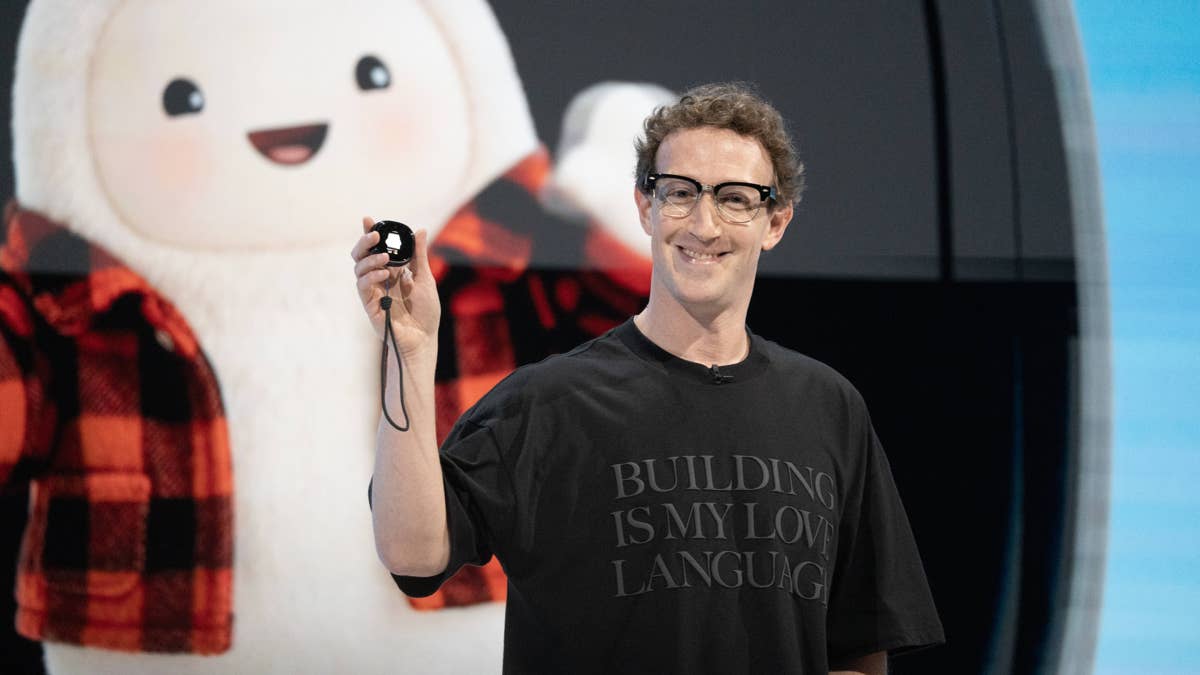 As sophisticated AI agents like Meta’s Muse take over routine digital tasks, Bank of America warns that consumer software providers could lose ground to data infrastructure giants.
Nonstop agents need nonstop computing power
A chatbot uses computing power only when you type a question. An agent that works while you sleep keeps renting chips all night.
That is BofA’s case for CoreWeave (CRWV), Nebius Group (NBIS) and Oracle (ORCL), all rated Buy. The note even flags potentially stronger pricing for these chip landlords.
In my view, that is the underrated twist. Agents may squeeze what we pay for apps while handing pricing power to the companies that run them.
More Bank of America:
- BofA thinks Wall Street is underestimating one J&J drug
- Bank of America’s $5,000 gold forecast comes with a warning
- Bank of America drops bombshell verdict on Nike stock
BofA’s $140 CoreWeave target sits almost exactly on the Street average, according to Stock Analysis. The split is about risk, since nine analysts there still rate the stock a Hold.
Nebius draws more conviction. BofA’s $310 target tops the $284 Stock Analysis average.
Oracle is where the gap is widest. Based on prices in the note, BofA’s $240 target implied roughly 75% upside. Even Morgan Stanley’s neutral call carries a $210 target well above where the stock traded.
In my read, the market is not doubting Oracle’s demand. It is doubting the cash needed to build data centers that meet it. For everyday investors, the fattest upside here sits with the biggest spenders.
Someone has to watch the robots
Agents make mistakes, and businesses will want to know when they do. BofA expects agents to multiply the logs and performance data that observability software tracks.
The bank rates Datadog (DDOG) and Dynatrace (DT) a Buy, with targets implying gains of roughly 11% and 13% at the note’s prices.
BofA’s $305 Datadog target also sits about $20 above the Stock Analysis average. It held that target even after Datadog fell 19% in August, when a single AI customer pulled back usage.
Shopify bets agents still need a checkout
Shopify (SHOP) is the boldest call on the list. BofA names it a winner despite heavy small-business exposure, the same trait that lands HubSpot (HUBS) on the risk list. Its $180 target implies about 21% upside.
A robot can find the product, but it still needs a store and a payment system, which Shopify sells. Still, the first risk BofA lists is AI shopping platforms cutting Shopify out.
MongoDB (MDB) plays a quieter role, holding the data agents draw on for context. BofA’s $540 target implies about 55% upside, even after the company’s CEO abruptly left on Monday, Sept. 28, 2026.
The cost cutter could turn on the winners
Here is my concern with the bullish half of the note: Agents are built to hunt waste, and nothing says that instinct stops at consumer apps.
BofA quietly concedes the point. It warns that business agents could help companies build their own monitoring tools and switch databases more easily.
There is also a Main Street irony. For now, consumers need an OpenAI Pro plan costing $100 to $500 a month to use Dots, NBC News reported. The bargain hunter is itself a premium subscription.
Watch the bills, not the demos
The demos are impressive, but demos do not pay invoices. The next round of earnings will show whether agent traffic is turning into revenue for CoreWeave, Oracle and Datadog.
If it is, BofA’s split will look early and right. If agents mostly squeeze costs everywhere they go, the line between winners and losers may prove thinner than it looks today.
