
For years, Bill Ackman has discussed creating a contemporary Berkshire Hathaway.
Investors now have a better understanding of how Howard Hughes Holdings (HHH) may achieve this.
Howard Hughes intends to include outside investors in real estate projects that it has traditionally funded mostly with its own resources, Ackman told Bloomberg.
The change could reduce Howard Hughes’ own equity commitment to parts of its real-estate portfolio by as much as 80%, Ackman said.
By the end of the next year, he hopes to have freed up between $2 and $3 billion in cash, which he would then put back into Vantage, the specialized insurance and reinsurance business that Howard Hughes purchased in June.
That fits with what Howard Hughes told shareholders ahead of its Sept. 30 annual meeting: The company wants to “significantly reduce” the capital intensity of Howard Hughes Communities and increase capital available for Vantage. Howard Hughes Holdings Inc.
Howard Hughes acquired acquired Vantage for around $2.1 billion on June 4, turning what had previously been mostly a real estate business into a holding firm with two significant operational platforms.
Ackman’s next strategy is to alter the way those two companies supply one another.
Ackman wants Howard Hughes to use outside capital
In the past, Howard Hughes’ real estate company has functioned differently from that of many major investment managers.
Ackman told Bloomberg that instead of bringing in institutional investors for specific initiatives, the business has often used its own stock to fund developments.
He now wants to alter that.
Instead of financing every project solely from their own balance sheets, Ackman cited companies like Blackstone and Brookfield as instances of real estate managers that invest alongside outside capital.
Read now: Ackman’s $1 billion Netflix return has a remarkable twist
Howard Hughes plans to maintain significant control while attracting outside investment. That might accomplish two things.
First, it may lower the amount of money Howard Hughes needs to fund both current and future projects.
Second, Howard Hughes may collect asset-management fees and “promotes,” which is the word used in the business to describe the additional portion of a project’s earnings that a manager is entitled to if investors meet certain return levels.
Ackman contends that this might lead to increased returns on Howard Hughes’ own capital investments.
This is not a completely novel approach.
On Howard Hughes’ second-quarter earnings call obtained by The Motley Fool, Ackman said that rather than just needing more stock from Howard Hughes, future incremental capital will probably come from current assets, outside partners, and third-party capital. Additionally, management said that over a five-year period, the real estate business might naturally generate between $2.5 billion and $3 billion in surplus free cash flow.
The scope of the shift that Ackman is now outlining is novel.
A very capital-intensive corporation may become more akin to an asset-management model by reducing its equity commitment to certain real estate assets by as much as 80%.
There would then be another place for that cash to go.
Vantage gives Howard Hughes its Buffett-style engine
Ackman made the inspiration explicit.
“We’re taking a page from Mr. Buffett,” Ackman told Bloomberg.
One of Berkshire Hathaway’s most significant sources of investable cash, according to Warren Buffett, was insurance operations.
Before many claims are finally settled, insurance firms receive premiums. Insurance “float” is the term used to describe the funds maintained between those two occurrences.
The money is neither risk-free nor free capital as a result. In order to pay policyholder claims, insurers must have sufficient liquid assets on hand.
However, while the core insurance company continues to generate premiums, a well-managed insurer may invest a portion of its cash.
Vantage should have a comparable function at Howard Hughes, according to Ackman.
More Warren Buffett:
- Warren Buffett reveals he broke his own investing pattern
- Warren Buffett has a blunt take on today’s market
- Warren Buffett pulls no punches on stock market for 2026
In June, Howard Hughes paid almost $2.1 billion to purchase Vantage. Pershing Square now manages the insurer’s investment portfolio, so Howard Hughes does not have to pay an extra investment-management charge.
After the purchase, the business swiftly liquidated longer-term fixed-income assets and moved a large portion of the portfolio into short-term U.S. Treasuries, Ackman told Bloomberg.
Common stocks are progressively receiving the remaining part.
Shortly after the purchase, over 60% of Vantage’s portfolio was in short-term Treasuries, while almost one-third had already been invested in stocks, according to Howard Hughes management’s second-quarter report. Afterward, that equity allocation rose to almost 40%.
Ackman said the longer-term structure could allow roughly 40% to 45% of Vantage’s investment assets to sit in common stocks while maintaining comparatively low insurance leverage.
The concept is simple: The funds required to satisfy insurance commitments should be kept in very low-risk assets. Pershing Square should then invest the leftover funds in businesses that it believes have the potential to grow over time.
Howard Hughes is becoming a different company
The most important thing for investors is that Howard Hughes no longer resembles the business it was a few years ago.
Real estate continues to be its primary industry. In regions like Nevada, Texas, and Hawaii, Howard Hughes Communities owns profitable assets and creates master-planned communities.
However, HHH now has a second operating platform with completely different economics thanks to the Vantage purchase.
Howard Hughes had over $2.65 billion in cash and cash equivalents at the end of the second quarter, including Vantage’s cash. The insurance division generated $97.2 million in net earned premiums in the brief period between its June 4 purchase and the end of the quarter.
In regulatory filings, the corporation has also made the strategy change clear.
Currently, Howard Hughes characterizes itself as a holding company that operates a specialist insurance and reinsurance subsidiary in addition to a large-scale real estate platform. SEC
Adjusting the balance between them appears to be the next step.
These days, real estate absorbs a lot of equity.
While Howard Hughes maintains significant ownership and may benefit from asset-management economics, Ackman wants outside investors to bear a larger portion of that burden.
This might enable HHH to support Vantage with more funds without issuing a lot of new shares.
Another aspect of the Berkshire analogy that Ackman highlighted in the interview is avoiding needless share issuance. Due in part to the internal capital produced by its operational companies and the relatively limited number of shares it held, Berkshire generated huge value for its shareholders.
Howard Hughes could use a similar compounding strategy, according to Ackman.
As previously reported by TheStreet, Ackman has defined Howard Hughes as the vehicle he plans to transform into a contemporary Berkshire Hathaway. That analogy became more concrete with the purchase of Vantage.
It may become even more crucial with this new real estate approach.
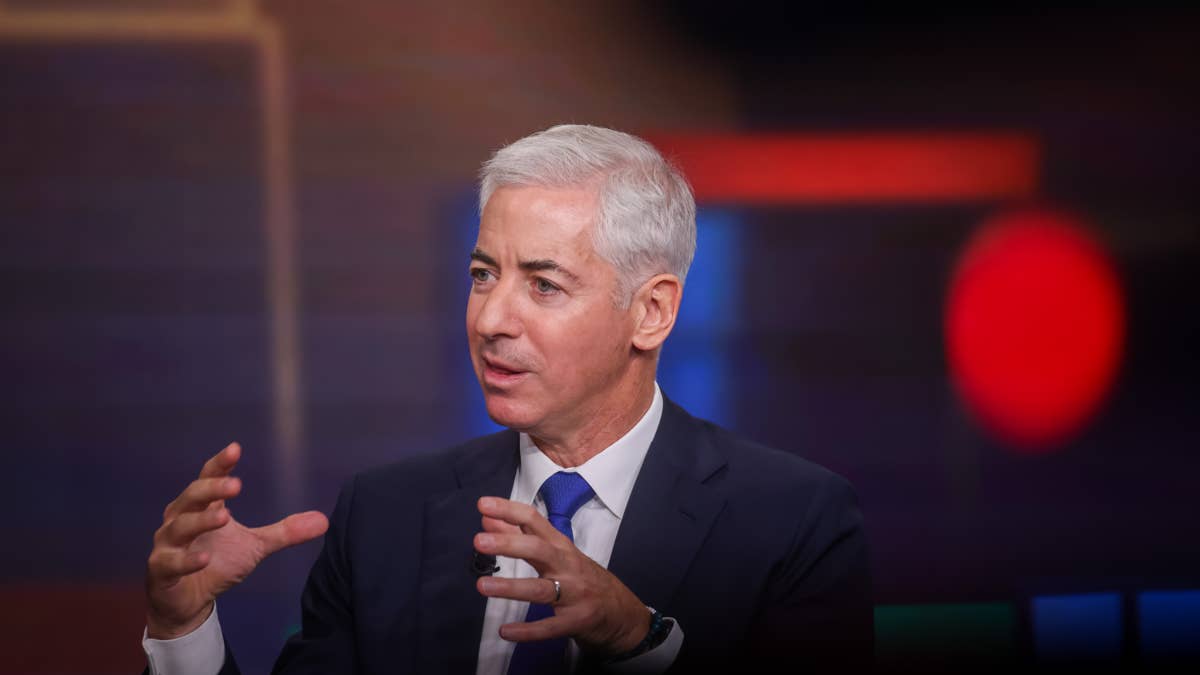 Bill Ackman reveals a $3 billion shift at Howard Hughes.
Ackman’s Howard Hughes plan now faces an execution test
On paper, the method is quite appealing.
In addition to bringing institutional partners into its projects and shifting billions of dollars toward an insurance platform that Ackman thinks will compound capital at greater rates, Howard Hughes might lessen the amount of wealth tied up in real estate.
However, none of that money has yet to be released automatically.
Howard Hughes must reach mutually agreeable values, frameworks, and return expectations in order to attract outside investors.
Timing is also important.
Ackman said that releasing between $2 and $3 billion was a goal rather than money that was already on Howard Hughes’ balance sheet.
In more circumspect language, Howard Hughes has said that it plans to raise Vantage’s cash availability and drastically lower the capital intensity of its real estate division. SEC
Vantage with its own dangers.
Disciplined underwriting is essential to the profitability of insurance, and investing more in equities than in short-term Treasuries increases market volatility. By keeping Vantage comparatively lightly financed, Ackman is attempting to mitigate some of that risk.
For Howard Hughes stockholders, this transaction means that the next year will be crucial.
By purchasing Vantage, the business has already accomplished the first significant step. It must now demonstrate that it can change its real estate business without compromising the economics that once made those assets desirable.
Ackman’s Berkshire parallel will become less theoretical if Howard Hughes is able to effectively entice partners into its real estate portfolio, release billions of dollars of its own stock, and redeploy that money at favorable rates.
Howard Hughes will continue to rely much more on its conventional capital-intensive real estate business if it is unable to do so.
The blueprint is becoming clearer.
The next step is execution.
Related: Berkshire investors brace for a harsh dividend reality
