
Grocery is a tough, low-margin business. I’ve known that for a long time. Long before joining Wall Street, I spent the better part of a decade working in grocery stores in various roles from bagger to manager. The business is cutthroat, and over the years, big chains’ buying power has increased pressure on smaller grocers, forcing many to sell or close their doors.
Walmart’s rise to national powerhouse status in the 1980s and 1990s was behind many of those supermarket failures. I remember hearing store managers fret over Walmart’s negative impact on openings, and the common refrain was “we can’t match their prices.”
In the end, the chain I worked for, Purity Supermarkets, had over 60 stores but was eventually forced to be sold to a larger New England chain due to competition.
Also read: DoorDash wants customers to stop using its app to order food
Unlike Purity, the chains that survived, including Albertsons, were geographically isolated or entrenched, with pockets deep enough to buy up smaller chains. Others, like Dollar General, stepped in to fill the void created by mom-and-pop closures, using their size to negotiate deals.
Still, Walmart’s low-price advantage has persisted, and a recent Goldman Sachs grocery survey shows the gap is widening.
Grocery chains angle for an edge as they chase Walmart on price
Unquestionably, the supermarket business is one where size matters. The bigger the chain, the more willing vendors are to cut deals, and the more insulated the grocer becomes to rivals encroaching on any one particular market.
To compete with Walmart, the industry has consolidated. Kroger now operates about 2,700 stores under the popular Ralphs, King Soopers, and Harris Teeter brands. Albertson’s runs about 2,200, including under Safeway, Albertsons, Vons, Jewel-Osco, and Acme banners.
Dollar General has leveraged its reach throughout underserved communities to provide low-cost essentials across over 20,000 locations, including more than 5,400 that sell fresh fruits and vegetables — traditionally the highest-margin products grocery stores sell.
Despite all those stores and all that buying power, each still can’t compete on price with Walmart.
According to the Goldman Sachs survey shared with me, which included shelf surveys at Kroger, Albertsons, Walmart, Sprouts Farmers Market, Whole Foods (WFM), and Dollar General, Walmart had the cheapest groceries by far, and the margin is widening.
Overall, Walmart’s prices were 15.7% below the group average across “38 SKUs in dairy, frozen goods, dry grocery, HPC, and produce categories.”
That handily outpaced Albertsons, which was 6% above average. Dollar General bargain hunters did better but still trailed Walmart, with prices only 7% below average.
The survey also revealed that Walmart’s edge against rivals on price has widened. When Goldman Sachs compared prices at stores last month, Walmart prices were 13.7% below the group of rivals average.
Unsurprisingly, Whole Foods, which some friends jokingly refer to as “whole paycheck,” had prices that were 10.9% above average. Meanwhile, Kroger’s prices were 2.9% below average.
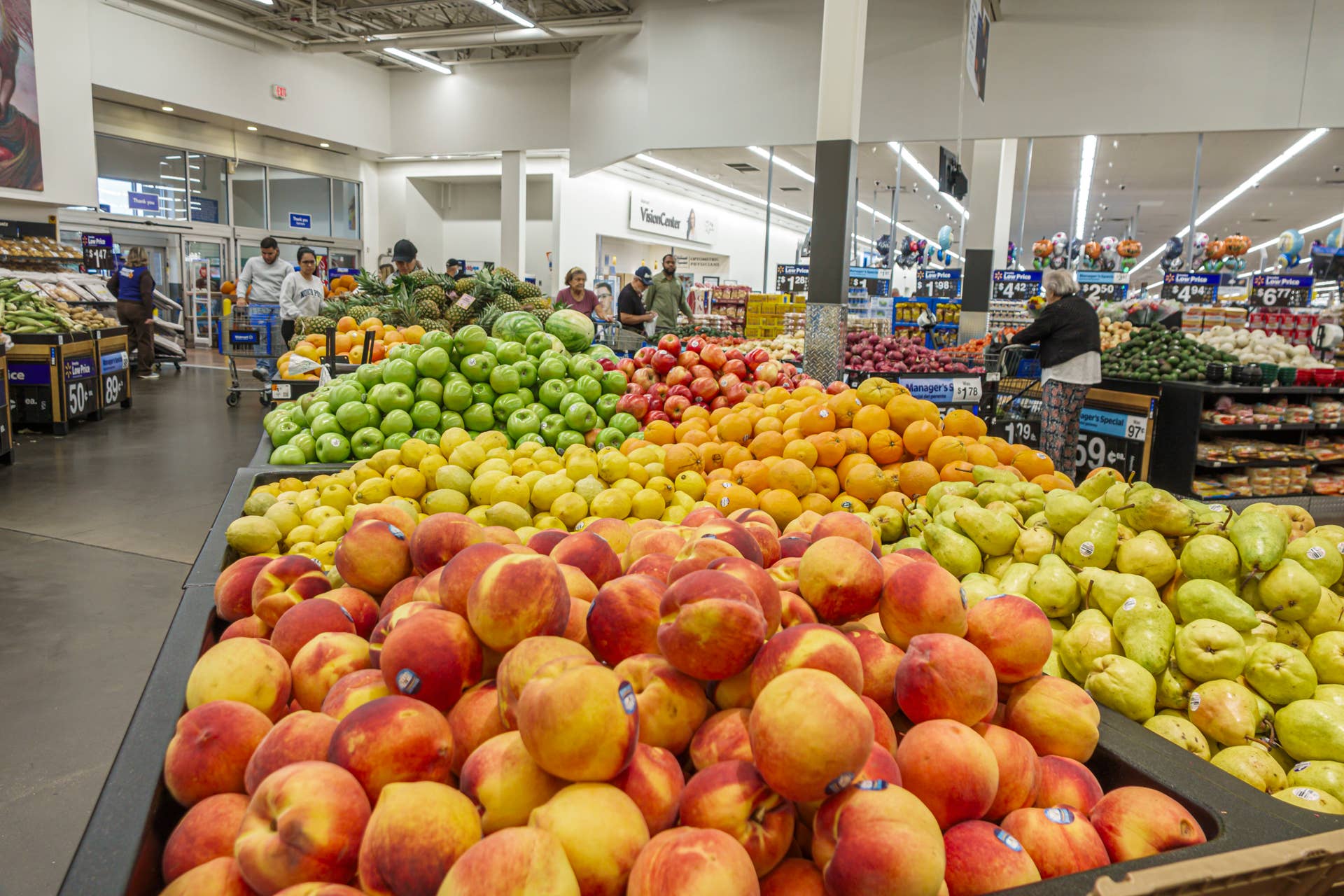 Walmart prices were 15.7% below averages in a recent Goldman Sachs grocery survey.
Walmart’s grocery prices are lowest in dairy and produce
Where Walmart’s grocery rivals struggle most in competing against the Goliath is in the dairy and produce departments. The trip for milk, yogurt, berries, and lettuce is notably less expensive, with Walmart prices 20.4% and 19.2% below the group average.
The chain’s advantage is smaller in other categories, like household and personal care (HPC), but it’s still meaningful. HPC prices were the closest to rivals, but still 9.5% better than the group average.
For perspective, Albertsons was 0.7% below average in dairy but 9.1% above average in HPC items. Dollar General was 6.6% cheaper on dairy and 7.8% below average on dry grocery items, such as canned goods.
One exception in which Dollar General shoppers did beat Walmart was HPC, where the discount store’s prices were 11.7% below average, suggesting that while Walmart handily outpaces it overall, bargain shoppers may want to go there instead for things like toothpaste or soap.
Walmart’s Grocery Price Advantage Versus Major Rivals
Segment
% Below Group Average
Dairy Products
-20.4%
Frozen Foods
-13.5%
Dry Grocery
-12.1%
HPC
-9.5%
Produce
-19.2%
Related: How Kroger and Costco help you beat record gas prices
