
Verizon is addressing customer pushback over an application it submitted to the Federal Communications Commission in August seeking approval to retire traditional copper landline phone service in parts of nine states.
The carrier said it wants to discontinue the service because its copper infrastructure is outdated, costly, “too slow to meet modern needs,” and “vulnerable to damage and theft.”
The change would affect roughly 277,000 business and residential legacy voice lines. Verizon says it will offer affected customers alternative service options, such as wireless or fiber, but critics warn the transition could harm some customers.
For example, Thomas Steed, chair of the Association of BellTel Retirees, sent a letter to the FCC in September asking the commission to deny Verizon’s request, saying it “ignores the needs of millions of older and vulnerable Americans, particularly those in rural areas, who rely on landlines in areas where cell service is inconsistent.”
Verizon responds to customer concerns over landline changes
Amid recent criticism, the FCC paused approval of the carrier’s proposal in September to allow extra time for review. After this setback, Verizon has recently notified the FCC that it has individually reached out to customers concerned about losing their landline phone service or “plain old telephone service” (POTS).
In an Oct. 9 letter to the FCC, Verizon said its “government affairs and policy team members” are calling customers who expressed concern about its proposed change to the FCC or to the company directly, and have found that some will be able to keep their landline service.
“Among the identified customers that we have contacted so far who commented in the FCC docket, Verizon was able to determine that the Application did not apply to roughly 43 percent and informed those customers accordingly,” wrote Verizon in the letter.
Related: Verizon plans to discontinue a phone service customers rely on
Verizon said that for the remaining 57% of customers, its representatives addressed their concerns via phone calls and provided detailed information on its “Voice Connect solution.”
The carrier also said it has been sending “supplemental letters, calls, and texts” to customers whose landline service will not be discontinued because they lack access to an “adequate replacement option.”
Verizon overall promises a “careful disconnection process for customers with an approved replacement.”
“Verizon will engage in extensive communication prior to any POTS discontinuance,” wrote the carrier. “If a customer receives a disconnection notice but it is determined before disconnection that the service is unavailable, Verizon will not disconnect service.
“If a customer transitions to a replacement service but it is determined within one month of the transition through a Verizon professional review that the Commission-approved replacement service is unavailable at the location, Verizon will restore the customer’s service over copper facilities and maintain that service until an adequate replacement solution is identified and available,” it continued.
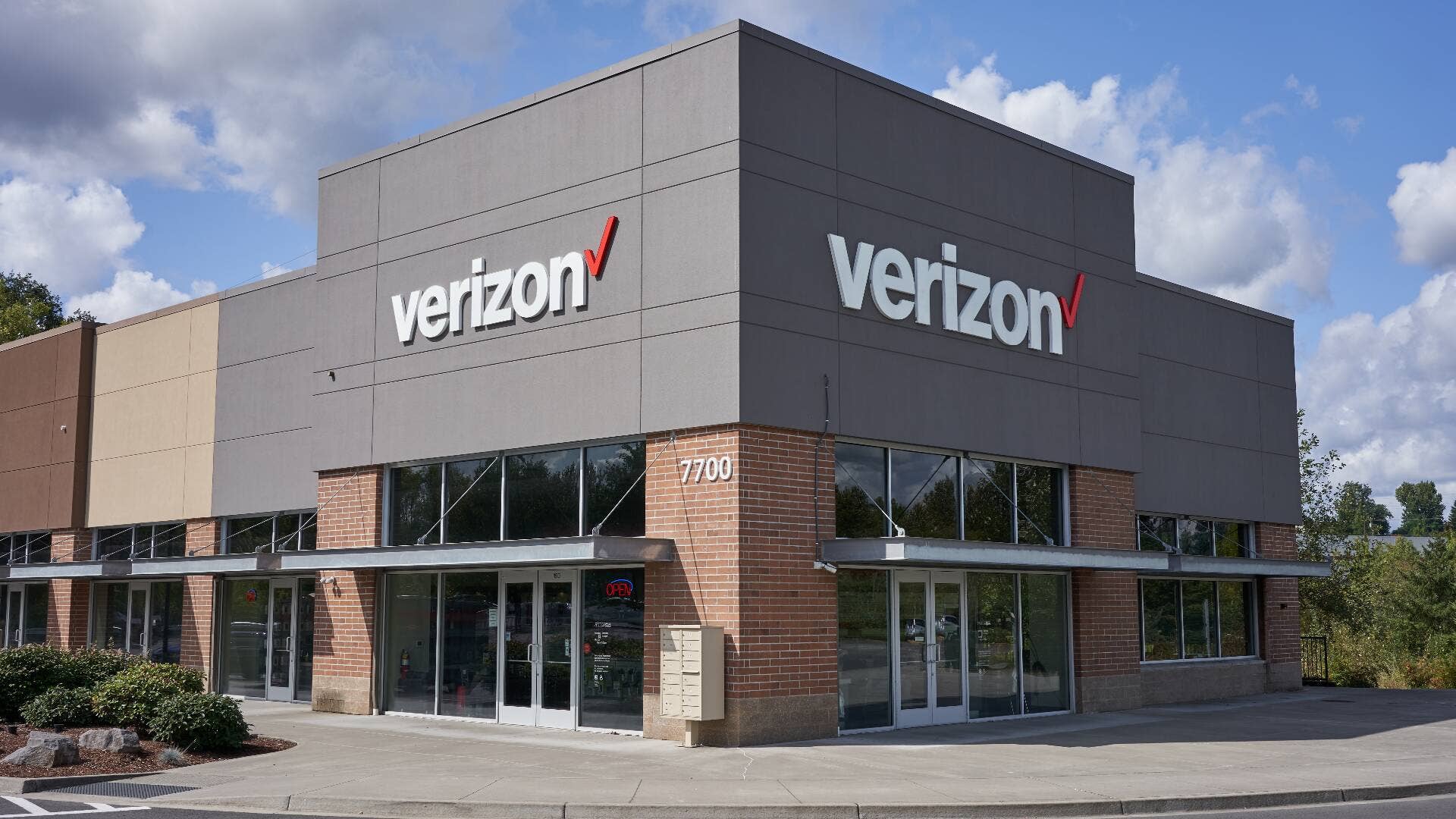 Verizon is addressing customer pushback over its plan to retire traditional landline phone service in parts of nine states.
Verizon’s plan to discontinue landlines sparks safety concerns
The move from Verizon comes after some consumers took to the social media platform Reddit to raise concerns that the carrier’s discontinuation of landline phone service could leave some customers vulnerable during natural disasters, storms, or power outages.
Some flagged that landline service is more reliable than wireless or fiber options during these emergencies.
“The big issue will be emergency call centers (911), many keep some POTS lines as back up for system failures. POTS rarely fails compared to internet based telephone and mobile,” wrote one consumer.
“For safety reasons, all homes should maintain landlines (copper/broadband/fiber) and have the option for digital lines,” wrote another.
“During a week power outage my landline worked. Many of my neighbors used it even though they made fun of me for having it,” wrote another consumer.
U.S. Rep. Ben Cline, who sent a letter to the FCC in September urging the commission to closely review Verizon’s proposal to discontinue landline phone service, raised the same concerns, highlighting that his district in Virginia is vulnerable to weather-related power outages.
“Copper lines continue to function during power outages, while the battery backups on wireless and fiber replacements typically last only a day or less,” wrote Cline. “In a region that experiences extended weather-related outages, that gap can mean the loss of 911 access precisely when it is needed most.
“Legacy medical alert units, home alarm systems, and similar equipment may also fail on the replacement service without additional hardware that many seniors and fixed-income households cannot readily afford,” he continued. “Importantly, the alternatives offered on paper do not always work in practice.”
Verizon faces a shrinking copper landline market as wireless grows
Verizon isn’t the only carrier discontinuing copper landline phone service. AT&T has already submitted applications this year to retire its legacy copper landline network in parts of California, and it plans to shutter most of this service nationwide by the end of 2029.
An analysis of FCC data published by the International Center for Law & Economics (ICLE) in February found that traditional copper landline usage in the U.S. dropped sharply over the past decade.
The number of consumers relying on the service declined from nearly 66 million in 2014 to approximately 12.5 million in 2024, an 81% decrease.
More Verizon News:
- Verizon scales back a perk that keeps prices low for customers
- Verizon plans to discontinue a phone service customers rely on
- Verizon hikes prices on multiple discounted offers for customers
The shift toward wireless connectivity was also reflected in household data. In 2024, 79% of U.S. adults lived in homes with only wireless service, while fewer than 1% depended exclusively on landlines.
The steep decline in traditional landline use reflects a broader shift toward newer connectivity options, including fiber, fixed wireless, and satellite service.
Roger Entner, a lead analyst at Recon Analytics, said in a July Light Reading report that the era of the copper landline service is “over” and “there is no measure left on which copper wins.”
“The copper telephone loop was the first strung technology in the 1800s, older than powered flight, older than the transistor and older than the interstate highway,” said Entner.
“It was a marvel in its era,” he continued. “That era is over. A pair of copper wires carries a few megabits on a good day, corrodes in the rain and is worth enough as scrap that thieves cut it out of the ground.”
Related: Verizon scales back a perk that keeps prices low for customers
