
Artificial intelligence has attracted enormous investment across software, data centers and the companies building increasingly powerful models. Physical infrastructure has received far less of that attention. That may be changing.
Roads, bridges and other public assets represent one of the largest maintenance challenges governments face, and one of the least technologically sophisticated. ASCE’s 2025 report card gave roads a D+ and bridges a C. Operators manage aging networks under tight budgets, often relying on scheduled inspections and visible damage to decide where money goes. When deterioration goes unnoticed, a manageable repair becomes expensive.
AI is starting to find applications not in consumer software or enterprise productivity, but in the less glamorous work of keeping physical infrastructure functional. A small number of companies are betting there is a substantial market in that shift.
Also read: Meta and Microsoft just sent employees a memo about Anthropic
Infrastructure maintenance is becoming an AI opportunity
The idea behind predictive maintenance is not complicated. Catching a problem early costs less than dealing with it after failure. The challenge for infrastructure is that the information needed to do it has traditionally been scattered and hard to use.
Infrastructure owners already collect substantial amounts of data: inspection reports, contractor records, citizen complaints and satellite imagery. The problem is turning those disconnected sources into a coherent picture of what assets need and when.
Saar Dickman, CEO of Dynamic Infrastructure, said the core AI opportunity is not about any single type of asset or application.
“The most promising application for AI in physical infrastructure today is not a specific application for roads or bridges. It is moving governments and large private infrastructure owners from reactive maintenance to predictive maintenance. This will dramatically improve the infrastructure around us and save governments trillions,” Dickman told TheStreet.
The savings argument depends on whether AI can do something more demanding than flagging visible damage.
A crack in a road or bridge does not reveal its own severity. How serious it is depends on the overall condition of the structure, its role in the wider network and how traffic volume and seasonal weather affect its performance over time.
Understanding those relationships requires AI models that can interpret infrastructure data in context, not just identify individual defects. Getting that right is where most of the technical work still sits.
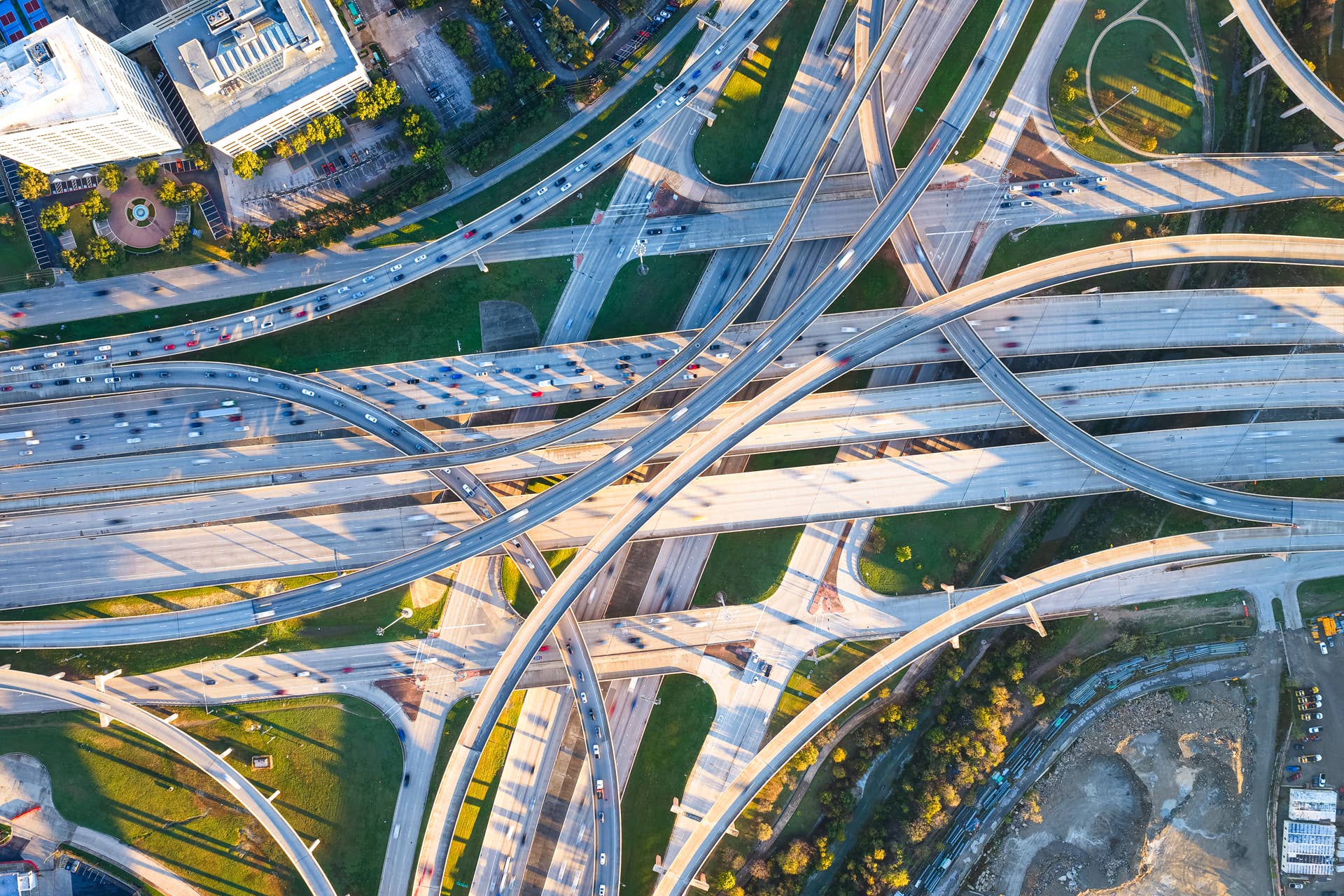 The idea behind predictive maintenance is not complicated. Catching a problem early costs less than dealing with it after failure.
The biggest obstacle may be organizational
Even if the technology works, it will not automatically change how infrastructure gets managed. The harder problem may be the organizations that own and maintain public assets.
Most infrastructure owners operate under annual budget cycles and established procurement procedures. The standard process is identifying what is broken, estimating the repair cost and deciding when it can be funded.
Predictive maintenance asks something different. It requires investing in a potential problem before it becomes urgent, even when other visible needs are competing for the same money.
The data needed to support that shift is largely already in place. Public works departments, contractors and inspection teams document infrastructure extensively. The gap is not information. It is what organizations do with it.
Infrastructure managers are used to asking what is broken today. The shift to predictive maintenance requires asking what is likely to fail next, a different kind of question that needs different processes and different planning assumptions.
Accurate predictions about future maintenance needs do not help much in agencies that only fund repairs after something breaks. Getting the technology to work is one challenge. Getting the organization to use it is often a bigger one.
Where investors could find the opportunity
The commercial opportunity extends beyond companies building AI models. Infrastructure operators need software that pulls together inspection records, asset databases and operational workflows in ways their existing tools were not built to handle. Getting ahead of a maintenance problem early enough to avoid a more expensive repair is a clearer value proposition than generating sophisticated output that does not change what actually happens.
“The technologies that will benefit most from this shift are those that connect siloed information locked in different systems to organizational processes that directly affect time and material consumption and savings,” Dickman added.
More Artificial Intelligence:
- AI’s biggest business opportunity may not look like AI
- AI racks are outgrowing old power: 2 chipmakers have a strategy
- BofA splits software into winners and losers as AI agents arrive
The opportunity could reach across multiple stages of the infrastructure lifecycle. Better data about asset performance could reshape decisions about materials procurement, repair scheduling and where capital investment is directed.
Maintenance activities could become more accurate and less frequent, with fewer materials required, changing the economics of how infrastructure networks are run.
For investors, the key question is whether these technologies can show measurable results in the field. Infrastructure owners will want evidence that AI improves decisions or reduces costs, not just that it produces sophisticated output.
Public procurement moves slowly, and existing infrastructure systems were not built with modern data integration in mind. Agencies responsible for roads and bridges are also not inclined to change how they make decisions based on AI assessments they cannot yet verify. When public safety is involved, the confidence bar is higher than in most industries.
Those dynamics could favor companies that understand both the technology and how infrastructure operators actually work, including the budget cycles, procurement constraints and the workflows through which maintenance decisions get made.
A different kind of AI growth story
AI’s move into physical infrastructure is a different story from the race to build more powerful models or reach more consumers. Value here will be measured by whether the technology can solve operational problems that have persisted for decades, not by how a product demo looks.
Infrastructure will still require physical inspections, skilled workers and significant capital. AI is not a replacement for any of that. Its potential lies in helping operators determine where attention is most needed and when intervention makes the most sense.
Public infrastructure spending run into trillions globally, and a meaningful portion of that goes toward maintaining assets that are deteriorating faster than they are being replaced. Shifting even a fraction of that spending from emergency repairs to earlier, cheaper interventions would be worth a great deal to the companies that make it possible. The technology sector has spent years scanning for its next major market. Infrastructure has been sitting there the whole time.
Related: Microsoft’s CEO says AI industry is skipping a step that could matter a lot
