
The AI trade has been one of the most lucrative in the market over the past two years. Money has poured into companies developing models, building data centers, and supplying the chips that keep it all running.
Not everyone watching that capital move thinks it is being deployed wisely.
A growing number of voices are raising questions about whether investors understand what they are actually buying. The worry is not abstract enthusiasm for AI. Capital is moving faster than investors’ ability to evaluate the businesses receiving it.
Broadcom (AVGO) CEO Hock Tan is among those sounding the alarm. His recent remarks at an event in Singapore invoke a principle Warren Buffett has preached for decades. The current moment, Tan suggested, may be testing investors in ways they have not fully acknowledged.
Also read: Warren Buffett has a stark message for stock market investors
Buffett’s ‘circle of competence‘ advice
Buffett has a name for what Tan is describing. In his 1996 letter to Berkshire Hathaway shareholders, Buffett wrote that investors need the ability to “correctly evaluate selected businesses.”
He has long argued that investors do not need to understand everything. What matters is knowing the limits of what they do understand.
The circle of competence does not steer investors away from any particular industry. Buffett has applied it across insurance, retail, energy and consumer brands. What it requires is an honest accounting of where a given investor’s knowledge actually stops, where real analysis gives way to assumption.
That reckoning is most difficult when prices are rising and the headlines are running in one direction.
AI may be the hardest test that principle has faced in a generation.
What Tan said about investors and AI
“A lot of investors have no clue what they are investing in,” Tan said, speaking in Singapore. He described investors who arrive with “extreme expectations” only to find the trade is “almost like they are in a casino.”
The remarks carry weight because Tan is not skeptical of AI. Broadcom has built a significant business supplying custom chips and networking infrastructure to the hyperscalers driving the AI buildout. He is bullish on AI’s long-term importance.
But Tan also said some businesses may simply be “wasting money,” and that profitability across the industry will depend on whether AI delivers real, measurable value to the companies using it.
Investors who cannot assess that are taking on risks they may not recognize.
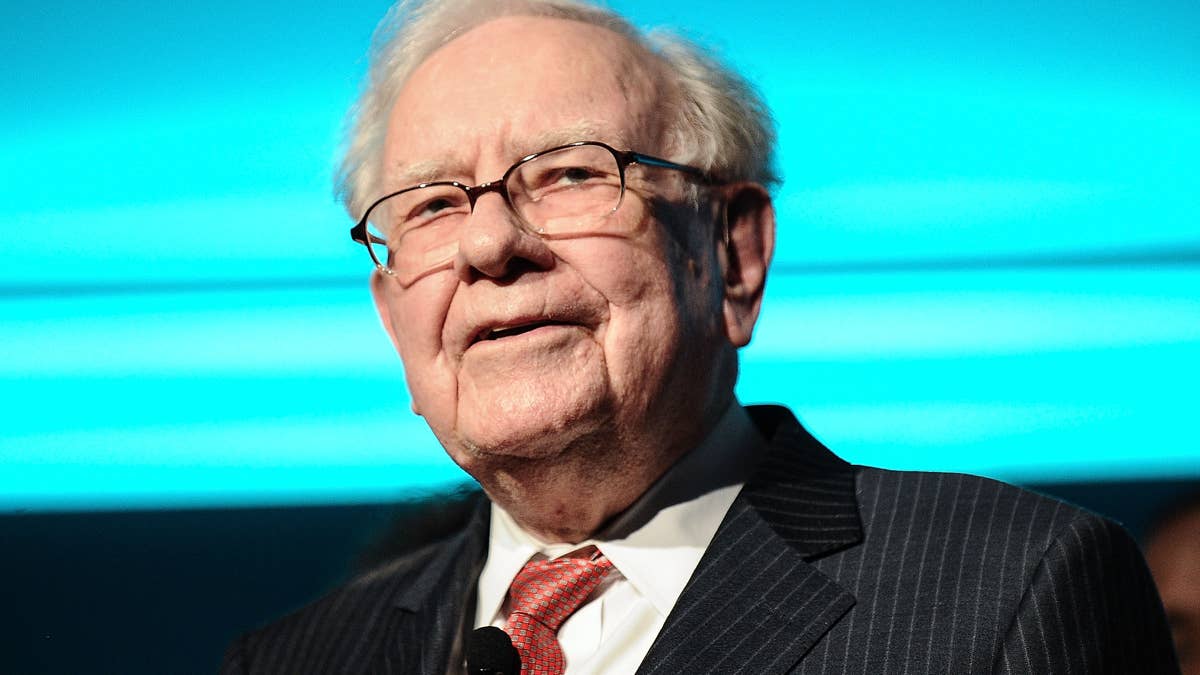 Buffett has said for years that most individual investors would be better served by a low-cost index fund than by trying to pick individual stocks.
Why Buffett’s casino comparison matters
Tan’s casino reference echoes language Buffett has used about the broader market. Buffett has compared the current market to a church with a casino attached, warning that investors are in a “gambling mood” unlike anything in his experience.
Two voices at different ends of the market have landed on the same description of investor behavior. One built and held businesses for decades. The other supplies the chips powering the AI buildout.
The dynamic is familiar from other cycles. Prices go up, coverage turns favorable, and the investors who got in early look smart. The question of whether the underlying business justifies the price becomes easier to set aside. At some point a trade built on sentiment needs business performance to catch up, and the two do not always move at the same pace.
The AI trade is particularly vulnerable because the technology is expensive to build, complex to evaluate, and still early enough that the economics of many individual companies are not settled.
The index-fund argument
Buffett has said for years that most individual investors would be better served by a low-cost index fund than by trying to pick individual stocks.
Most investors lack the time, access, and analytical tools to evaluate individual businesses well enough to beat the market consistently. Acknowledging that is not a failure of ambition.
The index argument takes on a specific weight in an AI-heavy market. The largest AI-adjacent companies, including hyperscalers, chip designers, and major platform businesses, have become significant components of the S&P 500.
Broad index exposure already carries meaningful AI weight, without requiring a bet on which individual company ends up with the most to show for the buildout.
More Warren Buffett:
- Warren Buffett’s $142 billion fortune hits a new milestone
- Warren Buffett’s farewell letter has 4 words for every investor
- Warren Buffett shares a simple rule for surviving a market crash
Companies including Meta Platforms (META), Microsoft (MSFT), and Alphabet (GOOGL) have committed hundreds of billions to AI infrastructure and development.
Whether that investment pays off, and for whom, is still being determined.
Questions worth asking before buying in
The warning from Tan does not mean investors should avoid AI-related stocks. It means they should be able to answer some basic questions before buying.
Before investing in any AI-related stock, consider:
- Does the company generate real profits and positive cash flow?
- How much is it spending on AI infrastructure, and can it sustain that spending?
- Is there a clear path to earning a return on those AI investments?
- Is customer demand durable, or driven mainly by experimentation?
- How does the current valuation compare to near-term earnings expectations?
- Would you still want to own this business if AI enthusiasm cooled for 12 months?
Buffett has applied these questions to every investment Berkshire Hathaway has ever made. Feeling uncomfortable asking them about a popular AI stock is itself an answer of sorts.
The harder question for investors
Hock Tan runs a company that depends on AI succeeding. His warning is narrower than it sounds. The gap between AI’s actual potential and investors’ understanding of the individual companies they are buying may be wider than markets are currently pricing in.
The circle-of-competence principle has outlasted every major market cycle because the behavior it describes keeps repeating. Capital goes into things investors cannot properly evaluate, and the reckoning tends to arrive well after the position is already on.
Markets rarely provide much warning before enthusiasm stops being enough to hold prices up.
For investors who cannot answer the basic questions about the AI stocks they hold, broader index exposure may be the more defensible position. The potential of AI can be captured without placing a specific bet on the winner of a race that has not been run yet.
Related: Warren Buffett doubles down on stock market message for 2026
