
It’s hard to ignore when a restaurant chain goes from being everyone’s favorite lunch spot to suddenly struggling to keep customers coming back. And sometimes, the change happens so gradually that you barely notice it.
I’ve always found that consumer behavior tells us more about the economy than some of the numbers Wall Street watches every day. When people start thinking twice about a meal they once bought without hesitation, something has certainly changed.
Chipotle has struggled recently. For years, the 33-year-old Mexican-inspired restaurant chain built its reputation around fresh ingredients, generous portions, and a loyal customer base willing to pay a little extra. But that customer loyalty has been cracking.
According to The Motley Fool report, Chipotle recorded four consecutive quarters of declining customer traffic in 2025, including a 4.9% drop in Q2 and a 3.2% decline in Q4. Full-year comparable sales fell 1.7%, marking the company’s worst performance since the 2016 E. coli crisis.
And perhaps the most telling detail is who’s pulling back. Households earning less than $100,000, which account for roughly 40% of Chipotle’s sales, and younger diners between 25 and 35 have been among the customers turning away.
That “tap out” is evident in Chipotle (CMG) shares, down 23% over the past year and 17% year to date, according to Yahoo Finance. That decline made it look cheap.
Also Read: Starbucks could acquire Chipotle in blockbuster restaurant deal
The Starbucks rumor moved markets, then died quickly
A rumor started on Oct. 8 when The Financial Times reported that Starbucks had been working with advisors on a Chipotle takeover proposal, citing people familiar with the matter. In fact, the burrito chain, with a $41 billion market value, would have been the largest restaurant acquisition in history.
As expected, Chipotle shares climbed on the news, while Starbucks shares moved in the opposite direction. Investors in Chipotle were excited about a possible reunion with Brian Niccol, who led Chipotle for six years before departing for Starbucks in 2024.
Related: Starbucks could acquire Chipotle in blockbuster restaurant deal
Taking on a major new commitment while you’re still trying to get your own house in order is not a good move. That’s what had Starbucks investors worried.
Then on Oct. 12, a Starbucks spokesperson told CNBC‘s Jim Cramer that: “Starbucks is not buying Chipotle.”
Cramer, who had spoken directly with Starbucks management, was unequivocal. The deal wasn’t happening. The market quickly reversed course, with Chipotle shares falling 3.77% while Starbucks gained 1.69%.
Semafor had separately reported in September that Chipotle hired advisors to defend against activist investors or an unwanted takeover bid. It almost seems as though management knew the company’s depressed valuation could make it an attractive takeover target.
The real Chipotle problem an acquisition would not have solved
I agree that acquisition rumors can temporarily inflate a stock price.
But can they fix the underlying reason the stock was cheap in the first place? I don’t think so. And for Chipotle, that reason is consumer behavior.
The customers who stopped coming in 2025 did not stop because Chipotle had the wrong CEO or the wrong ownership. Not really.
More Restaurants:
- Oprah-backed chain closes 12 restaurants for good after filing Chapter 11
- Hooters closing more restaurants in bankruptcy comeback
- These are the True Food Kitchen locations closing in Chapter 11
It’s probably because $16 burrito bowls began feeling like a stretch when gas topped $4 per gallon and groceries were still running hot.
Fast-casual, which positioned itself as the premium alternative to fast food, found that its premium suddenly felt optional.You might be someone who used to grab Chipotle for dinner after a long day but now chooses to cook at home instead. That small change in routine tells a bigger story about consumer spending.
And the data backs it up.
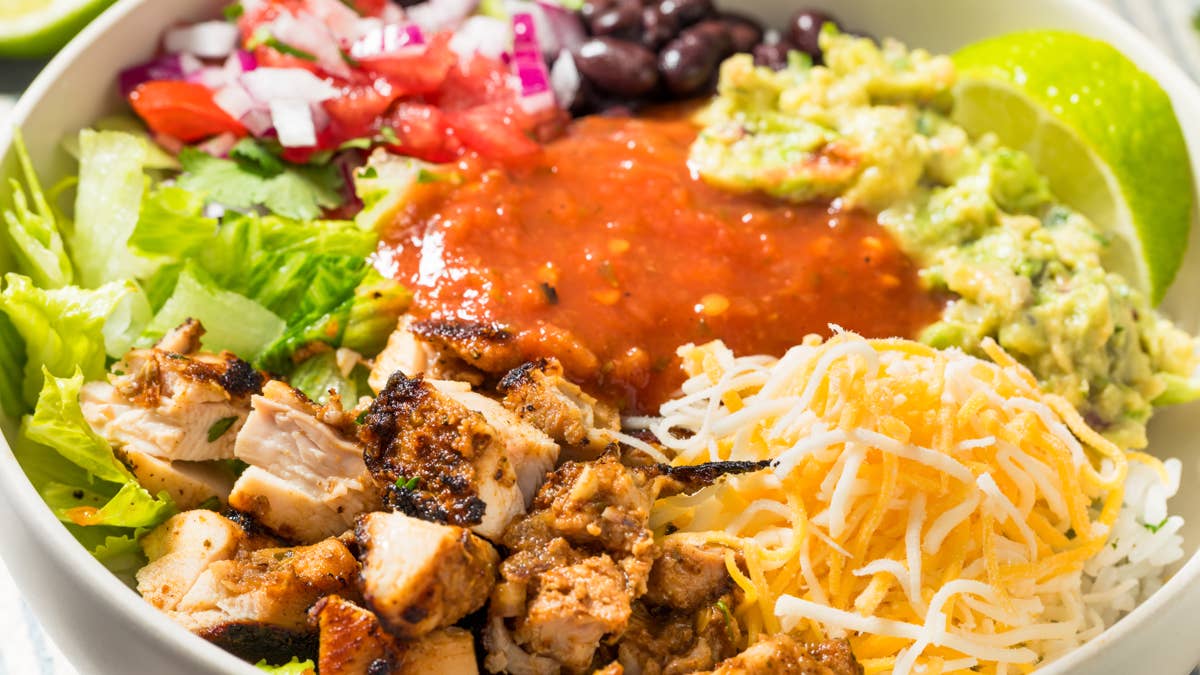 Chipotle doubled its limited-time offering (LTO) cadence from two per year to four, with fan favorites such as Chicken Al Pastor and Chipotle Honey Chicken driving measurable foot-traffic spikes.
What Chipotle is actually doing to win customers back
In the first quarter of 2026, CEO Scott Boatwright launched a turnaround plan called “Recipe for Growth.” The early results are modestly encouraging.
Comparable sales turned slightly positive: up 0.5% in Q1 2026 and 2.2% in Q2 2026, according to Chipotle. Revenue climbed 9.3% year over year to $3.35 billion in Q2, beating analyst expectations.
That confidence made Chipotle raise its full-year same-store sales guidance to low-single-digit growth from its prior flat outlook.
Related: Chipotle has 4,186 restaurants. Palantir is helping score the risk
One of its key strategies was doubling its limited-time offering (LTO) cadence from two per year to four, with fan favorites such as Chicken Al Pastor and Chipotle Honey Chicken driving measurable foot-traffic spikes.
A “barbell menu” approach targets budget-conscious customers through smaller, lower-priced items while retaining the core menu that anchors the brand’s premium positioning.
Chipotle also introduced new sauces and dips designed to appeal to Gen Z’s appetite for bold flavors and more variety.
Even in physical stores, Chipotle is winning back customers
On the physical expansion side, Chipotle celebrated reaching the milestone of 1,500 Chipotlanes just last month, having added 500 of its drive-through pickup formats in less than two years.
The format has actually consistently outperformed traditional restaurant locations on both volume and returns, making it the company’s preferred development model going forward. Florida alone is expected to see 17% restaurant footprint growth in 2026.
“We’re seeing encouraging progress because we’re focused on the right growth drivers,” Boatwright said in the Q2 earnings statement.
The progress is visible, but I think it’s still early because one or two quarters of modest comparable sales growth does not reverse four quarters of traffic decline.
What Chipotle needs now is sustained proof that the customers who drifted away are actually coming back, not just responding to limited-time promotions. I think that’s the best way to rewrite the recovery story.
