
Bumble, a dating app that was had a valuation of around $14 billion, is finishing its public-market chapter by going private for $1.3 billion.
The company agreed to be acquired by Ithaca Holdings for $6.05 a share in cash, a 138% premium to Bumble’s unaffected Oct. 9 closing price, according to Bumble.
That premium looks enormous until you compare the deal with where Bumble started.
Bumble reached a roughly $14 billion valuation when its shares surged in their 2021 market debut, according to Reuters.
By Oct. 12, its market value had fallen to about $582 million, Reuters reported. The $1.3 billion acquisition therefore gives beaten-down shareholders a sharp short-term lift while still valuing Bumble at more than 90% below its former peak.
That disparity is the real story.
Bumble is not being acquired because public investors still see it as a growth darling. It is going private after years of falling engagement, shrinking revenue, and strategic resets that failed to restore confidence in the business.
Bumble’s premium hides a much deeper decline
The transaction gives investors $6.05 for each Class A share, representing about a 119% premium to Bumble’s 30-day volume-weighted average price as of Oct. 9, Bumble said. Its board approved the deal after a special committee evaluated strategic alternatives.
Bumble’s second-quarter earnings contribute to the explanation of the stock’s sharp decline.
Revenue declined 15.2% from a year earlier to $210.5 million, while Bumble App revenue dropped 14.7% to $171.7 million. Total paying users fell 16.4% to 3.2 million from 3.8 million a year earlier.
A $169.3 million impairment charge was included in the company’s $127.9 million net loss.
The drop in users is very significant.
Dating apps prioritize user engagement over revenue. In addition to hurting present income, fewer paying consumers make it more difficult to persuade investors that growth will resume.
Reuters reported that Bumble and larger rival Match Group have both struggled with weaker engagement as younger users grow tired of endless swiping and increasingly look for more organic ways to meet people.
Bumble attempted to reply.
In 2025, Whitney Wolfe Herd, the company’s founder and CEO, took back his position. The business experimented with offline events, lengthier response times, price tweaks, artificial intelligence capabilities, and modifications to its distinctive women-first approach.
Related: Popular dating app drops its biggest rule after 12 years
Their attempts did not restore sustained growth so the acquisition premium’s magnitude may be deceptive.
The premium is high, given the starting position was so low.
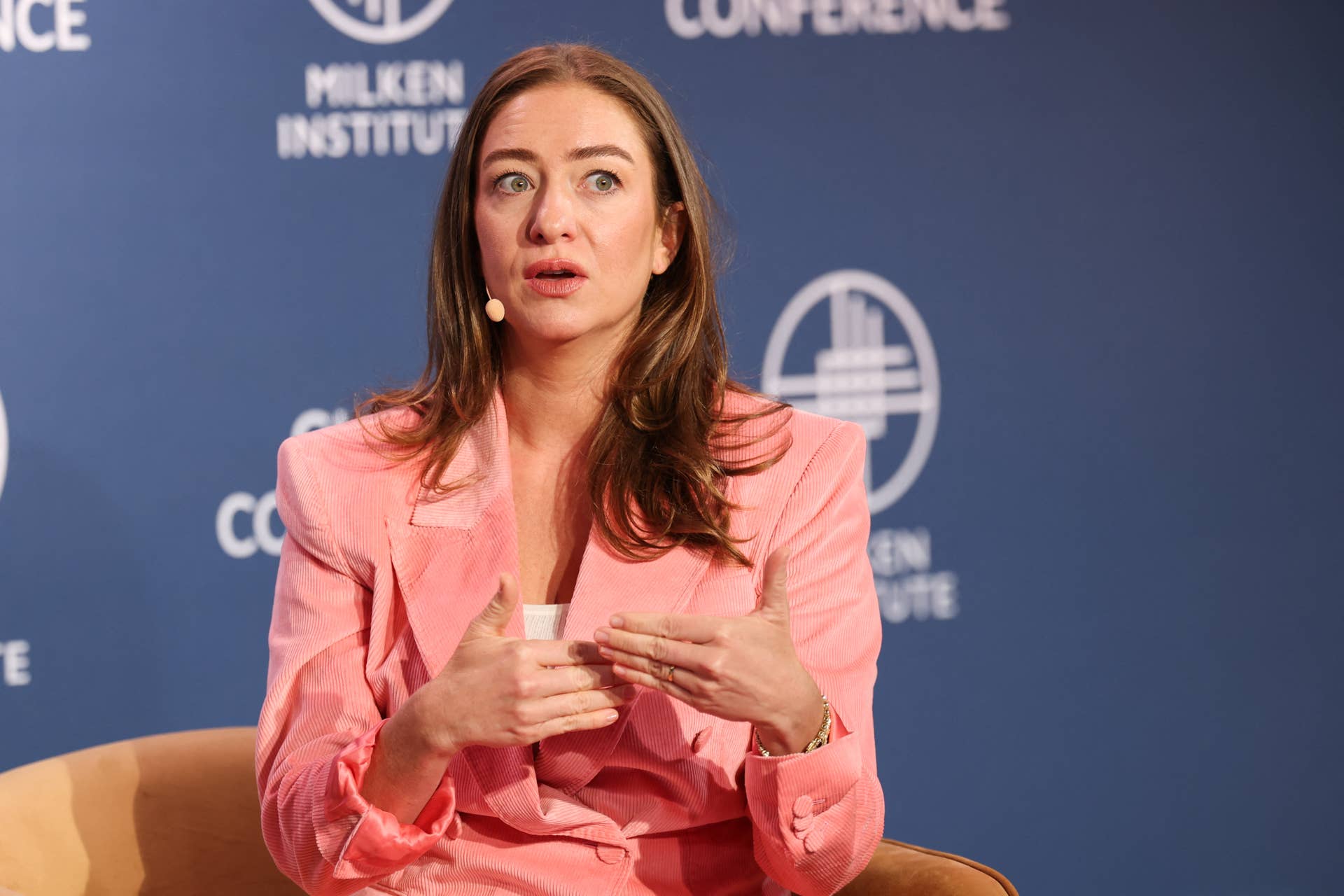 Bumble’s $1.3 billion exit comes with a surprising premium
PATRICK T. FALLON / Getty Images
Bumble now gets to attempt its turnaround in private
Going private gives Bumble something public companies rarely get: more room to rebuild without every quarter becoming a referendum on the strategy.
Ithaca co-founders Ravi Gupta and John Hegeman will become co-CEOs of Bumble after the transaction closes, while Wolfe Herd will remain involved with the company. Bumble said Ithaca plans to apply advanced technology to established businesses and accelerate their growth.
It must demonstrate that its product can keep customers engaged long enough to sustain the company over the long term.
According to M Science analyst Chandler Willison, who was quoted by Reuters, Bumble’s niche has shrunk as Hinge gained traction among more deliberate daters and as Bumble underwent management, brand, and strategy changes.
Fixing a single feature is not as difficult as that.
Bumble was founded on a unique concept in online dating: women initiating contact. However, as the business changed that experience and rivals became more formidable, it became harder to distinguish itself.
Ithaca has the opportunity to reconstruct its identity without the pressure of the public market thanks to the $1.3 billion transaction.
The immediate result seems favorable to present stockholders.
The path from $14 billion to $1.3 billion conveys the more significant tale for investors with longer time horizons.
There were plenty of individuals searching for connections on Bumble.
It lost public-market confidence in its ability to turn that demand into sustainable growth.
Related: Bumble makes harsh decision amid shift in customer behavior
