
Grudges in business rarely end with an apology. They end when both sides need something the other one has.
You’ve probably seen it at work. The coworker you avoided for years becomes your closest ally the week a big project lands on both your desks. Nobody admits the feud is over, but the emails get friendlier.
Silicon Valley works the same way, only the stakes run into the trillions. For most of the past decade, two of the biggest companies in your retirement account treated each other like neighbors arguing over a fence line.
One sold you hardware and promised privacy. The other gave you free apps and paid the bills with ads built on your data. Their bosses traded shots in interviews, and one software update turned the spat into a multibillion-dollar fight.
If you own an S&P 500 index fund, you own a slice of both. So when they shake hands, it’s worth asking who gets the better end of the deal.
That fence just came down a little. On Thursday, Oct. 15, Meta Platforms (META) chief executive officer Mark Zuckerberg publicly thanked Apple (AAPL) CEO John Ternus for helping Meta’s newest artificial intelligence (AI) model run on Apple’s desktop computers.
The model “runs great on new Mac Studios thanks to work with @johnternus and Apple,” Zuckerberg wrote, according to CNBC.
Ternus answered in kind. “Amazing to run a model of Muse Spark Open’s caliber and scale this efficiently, right from your desk,” he replied on X.
How the Cook-Zuckerberg feud cost billions
The handshake matters because of how ugly the history got. The two companies hadn’t publicly partnered since around 2017, CNBC reported.
When I lined up the key dates, one pattern jumped out. Nearly every flare-up hit somebody’s wallet.
- March 2018: Asked what he’d do in Zuckerberg’s place during the Cambridge Analytica scandal, Tim Cook said he “wouldn’t be in this situation,” reported Bloomberg.
- April 2018: Zuckerberg called that line of criticism “extremely glib,” reported Axios.
- February 2022: Meta said Apple’s App Tracking Transparency rules would cut its 2022 sales by about $10 billion, reported CNBC.
- Sept. 1, 2026: Ternus took over as CEO, with Cook moving to executive chairman, according to Apple.
- Oct. 15, 2026: Meta released Muse Spark Open, optimized for Apple’s M5 Ultra chip, according to Meta.
Hold on to that $10 billion figure. It comes back later.
Cook is still Apple’s executive chairman. But the person running the company day to day is a career hardware engineer, and hardware engineers love a good demo.
 Meta releases an open AI model built to run on Apple’s Mac Studio.
Smith Collection/Gado / Getty Images
What Ternus and Meta built on the Mac Studio
Strip away the drama and the deal is simple. Meta released downloadable weights for an 816-billion-parameter model that developers can run on two to four linked Mac Studio machines, CNBC reported.
Only about 42 billion of those parameters work on any given word, which is why the model fits on a desk at all. Two Mac Studios “behave like one supercomputer with a terabyte of unified memory,” according to Meta.
Meta’s AI chief, Alexandr Wang, said the companies had worked together for months, with former Apple executive Daniel Gross playing a key role, CNBC reported. Neither side disclosed financial terms, and both declined to say whether more joint work is coming.
More Tech Stocks:
- Micron stock tumbles despite analyst calls semiconductor selloff overblown
- Elon Musk doubles down on his Micron bet
- Dell leads CIO spending plans as hardware prices jump
Now the price tag. A Mac Studio with the M5 Ultra chip and 256 GB of memory starts at $10,799, according to CNBC. My math puts the minimum two-machine setup at $21,598 before any upgrades, and a four-machine rig at $43,196.
I ran that against Meta’s own spending to see how wide the gap really is. Meta poured $30.12 billion into capital expenditures in its second quarter alone, reported 24/7 Wall St. That’s enough to buy roughly 2.8 million of those $10,799 machines.
That contrast is Apple’s whole pitch. Meta spends like a utility building power plants. Apple sells you the box on your desk and lets you skip the cloud bill.
Why Wall Street still sees Muse as a services threat
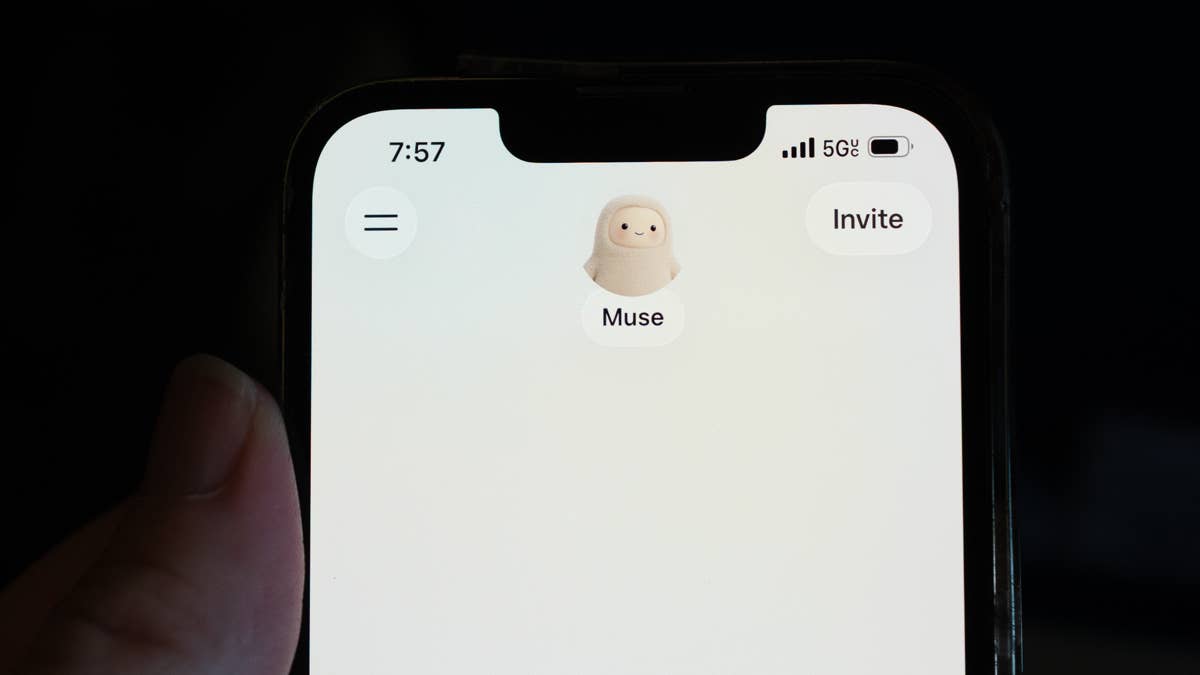
Here’s the part the friendly posts skip. Meta’s consumer AI agent, also called Muse, runs on the same Muse Spark model family, and analysts have treated it as a risk to Apple’s most profitable business.
Bank of America analyst Wamsi Mohan warned on Sept. 29 that agents like Muse could capture shopping, referrals and payments that now flow through Apple’s ecosystem, reported 9to5Mac.
“Whomever the agent chooses becomes the merchant,” Mohan wrote, according to the outlet. Apple shares fell more than 2.5% that day, though the bank kept its buy rating.
Remember that $10 billion? Apple’s privacy rules once took roughly that much out of Meta’s sales in a single year.
My read is that Meta now owns a product that could, in theory, return the favor through the App Store, and Apple just helped show off its sibling model.
So why would Ternus sign up? Developers building AI tools need serious local hardware, and Apple sells some of the best. Every engineer who buys two Mac Studios to test Meta’s model is a sale Apple books today, whatever happens to App Store fees later.
Your portfolio’s stake in an unlikely AI alliance
Neither stock flinched. Apple slipped 0.28% to $342.00 on Oct. 15, and Meta dipped 0.11% to $736.72, reported 24/7 Wall St.
That calm makes sense. A day earlier, Apple closed above $5 trillion in market value for the first time, reported 9to5Mac. A desktop AI deal won’t move a company that size.
What could move it is whether AI agents start skimming the App Store. If you hold Apple directly or through an index fund, watch services growth in the next earnings report more closely than any partnership headline.
If you hold Meta, the question is different. Can open models build a developer following that pays off before that capital spending bill comes due?
The lesson here travels well beyond Cupertino. Rivals make peace when the next fight looks bigger than the last one, and the next fight is over who owns the AI assistant in your pocket.
Apple and Meta have decided it’s easier to share a desk for now. Just don’t mistake a handshake for a truce.
Related: Zuckerberg says Meta’s AI bet only fails if all AI fails
