
South Korea’s finance minister thinks the chip boom will outlast last week’s selloff. Lee Hyoung-il told CNBC on Saturday, October 17, 2026, that it can run at least through 2027.
He spoke on the sidelines of the IMF and World Bank annual meetings in Bangkok. His reason: “the gap between demand and supply for semiconductors is still very wide.”
The timing took some nerve. Shares of SK Hynix Inc. (SKHY) fell about 10% in Seoul on Tuesday, October 13, Korea JoongAng Daily reported.
Fears of rate hikes and Chinese competition drove that selloff, Seeking Alpha noted. Korea JoongAng Daily tied the rate worries to U.S. inflation data due before the Federal Reserve’s October meeting.
Lee’s case rests on a real shortage. Data centers built for chatbots and other AI tools have soaked up much of the world’s memory, Reuters reported. Chipmakers now favor those bigger spenders over phone and laptop makers, the report added.
Reuters counts SK Hynix and Samsung Electronics Co. (SSNLF) among the three biggest suppliers and their windfall now flows into Seoul’s treasury. This helps explain why the country’s finance minister sounds like a chip bull.
Also read: Chip toolmakers can’t catch a break, even as TSMC spends more
Seoul’s budget now rides on two chipmakers
Together, Samsung and SK Hynix make up about half of the Kospi, South Korea’s main stock index, Seeking Alpha reported. Lee acknowledged that heavy weighting has made the market swing harder this year.
The index shows how hard. It topped 9,000 in June, then briefly sank to its lowest level since late July on October 13, AP reported.
More importantly, the two companies’ profits now prop up the government’s budget.
Samsung expects about 107.4 trillion won ($80 billion) in third-quarter operating profit, according to its earnings guidance.
That is nearly nine times last year’s third quarter, the same release shows. Profits like these turn into corporate tax bills a few months later.
As a result, Seoul now expects record tax revenue this year. Lee told CNBC the chip boom will leave the country in a stronger fiscal position.
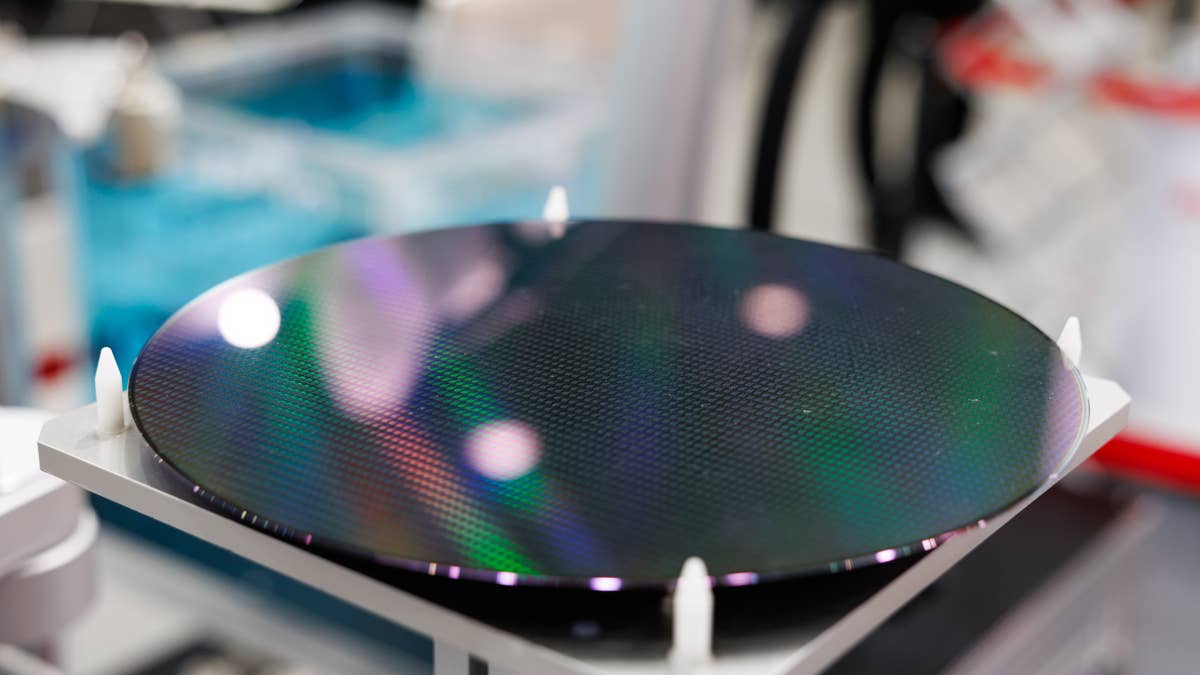 Samsung Electronics and SK Hynix account for about half of South Korea’s Kospi index, and their profits are driving record tax revenue in Seoul.
The 2027 forecast lines up with Seoul’s tax calendar
That fiscal boost arrives on a delay. Korean companies pay corporate tax in two installments, in March and August, Kyunghyang Shinmun explained in August.
Tax collected in 2027 will therefore reflect chip profits from late 2026 through the middle of 2027. The paper also reported that Seoul’s 2027 budget counts on about 580 trillion won ($430 billion) in tax revenue.
That makes Lee’s timeline convenient for his budget. To be fair, Samsung and SK Hynix themselves expect memory demand to stay solid through 2027. Still, I would treat his forecast as much a policy view as a market call.
Korea has lived through the reverse. National tax revenue fell in both 2023 and 2024, Kyunghyang reported. The same lag helps explain why 2024 stayed weak, since those bills still reflected the 2023 chip slump.
Lee’s own reasoning holds the biggest risk
That history is why one part of Lee’s answer deserves a second look. He said supply is still being expanded. I would watch that line closely, since every new factory that eases the shortage trims the windfall.
Meanwhile, China is adding pressure. ChangXin Memory Technologies, known as CXMT, said it had made progress on a denser memory design, CNBC reported. CXMT has not yet reached mass production, and its yields remain unproven.
Even Korean commentators are bracing for that turn. CNBC highlighted a Maeil Business Newspaper column urging Seoul to prepare, since new capacity could make memory cutthroat by 2029.
More Artificial Intelligence:
- AI’s biggest business opportunity may not look like AI
- AI racks are outgrowing old power: 2 chipmakers have a strategy
- BofA splits software into winners and losers as AI agents arrive
Korea’s chip windfall is America’s gadget bill
While Seoul cashes in on chip taxes, American shoppers help foot the bill. If Lee is right, that won’t change soon. A wide gap between demand and supply keeps memory scarce, and scarce memory keeps devices expensive.
Gartner’s February forecast has PC prices rising about 17% this year from 2025 levels as memory costs soar. It also expects new PCs under $500 to disappear by 2028. That matches what I found over the weekend on pricier memory cards and phones, where relief keeps slipping further out.
For investors, this is no longer a faraway story. SK Hynix began trading on Nasdaq on Friday, July 10, 2026. Its $26.5 billion share sale set a U.S. record for a foreign company, Quartz reported.
Anyone holding those shares now rides Korea’s swings. Even Korea’s top financial regulator said in June that he regretted letting leveraged funds on single-chip stocks launch, Fortune reported.
Oil exporters learned this lesson decades ago. A budget built on one commodity looks brilliant at the top of the cycle and painful at the bottom.
Officials in Seoul have floated a wealth fund for the windfall modeled on Norway’s oil fund, the Korea Herald reported. Whether Seoul saves or spends that money matters most in 2028. That is when its tax bills start reflecting whatever follows the shortage.
