
I’ve always seen pickup trucks as more than just vehicles. For people who run small businesses, especially in construction, farming, or landscaping, a truck is a tool that helps put food on the table.
But I often wonder how much longer these vehicles can remain affordable for the people who depend on them. And looking at General Motors’ latest numbers, I think they’re expensive now.
GM’s average transaction price climbed above $52,000 in the third quarter of 2026, up from $50,500 a year earlier, CFO Paul Jacobson’s said in an Oct. 20 appearance on CNBC.
I think that’s not a small jump for someone buying a truck to make a living. Yes, the vehicles may be getting better, but they’re also becoming harder to justify financially.
That tension between a company that is genuinely executing well financially and customers feeling the pressure of higher prices ran through GM’s entire Q3 2026 earnings presentation.
In fact, the company beat on both revenue and earnings. But the stock fell 8% anyway, as of the afternoon of Oct. 20.
That drop has pushed General Motors Company (GM) stock down over 4.5% year to date, according to Yahoo Finance, and a one-year return is fairly strong at 34%.
Also Read: GM wants drivers to be able to text and drive
The $20 billion move and what it says about where GM thinks its stock is valued
The headline from the Oct. 20 earnings was not even the beat but the buyback. GM’s board approved a new $20 billion multi-year share repurchase authorization after completion of an earlier $6 billion program, according to GM’s Q3 earnings announcement.
The new program has no expiration date. Jacobson had a few words to say about the logic in his CNBC interview.
We have one of the lowest price-to-earnings multiples on the street and a double-digit free cash flow yield. We know that buying back shares is a really strong investment for our shareholders.
The CFO is simply saying that his GE stock is cheap. GM’s forward P/E ratio on Macrotrends read 6.67 as of Oct. 20, 2026. According to a report by TheStreet’s Tony Owusu, BNP Paribas analysts viewed General Motors’ stock drop after the Q3 earnings as a buying opportunity.
The numbers behind the claim are solid. GM has reduced its fully diluted share count by 37% over the past three years, repurchasing an average of $7.5 billion annually over four years.
As of Sept. 30, GM had 849 million shares outstanding, down from 995 million at the end of 2024 and 1.2 billion at the end of 2023, according to GM’s earnings release.
The capital allocation framework Jacobson described is to invest in the business first ($10 billion to $12 billion this year), protect the balance sheet second, then return capital. “This is a cyclical industry,” he noted, and the balance sheet protection reflects hard-won lessons from 2008.
The GM earnings that funded the announcement
Q3 2026 revenue was $50.02 billion, up 2.9% year over year and beating consensus expectations of $48.21 billion, according to the GM’s earnings release.
Adjusted EPS was $3.70, up 32.2% year over year. Adjusted EBIT was $4.11 billion with an 8.2% margin. Global wholesale volume reached 1.03 million vehicles.
More Automotive:
- Tesla rival appears to have a demand problem
- Cars are getting older: AutoZone earnings reveal how drivers cope
- Volkswagen’s newest EV runs Chinese chips and starts near $19,000
Full-year adjusted EPS guidance was narrowed to $12.75 to $13.75, up from an earlier range of $12.00 to $14.00 — the second guidance raise of the year, according to Jacobson.
That brings me back to my earlier concern about affordability. Interestingly, Jacobson said Q3 pricing was flat to slightly lower year over year, with a $200 million decline.
Higher average transaction prices instead reflected a shift toward more expensive trucks and fewer heavily incentivized EVs following the expiration of consumer tax credits.
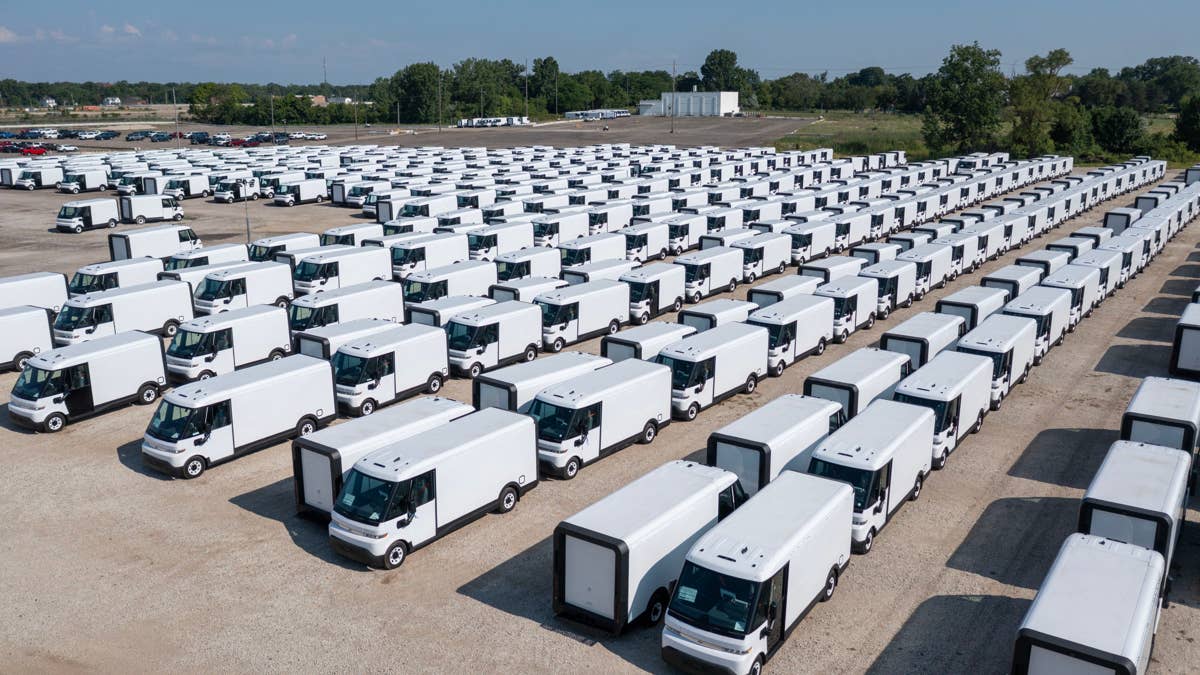 GM plans to cut fourth-quarter pickup truck production by roughly 37,000 wholesale units as plants shut down and reopen to prepare for redesigned 2027 models.
The hybrid gap GM investors are watching and the Q4 headwinds that spooked them
The 8% stock drop on a beat quarter came from two specific concerns Jacobson addressed.
First, GM plans to cut fourth-quarter pickup truck production by roughly 37,000 wholesale units as plants shut down and reopen to prepare for redesigned 2027 models, he told CNBC. The redesigned full-size trucks represent a major product cycle, but the changeover creates an inevitable sequential earnings step-down.
Second, commodity and logistics inflation has added approximately $400 million in pressure over the last two months of the quarter, with full-year headwinds now projected at $1 billion to $1.5 billion from higher steel, aluminum, and logistics costs.
“The team is digesting it,” Jacobson said, noting that GM held its full-year guidance despite that new pressure.
Another key issue CNBC’s Phil LeBeau pressed Jacobson on was hybrids, which now account for nearly 20% of the U.S. market, while GM has just one offering.
Jacobson acknowledged the success of rival hybrid manufacturers and said hybrids “are coming” to GM, but gave no specific timeline. “We understand how hybrids are growing, and we’re continuing to adapt,” he said.
For buyers who depend on affordable, fuel-efficient trucks to make a living, GM’s next move may matter more than its buyback. For investors, both affordability and shareholder returns deserve attention.
