
Most contractors stop work when a customer’s funding runs dry. Lockheed Martin Corp. (LMT) has kept building the F-35 anyway, and it said so in its third-quarter report on Oct. 22.
Lockheed’s costs on Lot 20, the next batch of F-35 jets, outran the government’s authorized funding during the quarter, according to its earnings release.
Lot 20 runs on an early-funding contract that lets work start before the full deal is signed. In plain terms, Lockheed is paying out of pocket for jets Washington hasn’t signed for.
The company warned that its results and cash flow will suffer without more funding. That warning sat below the guidance table in a release packed with good news. I’d put it near the top.
The good news was real. Sales rose 11% to $20.7 billion, according to the release, and Lockheed raised its full-year outlook for the second straight quarter.
Also read: Lockheed bets on ‘revolutionary’ Patriot to stop faster missiles
The F-35 has a 10-year path but no Lot 20 contract
The timing makes the gap stranger. On the earnings call, CEO Jim Taiclet said that a multiyear framework the Pentagon announced that morning sets a path to 850 U.S. jets over 10 years.
Yet the Lot 20 contract remains unsigned. Chief Financial Officer Evan Scott said a deal this year would be upside, but it “is not counted on in our guide.”
Investor relations head Mark Kvasnak said Lockheed pushed its assumption for the next F-35 award into 2027. To me, that is the real tell: Lockheed now plans to carry the gap through year-end.
The strain already shows. Contract assets track work Lockheed has done but cannot yet bill. They rose to $16.9 billion from $13 billion at the end of 2025, according to the release. Not all of it is F-35 work, but it is cash still waiting to be collected.
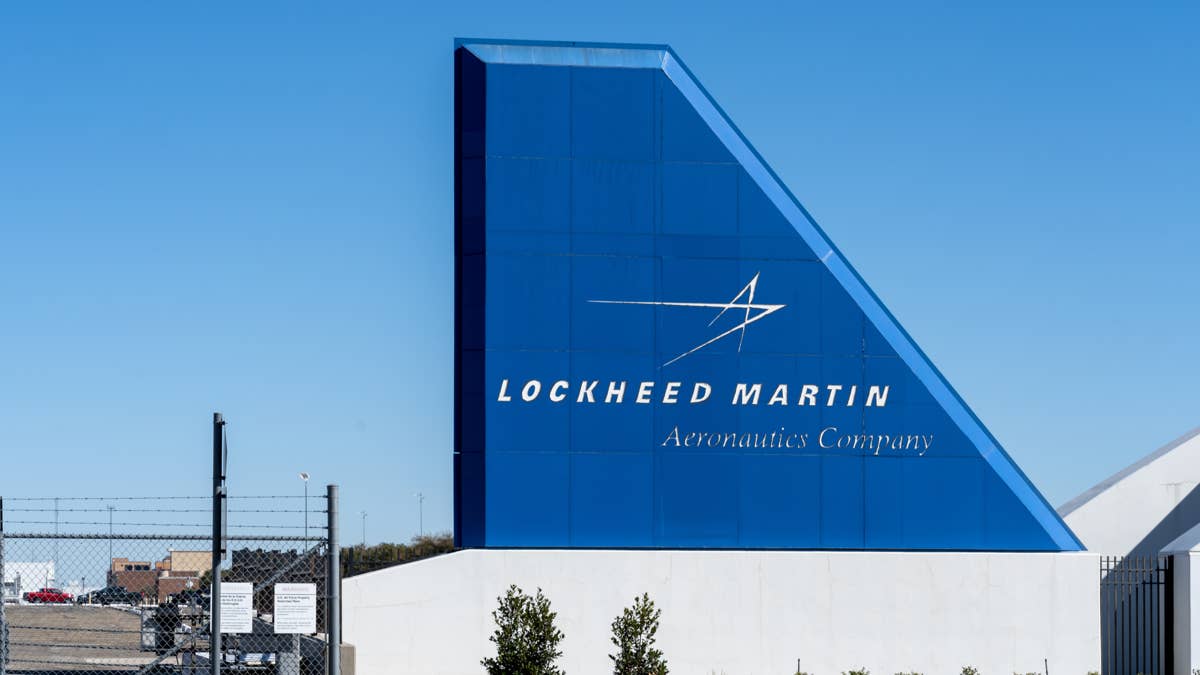 Lockheed Martin said its F-35 Lot 20 costs ran past government funding in the third quarter, leaving the defense giant to cover the gap for now.
Lockheed’s missile deals are built to protect its cash
The squeeze looks sharper next to Lockheed’s missile business. Missiles and Fire Control backlog has roughly tripled since the end of 2025 to $142.5 billion, according to the release.
That unit now holds about half of Lockheed’s record $292 billion backlog. Aeronautics, home of the F-35, saw its backlog shrink slightly. Growth is moving from jets to missiles, a shift UBS flagged last month.
Funding is the bigger difference. Scott said the government keeps Lockheed cash neutral while it ramps production under the missile frameworks, which are still being finalized. The F-35 has no such cushion today. Lockheed’s newest growth engine protects its cash, while its best-known program asks it to front money.
Lockheed stock rallied past analysts’ latest targets
Investors cared more about the beat. Lockheed shares rose nearly 7% on the day of the report. They still sit about 15% below the 52-week high of $692. The 52-week low is $437.25, a wide range for a defense blue chip.
The valuation looks fair, not cheap. Lockheed trades at nearly 19 times forward earnings. That sits below its trailing multiple of about 21, so analysts expect profits to grow.
The 23 analysts tracked by StockAnalysis rate the stock a Buy on average, with a mean target of $618.86. That implies only about 5% upside after the rally. The latest calls, all made before the report, leaned cautious:
- Hold from RBC Capital’s Kenneth Herbert, target cut to $550 from $600, Oct. 16
- Hold from Bernstein’s Douglas Harned, target cut to $564 from $629, Oct. 14
- Buy from Vertical Research’s Robert Stallard, an upgrade, Oct. 14
- Sell from Goldman Sachs’ Noah Poponak, target cut to $486 from $503, Oct. 12
- Hold from TD Cowen’s Gautam Khanna, target cut to $570 from $600, Oct. 9
The rally carried the stock past all four of those targets. Analysts must now chase the shares higher or argue they ran too far.
Shareholders are getting less back, too.
Lockheed bought back no stock in the first nine months of 2026, versus $2.25 billion a year earlier, the release indicated. Its risk language names presidential executive orders as a factor in buybacks, after a January order targeted defense contractor payouts.
More Defense stocks:
- UBS sees a structural shift building at Lockheed Martin
- Boeing lands key role in future of U.S. air power
- Two defense stocks just got a multiyear vote of confidence
Defense contractors are carrying more of Washington’s risk
Lockheed isn’t alone. RTX Corp. (RTX) and Northrop Grumman Corp. (NOC) also raised their forecasts the same week, according to Reuters.
The pattern matters more than any single beat. Washington wants faster production, smaller payouts, and contractors willing to spend before deals are final. Lockheed’s disclosure shows what that looks like on a balance sheet.
I’d watch cash more closely than backlog from here. The first number to check is free cash flow, the cash left after capital spending. Lockheed now expects $7.8 billion to $8 billion for 2026, the release confirmed. Falling short would show the F-35 gap starting to bite.
If Lot 20 is still unsigned at the fourth-quarter report, investors will learn how long Lockheed can fund its flagship jet alone. In this defense boom, winning orders may prove easier than getting paid on time.
