
Mark Cuban has seen a tech mania up close before, and he thinks he is watching another one. The billionaire investor now says the artificial intelligence boom has the makings of a bubble, and he wants investors to keep some powder dry.
His warning lands at a shaky moment for AI stocks. Tech shares slid on October 22 as fears grew that the AI investment boom may have peaked. Shares of the biggest AI names have swung sharply this month. For anyone riding the rally, Cuban’s message is simple, even if acting on it is not.
Cuban says AI data centres could become “pickleball courts”
Cuban first raised eyebrows in July with a joke that stuck. Speaking on the “All-In” podcast, he said AI would likely get cheaper and more power-efficient, and that many of today’s data centres could one day be turned into “pickleball courts,” as reported by 247 Wall St. He compared it to the fibre boom, when networks got so fast there “wasn’t a bandwidth problem anymore.”
Also read: Michael Burry doubles down on his stock market bet
He came back to that idea in a recent interview on “The Diary of a CEO” podcast with Steven Bartlett. Cuban said the pickleball line was a metaphor for infrastructure that could lose its usefulness as the technology becomes more efficient. His advice for investors watching AI stocks climb was blunt: “Just be patient.”
That patience comes with a plan. Cuban said people can put some money into the market but should also “have some cash” ready for when conditions turn, and he admitted he is holding back on some of his own investments while he waits to see what happens. In other words, he is not calling for anyone to sell everything, just to avoid going all in.
Cuban has been sounding this note for months. In July, he warned that committing tens of billions to facilities built to run for a decade or two amounts to “planning for perfection.” He also said the people most exposed were venture capital and private equity firms that had gone all in on AI.
Why Cuban thinks the market has gotten ahead of itself
Cuban knows how these stories can end. He sold Broadcast.com to Yahoo for $5.7 billion in 1999, about eight months before the Nasdaq peaked, according to CNBC. He told host Steven Bartlett that today’s market reminds him of that era, though he sees some key differences.
His biggest complaint is how stocks are being traded. Cuban argued that investors buy and sell based on anticipated news and on what someone else might pay, not on what the underlying business is worth. That kind of trading can send shares soaring or sinking after fairly small developments.
“We’re in a bubble,” Cuban said, while adding that he has no idea what will make it burst. That honesty matters. Plenty of investors have spotted bubbles early and still lost money waiting for a crash that took years to arrive.
He has pointed to specific weak spots, too. In July, Cuban said Nvidia’s role in funding customers’ chip purchases was “so analogous to the dot-com burst,” warning that one breakthrough by a rival chipmaker or one misstep “and it all could crumble.”
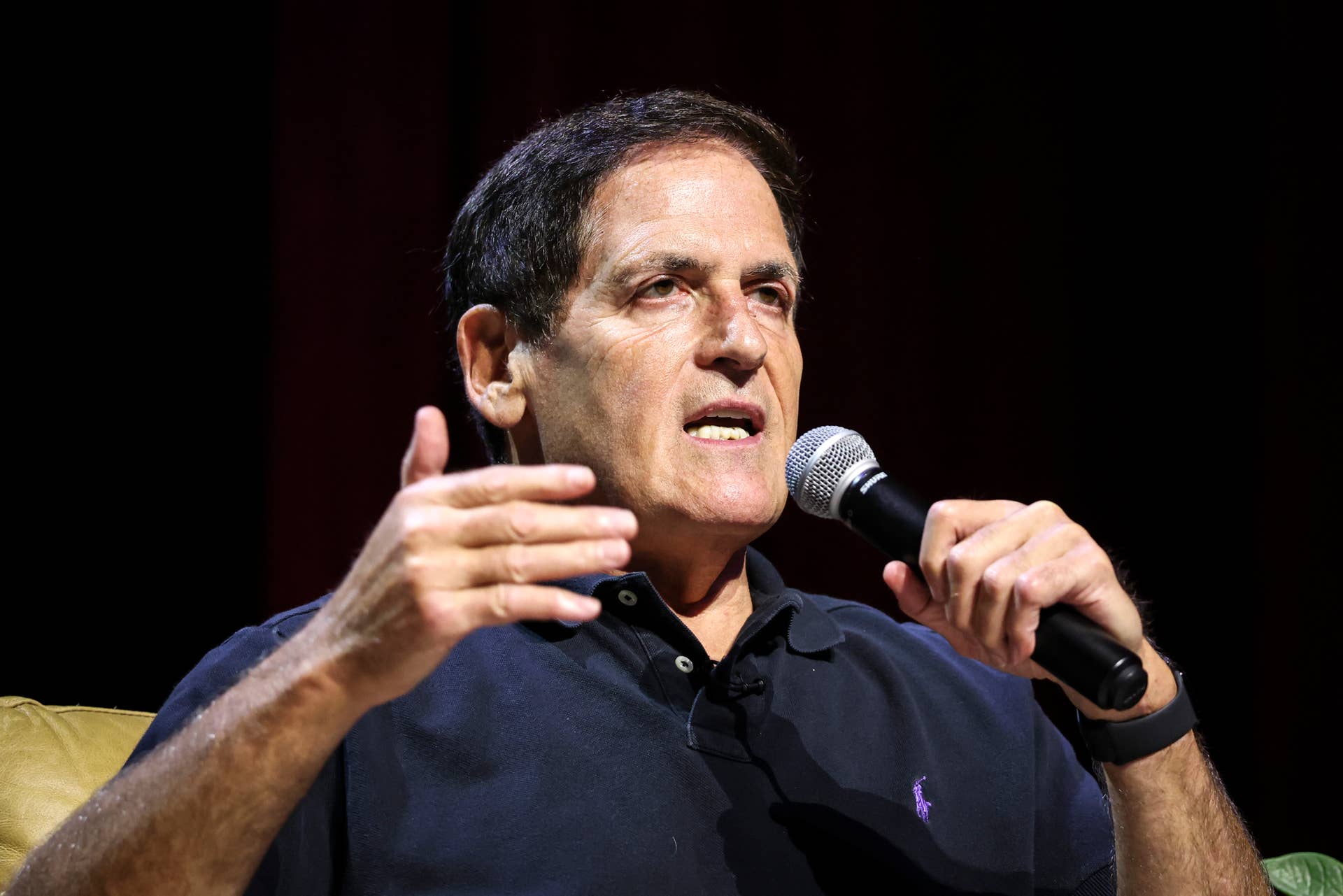 Mark Cuban has seen a tech mania up close before, and he thinks he is watching another one.
The Dallas Morning News/Hearst Newspapers / Getty Images
Debt is piling up behind the AI build-out
Cuban’s worries go beyond stock prices. Big Tech is pouring money into data centres and leaning harder on debt markets to pay for it. Amazon, Alphabet, Meta and Oracle issued about $194 billion of bonds in 2026 through July 7, up from roughly $108 billion in all of 2025, according to Reuters. Goldman Sachs expects the five biggest hyperscalers, including Microsoft, to issue roughly $400 billion in bonds in 2027.
That borrowing is starting to worry Wall Street. The median spread on hyperscaler bonds maturing in more than 20 years has already widened, raising the cost of future debt and adding a new layer of risk to the AI build-out.
More Mark Cuban:
- Mark Cuban sees a new way to compete with China
- Mark Cuban exposes a problem with how Meta and Google fund AI
- Mark Cuban says the ‘one thing in life you can control’ gives you a huge advantage
Investors have already had a taste of that stress. AI and semiconductor stocks were on course to shed more than $1 trillion in combined value in one week in mid-October as rate-hike fears and worries about AI financing hit sentiment, according to TheStreet.
Still, Cuban is not anti-AI. He calls himself a fan of the technology and pointed to Amazon, which survived the dot-com crash and went on to become enormously valuable. The hard part, he said, is knowing which AI companies will end up as winners.
What everyday investors can take from it
Most households cannot sit on a billionaire’s cash pile, but the idea behind Cuban’s advice still works on a smaller scale. A more practical first step is deciding how much money you need for emergencies and near-term bills, since moving too much of a portfolio into cash while waiting for a downturn can mean missing out on gains. Having that money set aside can keep you from leaning on high-interest debt or selling investments when prices are down.
Plenty of Americans are still short on that cushion. Only 63% of adults said they would cover a $400 emergency expense with cash or its equivalent in 2025, unchanged from the year before, according to the Federal Reserve.
Beyond that, it may be worth checking how much of a 401(k) rides on the same few tech giants, since several funds can hold many of the same stocks. Cuban expects the AI story to produce big winners, just as the dot-com era did. His warning is that nobody, including him, knows exactly which ones, so it pays to stay patient, keep some flexibility and avoid betting the whole nest egg on one corner of the market.
