
T-Mobile has been contemplating a billion-dollar merger that would have made it the world’s largest telecom company; however, these plans have reportedly faltered.
The carrier has already made several notable mergers and acquisitions in recent years to gain a competitive edge in the telecom market.
In 2020, it merged with Sprint in a $26 billion deal. Four years later, T-Mobile paid up to $1.35 billion to acquire Ka’ena Corporation, the parent company of mobile virtual network operators (MVNOs) Mint Mobile, Ultra Mobile, and Plum.
More recently, T-Mobile acquired US Cellular’s wireless operations for $4.3 billion in August 2025.
T-Mobile-Deutsche Telekom merger gets shelved
T-Mobile was reportedly considering a merger with its parent company, Deutsche Telekom, over the past few months, but the deal has stalled, according to a recent Bloomberg report.
Deutsche Telekom has paused plans to submit a formal bid to merge with T-Mobile, partially due to opposition from its works council. However, Deutsche Telekom could still opt to move forward with an offer at a later date.
T-Mobile has a market value of about $157 billion after its shares declined by almost 30% this year. Deutsche Telekom has a market cap of about €122.93 billion (or $137.21 billion).
Read more: T-Mobile and Verizon face a new broadband rival
Currently, Deutsche Telekom holds a stake of more than 50% in T-Mobile, and a full merger, which is valued at $300 billion, would have created the world’s biggest telecom operator. It also would be the largest public merger ever.
The pause in the potential merger comes after the move reportedly drew criticism from activist investor Elliott Investment Management, which holds a stake in Deutsche Telekom, according to a Reuters report in September.
The group reportedly urged Deutsche Telekom to drop its plans to merge with T-Mobile and instead focus on shareholder returns.
It is no surprise that both companies were considering a merger, as more telecom operators across the U.S. have recently been joining forces.
A report from consulting firm PwC in June found that 58 U.S. telecom deals were completed through the first and second quarters of 2026.
PwC attributed the heightened deal activity to growing consolidation among fiber operators, increased bundling of wireless and broadband services from telecom providers, and rising demand for high-capacity networks capable of handling artificial intelligence workloads.
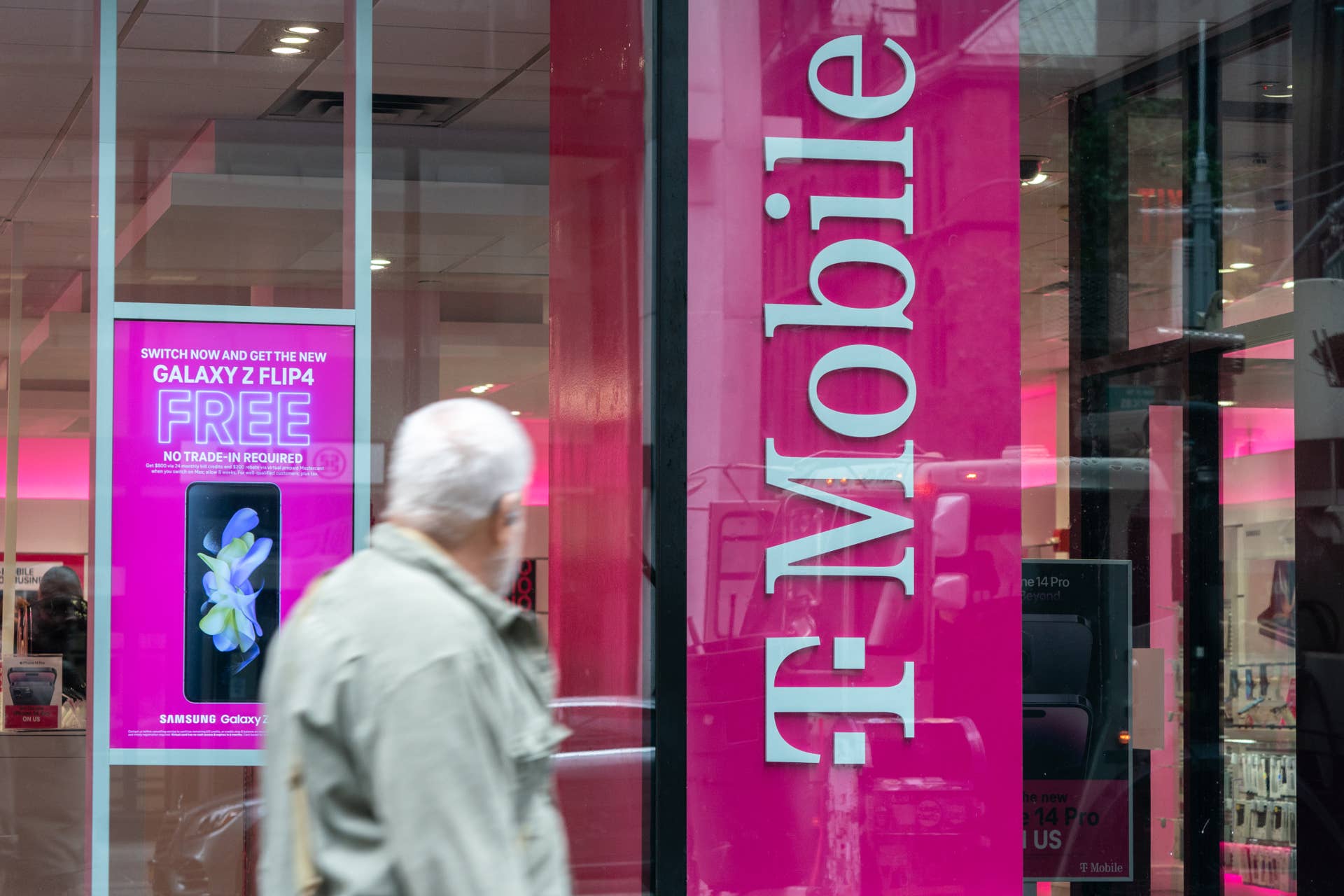 A proposed merger between T-Mobile and Deutsche Telekom has stalled.
Former T-Mobile CEO prepares to leave the company
As the potential Deutsche Telekom-T-Mobile merger hits a snag, T-Mobile is continuing to make significant executive leadership changes.
According to an Oct. 26 SEC filing, former T-Mobile CEO Mike Sievert is resigning from the company’s board of directors as vice chair and as a member.
The change takes effect on Nov. 1, as previously planned when he joined the board. The filing states that the “resignation is not the result of any disagreement with the company on any matter relating to its operations, policies or practices.”
Sievert joined T-Mobile in 2012 and became vice chair of the company’s board in November 2025 after resigning as CEO that same month. He first became CEO of T-Mobile in April 2020, and Srini Gopalan took over the position on Nov. 1, 2025.
More T-Mobile News:
- T-Mobile raises another fee customers pay each month
- T-Mobile quietly plans new perks to keep customers from switching
- T-Mobile adds monthly fee to a new iPhone feature for customers
Sievert’s resignation from the board follows several notable departures from T-Mobile’s top leadership over the past year. For instance, Callie Field left her role as president of T-Mobile’s business group in September 2025 after 21 years with the company.
In July this year, Mike Katz departed as T-Mobile’s chief business and product officer after 28 years. He will remain with the company as a strategic advisor through December.
T-Mobile’s recent leadership shakeups and reported merger talks with Deutsche Telekom have previously sparked concern among analysts.
In August, Wolfe Research downgraded T-Mobile’s stock rating from outperform (indicating expected performance above the broader market) to peer perform (signaling expectations that the stock will perform in line with industry peers).
Wolfe Research analyst Peter Supino said in a note that his firm expects T-Mobile’s revenue growth to be hindered by increased competition and recent investments, according to an Investing.com report.
Related: T-Mobile reduces a generous discount as customers see prices rise
