
If you have $1 invested in an S&P 500 fund, a surprising amount of it may already ride on the artificial intelligence trade.
In State Street’s SPYM fund, Nvidia (NVDA), Microsoft (MSFT), Amazon (AMZN), Alphabet (GOOGL), Broadcom (AVGO), and Meta Platforms (META) together represented about 26% of the portfolio as of Oct. 29.
This implies that an investor does not need to purchase an AI stock intentionally to be concerned about its future.
Tom Lee thinks the latest sell-off may be approaching an important turning point. The Fundstrat co-founder said on Nov. 2 that he believes AI stocks are at or close to a bottom after a painful October for technology shares.
This means it’s difficult for regular investors to make a decision.
If Lee is correct, selling technology exposure during the downturn may entail leaving immediately before a recovery. Retirement portfolios that are already highly exposed to megacap technologies may suffer more if he is wrong.
It goes beyond just asking whether Nvidia has reached its lowest point.
After most of the harm has already been done, the question is whether investors are ready to sell.
Tom Lee says AI demand has not disappeared
Lee’s bullish argument starts with what he believes investors are getting wrong about the sell-off.
He does not see an AI industry that has built more computing capacity than customers need. “The market for AI is still very tight. It’s not an overcapacity market,” Lee said during a CNBC interview.
That difference is important.
Investors may see a far longer decline if AI businesses have already constructed too many data centers, purchased too many processors, and depleted consumer demand.
Lee instead argues that although demand remains strong, limits on how quickly infrastructure can be built are constraining growth. “I think we’re at the bottom,” he said.
It doesn’t guarantee that stocks will climb right away. And because investors can’t determine the extent of any declines, Lee himself cautioned that bottoms are risky.
Nvidia offers a helpful test to investors. It reported second-quarter fiscal 2027 data-center revenue of $89 billion, up 117% from a year earlier. The company expects third-quarter revenue of about $108 billion and reports results Nov. 17.
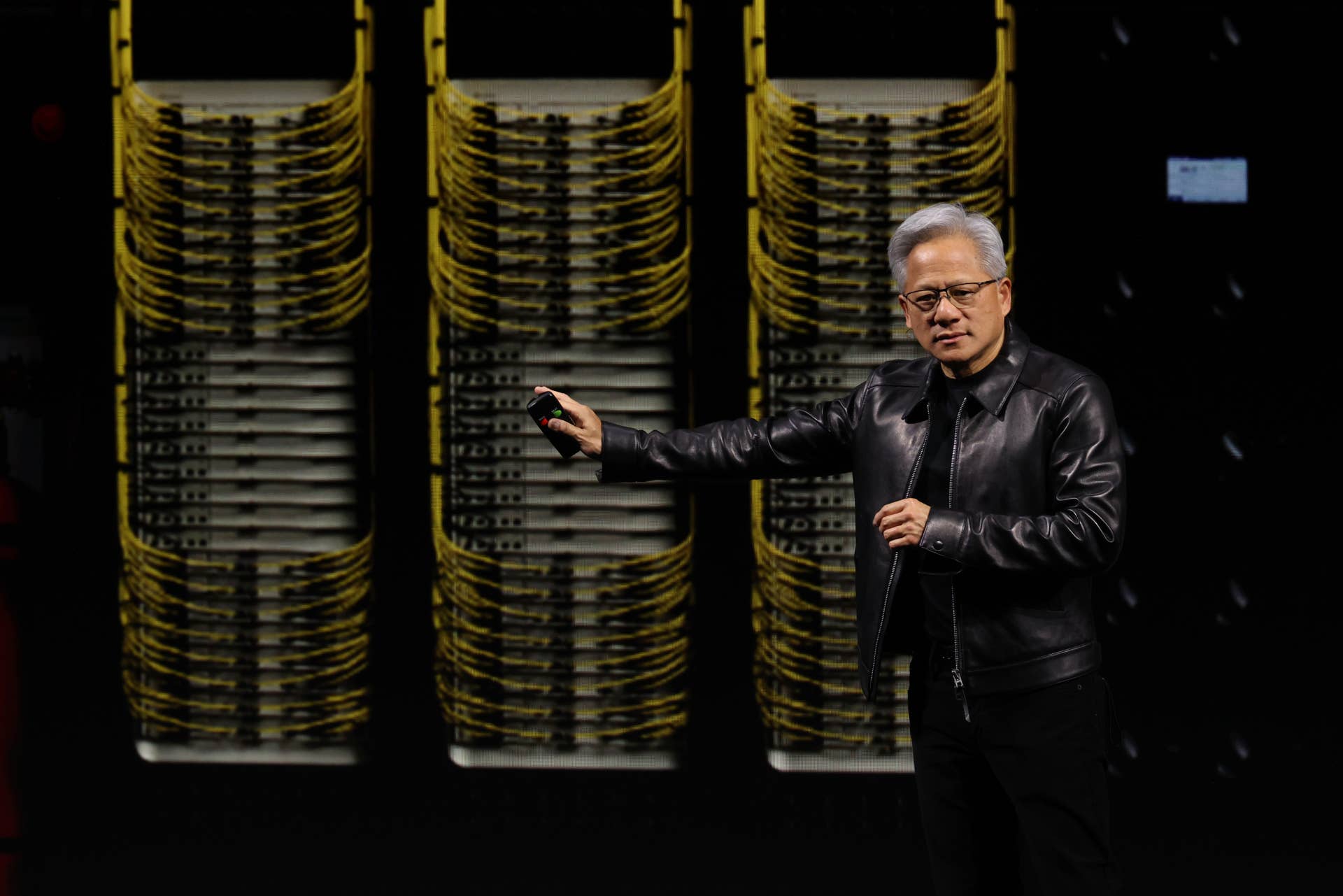 Nvidia CEO Jensen Huang speaks in front of server racks as investors weigh whether the AI sell-off is near a bottom.
Your retirement fund may already be an AI bet
The average investor’s exposure is larger than many may realize.
Nvidia made up 7.77% of State Street’s SPYM S&P 500 fund on Oct. 29. Microsoft had 5.91%, Amazon 3.59%, Alphabet’s two share classes 4.5%, Broadcom 2.47%, and Meta 2.07%.
Information technology represented 38.4% of the fund.
More Wall Street:
- Nvidia and Micron are about to lord their successes all over Wall Street
- Nvidia, Palantir, and Alphabet send waves through Wall Street
- Wall Street elites will pocket windfall from record $46 billion profits
For someone making automatic monthly contributions to a 401(k), IRA, or brokerage account, Lee’s bottom line is relevant.
Nvidia may not have been the investor’s first choice, since it was selected for them by the index. But as such businesses expand, they may have more influence on broad-market returns due to their rising market prices.
When they come together, an investor may find that what seemed to be a broad portfolio actually relied more on a small number of tech firms.
October was the weakest month for the Nasdaq-100 tracking QQQ fund since March 2025, with a roughly 7% decline.
That decline explains why the timing of Lee’s call matters.
Selling after the drop creates a different risk
Paying too much for technology stocks is a clear risk ahead of an AI sell-off.
Selling after prices have already dropped poses additional danger to investors after a significant downturn.
This does not imply that all investors need to purchase further Nvidia.
A person who is decades away from retirement could have a different perspective on volatility. When prices drop, that younger investor who keeps making regular payments may purchase additional shares.
If Lee is mistaken and another significant deterioration occurs, a person nearing retirement will have less time to recover.
Concentration is a typical problem. Before responding to the most recent market change, investors should be aware of how much of their purportedly diverse portfolio is already linked to the same AI firms.
Over the next weeks, it will be simpler to evaluate Lee’s theory. Nvidia’s Nov. 17 results will show whether extraordinary AI demand is still translating into extraordinary revenue.
Additionally, investors should keep an eye on whether Microsoft, Alphabet, Amazon, and Meta continue to spend heavily and if the revival of the stock market extends beyond a few megacap companies.
The latest sell-off may ultimately prove to be a reset in expectations if AI demand stays tight and profits continue to rise. Lee could have called it quits too soon if consumers begin to reduce their spending.
His call is important for everybody who has even $1 invested in the AI trade.
Related: Nvidia has a stake in SpaceX that came from an unexpected place
