
Bank of America raised its Supermicro price target to $39 from $38 after the AI server maker reported record quarterly revenue, but maintained its Underperform rating over concerns about future profit margins and cash flow.
Supermicro makes servers, rack systems, and cooling equipment used in AI data centers. Its fiscal first-quarter results, released Nov. 3, showed revenue surging 298% from a year earlier to $19.9 billion, and adjusted earnings climbed to $1.81 per share from $0.35.
The company raised its fiscal 2027 revenue outlook to $72 billion to $82 billion, from $65 billion to $72 billion. About $2.3 billion of first-quarter revenue came from deployments delayed from earlier periods, according to management.
BofA analyst Ruplu Bhattacharya increased his fiscal 2027 adjusted earnings estimate to $6.34 per share from $5.31, citing strong demand and an improved profitability outlook.
The bank’s $39 target represented about 24% upside from the $31.39 share price used in its report. But its underperform rating reflects that Supermicro’s relative attractiveness, compared with other hardware stocks, is below BofA’s coverage.
Supermicro (SMCI) shares fell about 3.76% to $30.21 in afternoon trading on Nov. 4, giving back an initial after-hours gain following the earnings release.
Why BofA questions Supermicro’s margin outlook
Supermicro’s adjusted gross margin exceeded its previous guidance in the fiscal first quarter, but declined sharply from the preceding quarter.
Also read: Warren Buffett shares a simple rule for surviving a market crash
The company’s reported margins and full-year outlook show the difference:
- Fiscal Q1 2027: 12.8%, up from 9.5% a year earlier.
- Fiscal Q4 2026: 17.6%.
- Full-year fiscal 2027 outlook: 11.8% to 12.2%.
During the company’s Nov. 3 earnings call, Chief Financial Officer Mark Long said the sequential decline largely reflected a shift toward large AI data-center projects, which generally carry lower margins than the company’s enterprise and channel business.
The timing of customer deliveries was also a reason. Some delayed projects recognized in the first quarter had lower margins, making it difficult to sustain the previous quarter’s stronger profitability.
More Artificial Intelligence:
- AI’s biggest business opportunity may not look like AI
- AI racks are outgrowing old power: 2 chipmakers have a strategy
- BofA splits software into winners and losers as AI agents arrive
AI-related systems accounted for 71% of first-quarter revenue, up from 59% in the previous quarter. Based on its current backlog, Supermicro expects those products to generate 70% to 80% of revenue for the full fiscal year.
BofA expects the growing share of large AI projects to pressure margins, particularly in the second half of fiscal 2027.
The bank also warned that rising component costs and competition among AI server makers could squeeze profits. Strong pricing for traditional, non-AI servers has recently helped margins, but BofA questioned how long those prices could remain elevated.
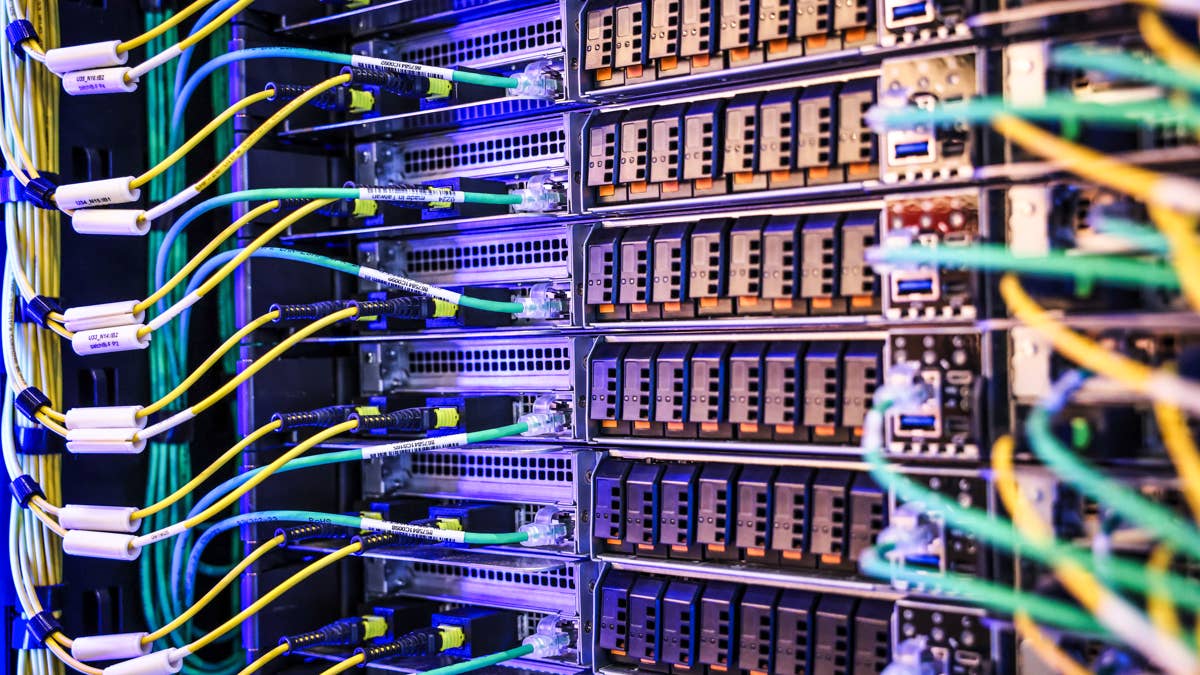 Supermicro’s margin outlook questioned by Bank of America.
Supermicro is expanding its enterprise business, where customers may purchase more integrated systems and services.
In September, the company announced a partnership with NetApp to integrate its AI servers with NetApp’s storage and data management technology.
BofA cited Supermicro’s enterprise partnerships and manufacturing scale as strengths, although the bank remains cautious about profitability as large AI deployments account for a greater share of revenue.
Management also expects weaker margins in the second half of fiscal 2027 as the product mix shifts further toward large AI deployments.
Cash flow and customer concentration remain concerns
Supermicro generated nearly $20 billion in quarterly revenue, but its operations still consumed cash.
Its fiscal first-quarter cash flow figures were:
- Operating cash flow: Negative $434 million.
- Capital expenditures: $47 million.
- Free cash flow: Negative $481 million.
Large AI server projects require Supermicro to purchase expensive components and build inventory before completing deliveries and collecting payments.
Inventory increased by about $2.5 billion during the quarter, reaching $15.1 billion at the end of September. Customer prepayments helped finance much of that increase, according to Long.
BofA expects those working-capital requirements to remain substantial. The bank forecasts roughly $2.45 billion in negative free cash flow for fiscal 2027, even after raising its earnings estimates.
Long pointed to improvements in cash management. He said Supermicro’s cash conversion cycle, which measures how long money is tied up in inventory and customer payments, shortened to 97 days from 149 days in the previous quarter.
The company ended September with approximately $6.9 billion in cash and $8.6 billion in bank debt and convertible notes. Long said Supermicro has no current plans to raise additional equity, although it may consider financing options if attractive growth opportunities arise.
BofA also cited Supermicro’s reliance on a small number of large customers.
One major data-center customer accounted for 44% of first-quarter revenue, according to management. Delays in that customer’s deployments or payments could have an outsized effect on Supermicro’s results.
Long said the company frequently requires deposits on major projects and recorded no material credit losses during the quarter.
Financial-reporting controls remain another concern. In its latest annual filing with the SEC, Supermicro disclosed that an information-technology control weakness remained unresolved as of June 30, 2026. However, it had addressed three other previously reported material weaknesses.
Supermicro expects second-quarter revenue of $19.5 billion to $21.5 billion. Long also said during the earnings call that the company expects a gross margin of 12% to 12.5% for the quarter.
Those results will provide the next test of whether Supermicro can maintain margins near that level and reduce its cash needs as more large AI server projects move through production.
Related: Rivian car buyers are driving a Wall Street rethink on the stock
