
If you pull into a Taco Bell drive-thru today, the voice taking your order might not be a real person. Yum! Brands (YUM) is introducing artificial intelligence into its order system, and the results of the change are already showing up in the company’s numbers.
Due to that and some other reasons, Morgan Stanley’s restaurants team, led by equity analyst Brian Harbour, said in a research note shared with me on Nov. 3 that Yum!’s third-quarter results back up the firm’s Overweight rating and $185 price target.
Morgan Stanley maintained its call even after Yum! was affected by a recent Taco Bell food-safety issue and the Pizza Hut sale that closed during the quarter.
As I read the note, a small shift in the drive-thru lane caught my attention, especially since it is already changing the daily experience for fast-food customers.
An AI change at Taco Bell that customers are already noticing
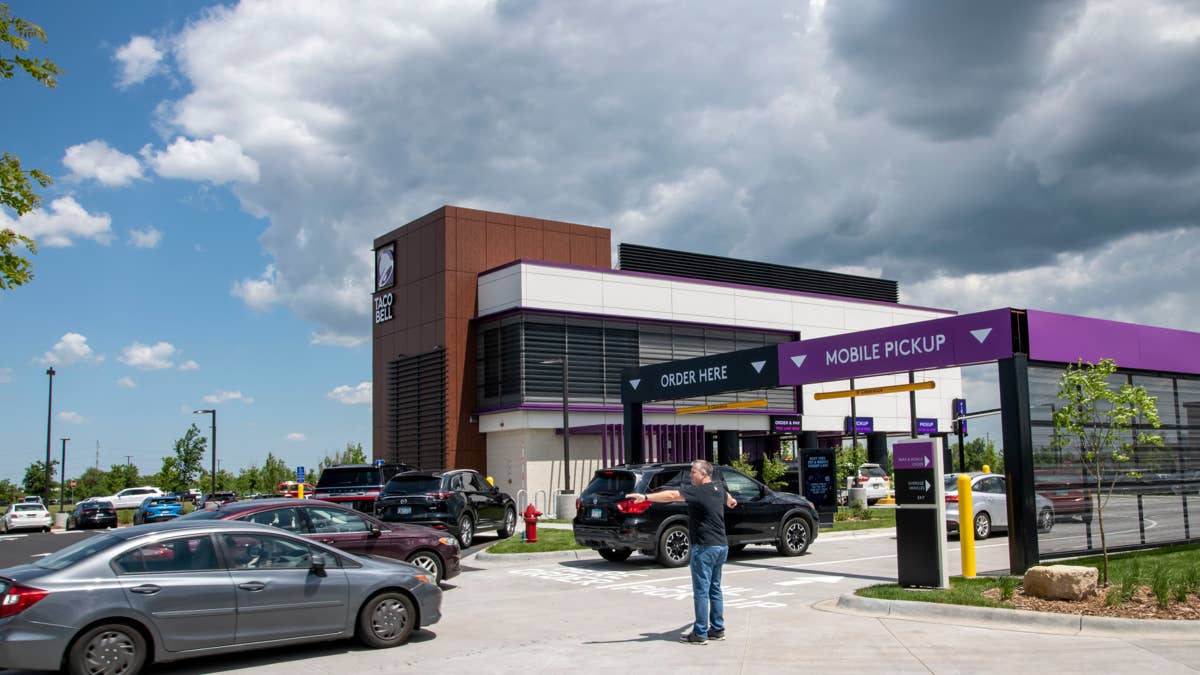
Yum! has introduced drive-thrus with voice AIs to about 900 Taco Bell locations. According to Yum! Brands CFO Ranjith Roy, those stores experienced a 1.5% increase in sales, better crew retention, and a 6% jump in the satisfaction level of drive-thru customers, CIO Dive reported.
“Taco Bell has been an example of where digital engagement and digital channels are a real sales driver,” Harbour wrote.
Also read: Applebee’s menu adds items as customer foot traffic slumps
Customer satisfaction is very important for any food company. The smoother AI drive-thru experience means people don’t have to wait too long to place and get their orders. There will also be fewer cases of wrong orders, and the staff serving inside the restaurant will become more hospitable because their workload will be reduced.
AI can also improve sales by asking every customer if they want to add a drink or side to their order. If successful, that would increase the total amount spent per customer. Human workers do this too, but on a busy night when there’s a long line, it can be hard to remember to ask extra questions.
 A Taco Bell comeback and other factors point to a bigger change at Yum! Brands that Wall Street might not have fully priced in.
KFC’s new kitchen screens are cutting mistakes and speeding orders
Yum! is also making another shift at its KFC stores in the United States. The company installed an upgraded system called Byte Kitchen Display.
The system shows the cook your orders, predicts meal prep time, and organizes the cooking process when there are multiple orders. It also shows when a delivery rider is close so the order can be packed, and it catches any mistakes before the order reaches the customer.
Yum! reported that the Byte Kitchen Display improved drive-thru speed by 8% and reduced refunds by 12%. There was also a 20-second drop in the time third-party delivery drivers needed to wait.
Fewer refunds mean fewer wrong orders at the counter, which leads to fewer wasted meals. The drop in the handoff time also means your delivery arrives hotter and on time.
Related: Domino’s Pizza may have a franchisee problem
These are small wins that help a company build loyalty without a single marketing campaign. However, Yum! is still adding personalized marketing, while simultaneously introducing an internal AI assistant called ByteCoach.
The internal AI assistant helps KFC and Taco Bell managers identify issues and run their kitchens more effectively.
The recovery from Taco Bell’s food-safety hit
Although Morgan Stanley believes in Yum!’s future, Taco Bell had a tough third quarter. The brand’s same-store sales dropped 4% after a cyclospora outbreak tied to lettuce from a single supplier pushed cautious customers to other chains.
However, Taco Bell is already recovering, and according to Yahoo Finance‘s transcript of Yum!’s Nov. 3 earnings call, the brand’s sales have already bounced back to +1% quarter to date and +3% in the last four weeks of October.
More Restaurant Stocks
- An entire island just lost its KFC and Taco Bell overnight
- Breaking News: Wendy’s makes a major breakfast change
- Chipotle is leaning on new menu items to bring diners back
“Since the end of September, Taco Bell U.S. has been outpacing the QSR industry on same-store sales growth,” CEO Chris Turner said on the earnings call.
Loyalty members returned twice as quickly as non-members, and medium and light Taco Bell users are now back to 95% of their pre-incident visit levels.
Yum! Brands’ path into 2027 and the risks worth tracking
Morgan Stanley kept its price target on YUM, valuing the stock at about 24 times its projected 2028 earnings of $7.65 per share. Since YUM closed on Nov. 6 at $161.14, that leaves roughly 15% room to reach the target.
However, to achieve that target, the company needs to put the Pizza Hut sale behind it and ensure Taco Bell keeps recovering by next year. Morgan Stanley is positive, and Harbour wrote, “2027 should be cleaner, and we continue to feel good about YUM’s major KPIs and overall growth profile into that year.”
Investors should watch for continued softness in the KFC China business and higher interest costs from refinancing about $1.6 billion in debt. Taco Bell’s recovery could also be delayed if another safety issue arises.
