
Toyota drivers have long associated the Japanese automaker with reliability and fuel savings. Now, people who own its stock have another reason to pay attention.
Toyota Motor (TM) unveiled plans Nov. 5 to return as much as 14 trillion yen ($89 billion) to shareholders over five years, potentially benefiting ordinary Americans who hold the company’s shares.
The news comes as Toyota’s hybrid vehicles continue to sell, helping the automaker weather industry challenges. Additionally, the business revealed ambitions to enter the robotics industry and increased its annual profit prediction.
Investors welcomed the innovations. Toyota shares jumped 17% in Tokyo, their biggest one-day gain in nearly 40 years, Reuters reported.
The appeal is simple for private investors. Toyota plans to buy shares and pay out greater dividends.
While buybacks may raise the ownership percentage represented by each remaining share, dividends provide shareholders cash.
But the $89 billion is not an instant payoff. Rather, it is the top end of a five-year plan.
The crucial issue is whether Toyota’s increasing profits can finance its next generation of automobiles and technology while maintaining those shareholder benefits.
Toyota’s $89 billion plan offers 2 shareholder benefits
Toyota expects to return between 11 trillion yen ($70 billion) and 14 trillion yen ($89 billion) through March 2031.
In contrast, during the previous five years, the company returned around 7 trillion yen ($44 billion).
Toyota also raised its current fiscal-year share-repurchase authorization by 300 billion yen ($1.9 billion), according to the company’s official results report.
The total authorization now stands at 1.3 trillion yen ($8.2 billion).
Read more: Major auto parts maker closes 5 sites, cuts 3,460 more jobs
In addition, Toyota intends to cancel an extra 1 billion Treasury shares, for a total of 1.2 billion cancellations for the fiscal year.
By reducing the number of shares outstanding, canceling shares may increase profits per share and the ownership percentages of remaining investors. Meanwhile, Toyota is planning to raise its annual dividend from 95 yen to 100 yen per common share.
Each of its American depositary shares registered in New York represents ten ordinary shares. This indicates that, before currency fluctuations, taxes, and fees, the annual dividend prediction is equal to 1,000 yen, or around $6.33, each depositary share.
Compared to repurchases, dividends reward owners more directly. However, future payments are not certain.
Toyota’s hybrid success explains its growing confidence
Plans for Toyota’s shareholders rely on increasing operational performance. During the July–September quarter, operating profit rose 34% to 1.13 trillion yen ($7.1 billion).
Stronger operational earnings may not always translate into larger bottom-line profits, as seen by the quarterly net profit reduction of almost 19%.
Toyota’s financial results also show that management increased its operating-profit forecast for the fiscal year ending March 2027 to 3.9 trillion yen ($24.7 billion).
More Automotive:
- BMW’s second profit warning of the year hit harder than the first
- Ford and GM see savings drivers may pay for later
- Ford stock rises as car buyers face a costly reality
Hybrid demand is helping Toyota navigate an increasingly difficult automotive market. Toyota Motor North America sold 117,215 electrified cars in September, up 37.8% over the same month the previous year.
Electrified models, including hybrids, plug-in hybrids and electric vehicles, accounted for 58.2% of its U.S. sales that month.
Toyota’s official U.S. sales report confirms those figures.
With rising gas costs encouraging consumers to think about more fuel-efficient cars that don’t depend only on infrastructure for charging, hybrids have become more appealing.
Increased demand may help Toyota sustain earnings and pay dividends in the future, which would benefit shareholders.
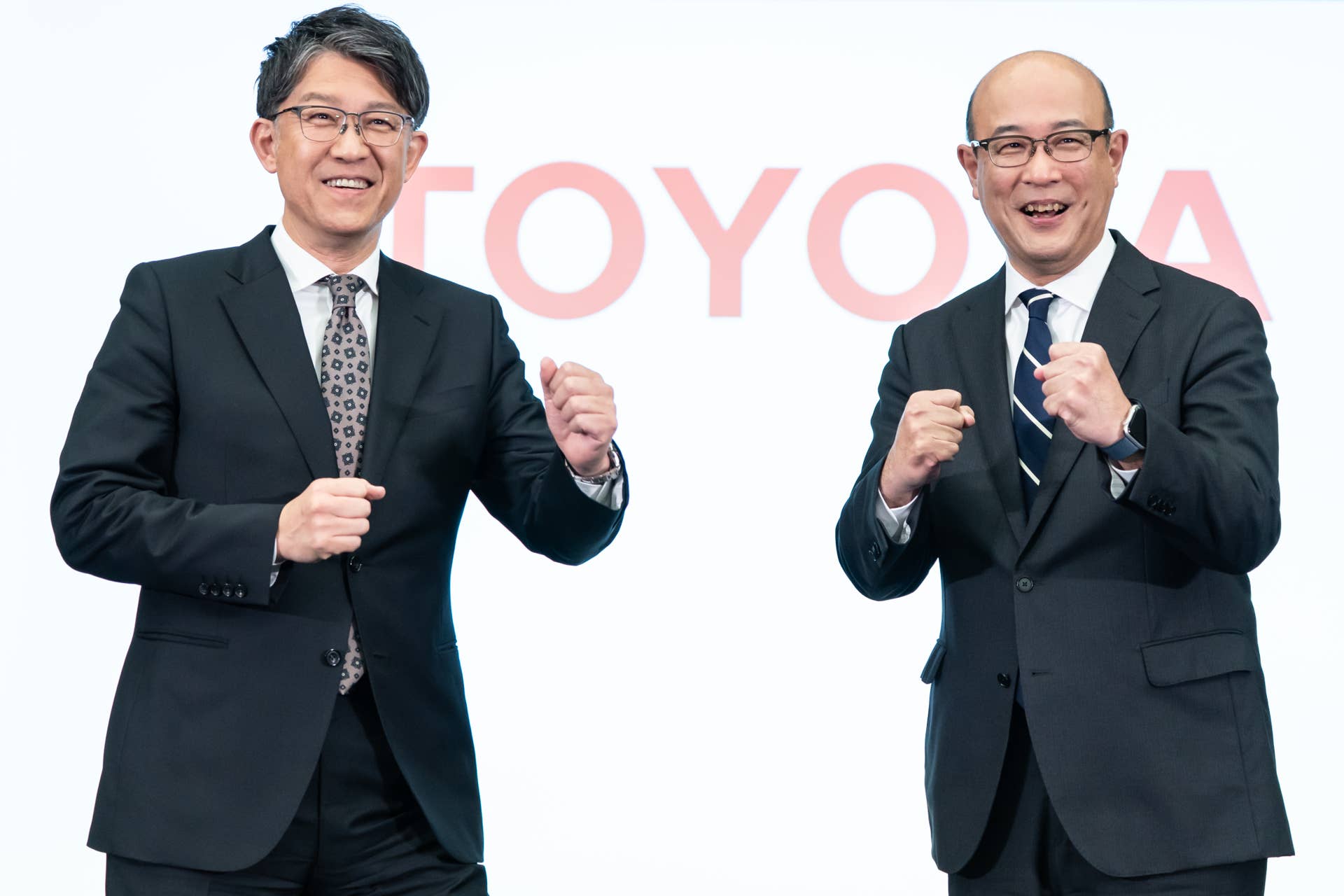 Toyota’s hybrid success unlocks an $89 billion opportunity.
Tomohiro Ohsumi / Getty Images
Toyota investors still face a major financial test
Toyota’s goals go beyond just producing cars.
Through March 2031, the business intends to invest at least 22 trillion yen ($139 billion) on R&D and capital. Additionally, it plans to launch Toyota Robotics in January 2027 with the goal of creating industrial automation before branching out into other sectors.
According to Toyota’s investor presentation, the company estimates that it and its suppliers could require approximately 400,000 robots between 2028 and 2040.
These investments compete with shareholder payouts for available funds, but they may also open up new income streams.
Chinese manufacturers, currency fluctuations, material prices, and unpredictable worldwide demand are additional hazards that Toyota must contend with.
Future earnings performance is particularly crucial since its shares have already seen a significant increase since the announcement. Buybacks do not guarantee higher stock prices, and dividends may fluctuate if the economy worsens.
Toyota appeals to regular investors because of its established car sales, rising demand for hybrid vehicles, and more dedication to capital returns.
The next challenge is whether Toyota can maintain those benefits while investing billions to safeguard its future.
Related: Elon Musk sends incredible news to Micron stock investors
