
I work on my computer, switching between research, market data, writing, and my trading platforms. I notice when applications respond quickly and when my machine struggles to keep up with several tasks at once. A frustrating issue I had with my previous six-year-old laptop.
It honestly made me appreciate how much the processor matters, even when I rarely think about the chip powering it.
AMD makes chips for devices like those, but its fortunes now hinge on data centers. In the third quarter, data center revenue hit a record $8.5 billion, up 97%, while client chip revenue rose 7% to $2.9 billion and gaming fell 40% to $773 million.
AMD CEO Lisa Su called it “a record quarter with revenue exceeding the high end of our guidance” and said growth should accelerate as Helios and Venice ramp. AMD guided fourth-quarter revenue to about $17 billion, up 66%, and management expects more than 80% growth next year despite supply limits.
Also Read: AMD’s biggest AI deals come with a 320 million share catch
AMD jumps 13% as an upgrade tests the pullback
On Nov. 9, AMD closed at $508.58, up 13.26%, after Oppenheimer analyst Rick Schafer upgraded it from Perform to Outperform with a $600 price target, about 18% higher, in a note shared with TheStreet.
TipRanks ranks Schafer No. 20 of 12,555 analysts it tracks, with a 70% success rate and a 30.50% average return per rating.
AMD’s strong performance is reflected in its shares, still up 137.48% this year and 117.77% over one year, according to Yahoo Finance, even after the pullback that began following earnings on Nov. 3.
AMD also said its fifth-generation EPYC processors power Google Cloud’s TPU 8tx, adding hardware-enforced confidential computing for that cloud’s AI systems.
Why Oppenheimer turned bullish
Oppenheimer raised estimates after speaking with CFO Jean Hu and investor relations head Matt Ramsay. It expects data center revenue to grow 135% in 2027 and reach 85% of total sales, as GPU sales overtake server CPU revenue. It models about 3 gigawatts of computing capacity shipped in 2027 and 4 gigawatts in 2028.
The customers are household names in AI.
OpenAI and Meta should drive data center sales through the first quarter. Anthropic could ramp late in that quarter, and Oracle, Microsoft and Humain may support growth through 2028. Anthropic, Meta, Microsoft, OpenAI and Oracle already run workloads on AMD’s first Helios rack-scale systems.
More on AMD:
- AMD, Nvidia and Intel diverge as Morningstar resets the scorecard
- Nvidia dominates AI chips, but BofA sees AMD closing in
- 5-star analyst resets AMD stock price target
I’ve automated my trading strategy to make execution more consistent and reduce the emotional decisions that can undermine my setups. It’s shown me how useful AI and automation can be when they take repetitive tasks off your hands and help you stick to a plan. That is just a small example of the computing power businesses are increasingly demanding.
AMD plans a new AI chip every year, with MI500 in 2027 and MI600 in 2028, and Oppenheimer sees favorable pricing in next-generation deals. It estimates the five largest cloud providers will spend about $1.3 trillion in 2027, up from roughly $800 billion this year. Schafer called AMD’s progress in server CPUs and data center products “undeniable.”
Dell’Oro Group data show global data center capex grew 92% in the second quarter, and expects high-end accelerators to remain the largest share of spending and the main driver of growth through 2030.
Dell’Oro also expects global data center capex to exceed $1 trillion in 2026.
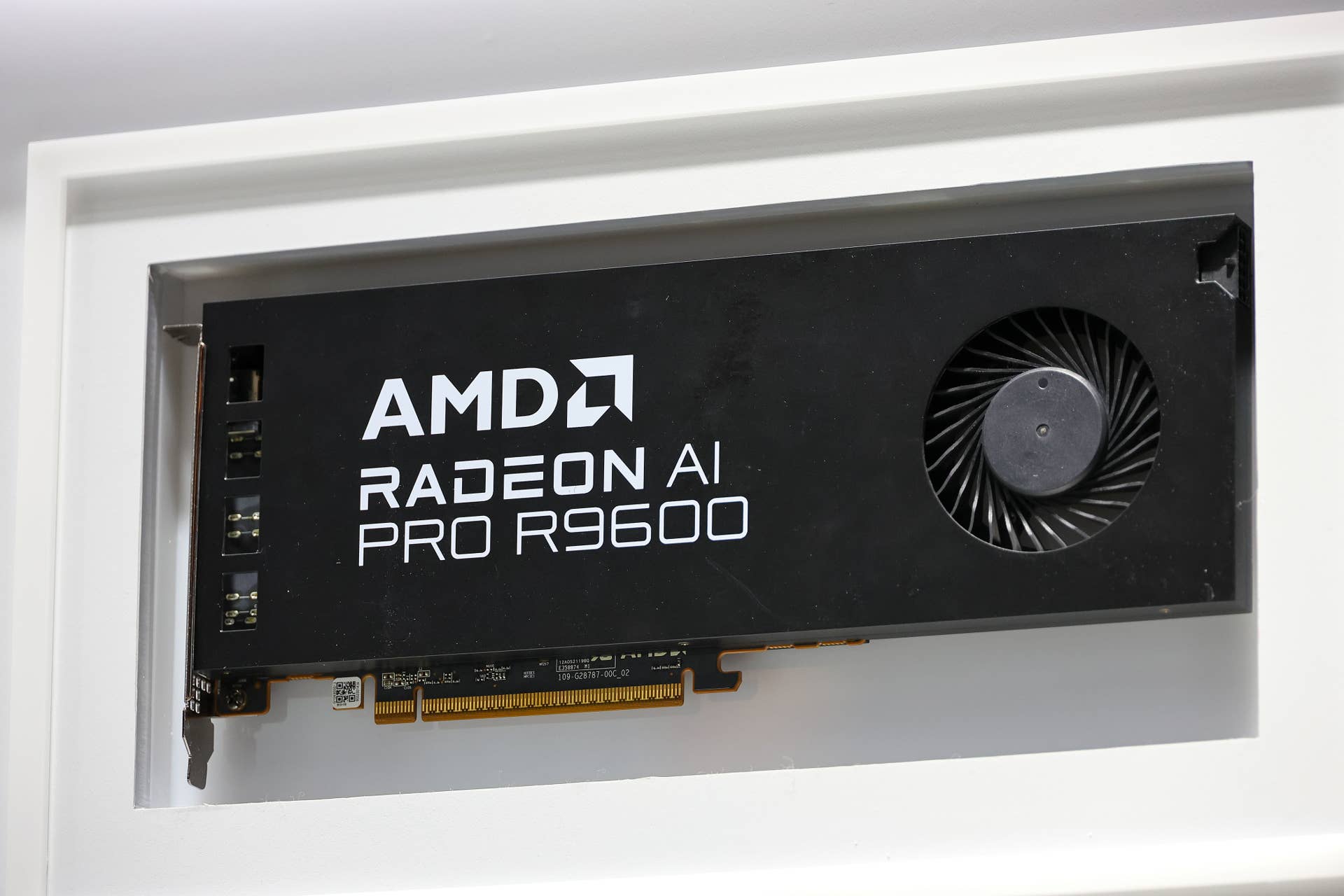 AMD plans a new AI chip every year, with MI500 in 2027 and MI600 in 2028.
What could still go wrong
The same data carries warnings too. Dell’Oro said some spending may have been pulled forward ahead of expected price increases, and that enterprise AI adoption remains constrained by uncertain returns.
Supply is the first limit since management’s 80% growth target comes despite constraints. Customers are concentrated among a handful of AI labs and clouds, and expectations are high after a stock that has more than doubled this year. Gaming weakness shows that not every segment is growing.
AMD is also expanding through acquisitions, agreeing to buy World Labs for model research and Taalas for inference chips.
Oppenheimer’s call is that data center growth near 100% is not slowing, so the post-earnings pullback was a buy chance. The next proof points are the roughly $17 billion fourth-quarter guidance, gross margin near 55%, and the Helios and Venice ramp.
