Most billionaires who make philanthropic pledges commit to giving away their wealth based on what they own at the time.
For Meta CEO Mark Zuckerberg, a decade of extraordinary wealth growth has transformed his philanthropic promise into one of the largest personal giving commitments in modern history.
In December 2015, Zuckerberg and his wife, pediatrician Priscilla Chan, wrote an open letter to their newborn daughter Max, pledging to give away the vast majority of their wealth during their lifetimes.
Also read: The inheritance mistake that can tear families apart
Since then, Zuckerberg’s fortune has grown substantially, raising the value of what the couple has promised to give away and changing how much wealth their daughters are likely to inherit.
What makes the pledge unusual is not its size but its specificity, a step the vast majority of families still refuse to take, according to Fidelity’s 2025 Family and Finance Study.
How the Chan Zuckerberg pledge grew from $45 billion to $200 billion
The couple pledged to transfer 99% of their Facebook (now Meta) shares through the Chan Zuckerberg Initiative (CZI), which they structured as a limited liability company rather than a traditional private foundation. At the time, those shares were worth about $45 billion.
Nearly 11 years later, Zuckerberg’s net worth has climbed past $200 billion, meaning the commitment now covers more than four times its original value, Bloomberg reported.
The pledge does not require him to give up control of Meta, and he still holds about 13% of Meta’s economic shares but retains roughly 61% of voting power through Class B supervoting stock, Meta’s proxy filing showed.
More Mark Zuckerberg:
- How much META stock does Facebook founder & CEO Mark Zuckerberg own?
- Mark Zuckerberg sends bold message to Meta investors after Muse
- Mark Zuckerberg says Meta found a way to make more money
If the couple’s three daughters split just the remaining 1%, their collective inheritance would hover around $2 billion, generational wealth by any standard yet a sliver of the whole fortune.
The growth from a $45 billion pledge to one worth over $200 billion is what makes the decision so striking.
Bill Gates cited Zuckerberg as a model of giving in a published interview last year.
“There are exemplars like Mark Zuckerberg, you know, through the Chan Zuckerberg Initiative, is committed to give over 90% of his wealth away and he’s off to a very good start,” Gates said.
Zuckerberg and Chan hold firm as the Giving Pledge loses momentum
The couple’s commitment has held steady even as the broader Giving Pledge movement shows cracks, with new signups plummeting from 113 families during its first five years to just four in 2024, The New York Times reported.
Among the 32 original United States signers who remain billionaires, Zuckerberg and Chan’s combined wealth has grown by more than 4,000%, according to the Giving Pledge.
The pledge is voluntary and unenforceable, which makes their decision to hold the line notable, while billionaires like Peter Thiel have publicly criticized the Giving Pledge concept, The New York Times reported.
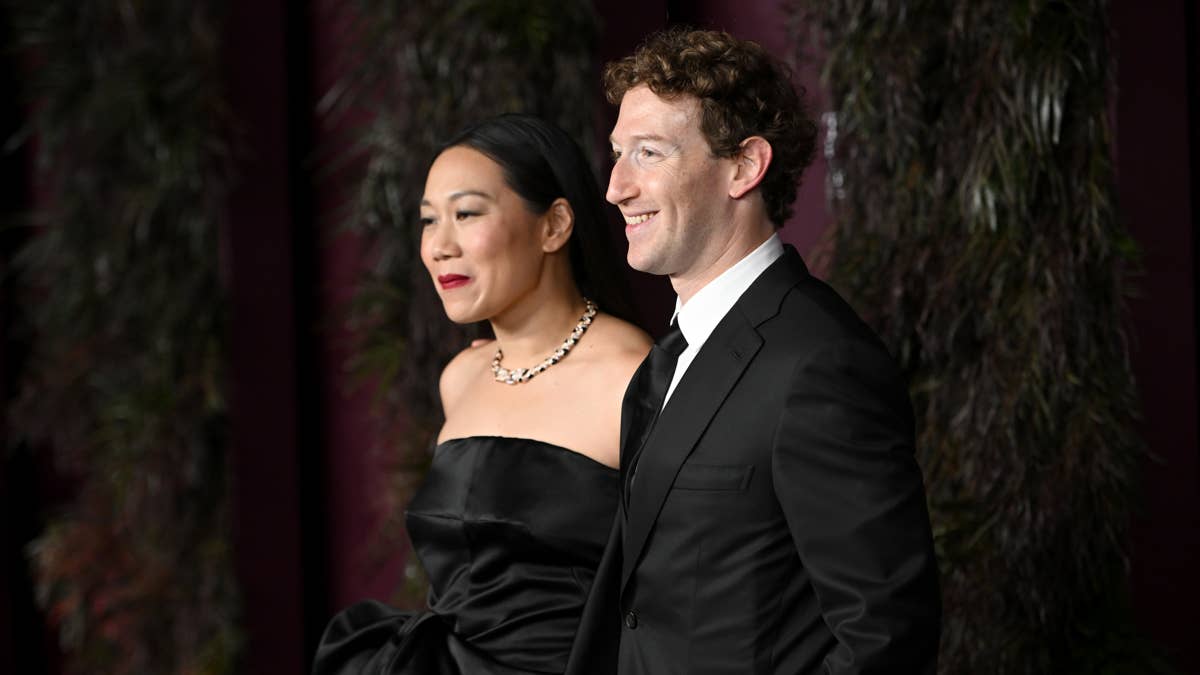 Mark Zuckerberg and Priscilla Chan are shifting philanthropy toward AI-powered biomedical research as momentum behind the Giving Pledge weakens.
Most parents avoid the conversation Zuckerberg had in 2015
The Zuckerberg-Chan letter was explicit about what the children would and would not receive, a disclosure Fidelity’s 2025 research found most families still avoid.
Fidelity Investments’ 2025 Family and Finance Study found that 68% of parents aged 55 and older with at least $500,000 in investable assets have not told their children what they will inherit or how much, even though 70% already have a will or estate plan.
Matthew Saul, founder and CEO of wealth advisory firm Saul Wealth, told Fortune that the gap between creating estate documents and actually sharing the details with family remains one of the biggest risks in wealth planning.
<strong>Whether it is the estate plan, the intention for a family property, or the philanthropic intent, those are dialogues a family should have together, both during life and about what happens after the eldest generation is gone…,</strong>
That disconnect has consequences at every level of wealth, as Bank of America’s 2026 Private Bank Study of Wealthy Americans found that 61% of ultra-high-net-worth respondents worry about how an inheritance will affect their children’s motivation. 41% are now including provisions in their trusts to manage the risk.
What the Zuckerberg pledge means for your inheritance plan
Zuckerberg’s 2015 letter offers a lesson for everyone, regardless of income: changes in asset values, family size, and tax laws can significantly affect how much wealth is passed on to the next generation.
“The right time is ‘early and always’ as there is no need to wait for a particular milestone,” John Abbuhl, director of trust business development at National Advisors Trust, told InvestmentNews.
That urgency is backed by a persistent gap between what families plan and what they actually tell heirs.
Fidelity’s research showed that 95% of adult children believe they can handle inherited wealth responsibly, while 25% of parents disagree, a mismatch that breeds confusion when the details come too late.
Whether the estate in question is worth $200 billion or $200,000, families who name the amount, explain the reasoning, and set expectations through a will, trust, or beneficiary designations before life events force the conversation are more likely to see their wealth transfer smoothly, Mercer Advisors noted.
Related: Zuckerberg shakes California’s wealth tax before the vote
