
Zillow is highlighting a growing financial divide in the U.S. housing market as renting a single-family home increasingly requires far less income than buying one amid stubbornly high and volatile mortgage rates.
For millions of Americans chasing a suburban lifestyle — complete with a yard, a garage, and extra square footage — signing a lease rather than a mortgage has become the more realistic financial path.
According to new research from Zillow, a household that can comfortably afford to rent a typical U.S. single-family house would need a $14,408 annual pay raise to comfortably afford the monthly costs of buying one.
That affordability gap is now the widest it has been since early 2025, more than double the $6,463 raise required in February 2026 when mortgage rates briefly dipped below 6%. With borrowing costs swinging sharply again in mid-November, the math is pushing more would-be buyers toward the rental market.
Mortgage rate volatility keeps pressure on prospective buyers
The steep income hurdle for buyers comes against a backdrop of whipsawing mortgage rates.
On Nov. 12, Freddie Mac reported that the average 30-year fixed-rate mortgage declined for a fourth consecutive week to 7.11%, down from 7.18% the prior week, though still well above the 6.24% average a year earlier. The 15-year fixed-rate mortgage fell to 6.45% from 6.57%.
“Mortgage rates dropped to their lowest level in seven weeks, a welcome development that gives borrowers greater flexibility as they navigate the current housing market,” Sam Khater, Freddie Mac’s chief economist, said in a statement.
Yet daily rate tracking shows that relief proved short-lived. According to Mortgage News Daily, daily lender rates reversed course sharply by Nov. 13.
“In 3 short days, the average top tier 30yr fixed mortgage rate has risen 0.32% to 7.50%, erasing a vast majority of the improvement seen over the past 5 weeks,” Mortgage News Daily wrote.
With 30-year rates bouncing back toward 7.50% and homeownership carrying a $360 monthly premium over single-family rents, Zillow’s data underscores why many households are choosing to stay renters rather than stretch their budgets for a mortgage.
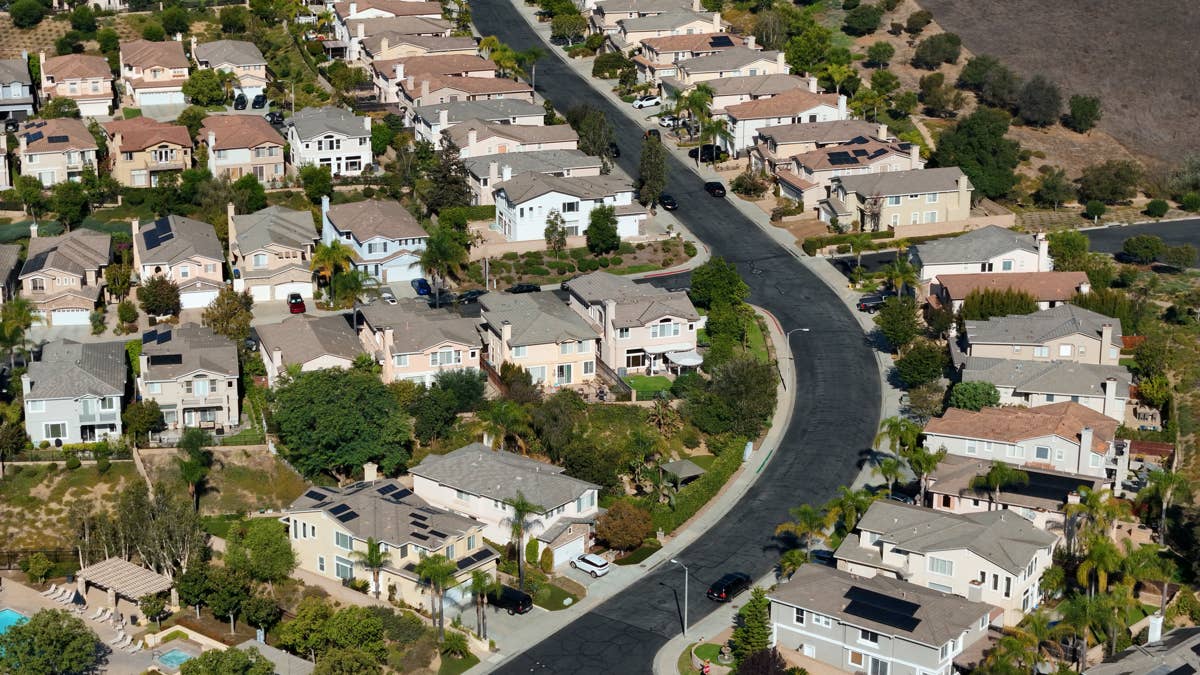 As mortgage rates jump, new Zillow data highlights the steep pay raise households now need to afford buying a home over renting — and the major U.S. metros where that gap is widest.
Zillow outlines the widening rent-versus-buy income gap
Nationally, the typical single-family rent reached $2,243 a month in October, up 3.2% from a year earlier, while typical multifamily rent rose 2.5% to $1,744, according to the Zillow Observed Rent Index.
By comparison, owning a typical single-family home with a 20% down payment costs $2,603 a month — or $360 more every month than renting.
Using the standard rule of thumb that households should spend no more than 30% of their income on housing, Zillow calculates that a family needs an annual income of $89,724 to comfortably rent a single-family home, compared with $104,132 to buy.
“For a growing number of households, renting a house is a legitimate financial strategy,” Kara Ng, senior economist at Zillow, said in the report. “You get many of the lifestyle benefits, but it takes less income than owning and keeps more flexibility in the monthly budget. That’s the appeal for the deliberate renter.”
Even if a household secures that $14,408 raise, saving for a 20% down payment remains a major obstacle. Zillow’s 2026 Consumer Housing Trends Report found that about 30% of mortgage buyers rely on a gift or loan from family or friends, and 46% draw on two or more funding sources, including down payment assistance programs.
Based on Zillow’s rent-versus-buy analysis, the national break-even timeline — the number of years a homeowner must stay put before buying beats renting financially — stands at 7.8 years with 20% down.
Rental demand surges in expensive coastal and Sun Belt metros
Fidelity Investments urges current renters to carefully consider whether buying a home now is the right move at the right time.
“You might assume buying is a better value because it lets you build equity in a home. But that may not be the case if rents are low relative to purchase prices in your area,” Fidelity wrote. “In any comparison, first make sure you’re looking at similar properties in the same area (i.e., don’t weigh renting your city studio against buying that country cottage).”
As the monthly savings from leasing widen, renter interest is accelerating. Overall rental demand is up 22.1% year over year nationwide on the Zillow Observed Renter Demand Index, led by a 24.3% jump in demand for single-family rentals — roughly double the 12.1% increase seen in multifamily properties.
The financial spread varies dramatically by metro area. The annual pay raise needed to buy instead of rent is largest in San Jose, where buyers need $404,925 compared with $190,561 for renters, a gap of $214,364, according to Zillow.
More on the housing market:
- Redfin: 7 cities where the holidays are a great time to buy
- Here’s what a $400,000 mortgage costs in today’s housing market
- Home Depot sends its strongest warning yet on the housing market
San Francisco follows with a $139,353 gap, ahead of San Diego at $84,101, New York at $78,208, and Los Angeles at $78,003.
Meanwhile, the smallest gaps appear in Pittsburgh ($2,554), Houston ($4,500) and Cincinnati ($4,774), while Buffalo is the only major market where buying does not require a raise over renting.
Renter demand has surged most sharply in San Jose (up 78.9% year over year), San Francisco (60.5%), Austin (59.6%), Miami (51.5%), and Jacksonville (47.9%).
Related: Redfin predicts housing market shift amid mortgage rate changes
