
While it has continued to grow its sales, Black Rifle Coffee Company (BRCC) lost money in the most recent quarter and will close at least a dozen locations.
The coffee chain has built its brand around being founded by veterans and embracing patriotism.
That shouldn’t be a controversial business model, but in the current political climate, just like Starbucks loses some customers because of its perceived “wokeness,” BRCC has turned off some liberal coffee drinkers.
Founder Evan Hafer doesn’t see it exactly that way.
“I didn’t start it as a conservative company. I started it as a conservative starting a company,” he told KSL News.
No matter what his intent, Hafer’s company has been endorsed by Donald Trump and has taken positions against liberal causes. The BRCC founder, however, sees the brand as supporting veterans, gun rights, first responders, and active-duty military, not any particular politician.
“Black Rifle Coffee Company (BRCC) is a Veteran-founded coffee company serving premium coffee to people who love America,” the company shared on its website.
It’s a company that has built its brand name by embracing conservative causes and patriotism, and that’s something that both brings in customers while keeping others away.
Black Rifle Coffee Company posts mixed results
In the third quarter, BRCC made some changes to its business model.
“We expanded distribution through new retail partners and increased our presence within existing accounts. Our campaign celebrating America’s 250th birthday helped broaden awareness and encourage trial among new consumers. Wholesale delivered another quarter of growth, while Direct-to-Consumer recorded its fourth consecutive quarter of year-over-year revenue growth,” CEO Chris Mondzelewski said in the third-quarter earnings release.
Numbers were mixed.
- Net revenue increased 7.3% compared to Q3 2025, driven primarily by growth in the Wholesale and Direct-to-Consumer channels.
- Wholesale revenue increased 8.1%, while DTC revenue increased 8.5%, marking the fourth consecutive quarter of year-over-year DTC growth.
- Packaged coffee distribution increased 4.6 percentage points to 58.7% on an All Commodity Volume (“ACV”) weighted basis.
- Net loss was $8.7 million in Q3 2026, compared to a net loss of $1.2 million in Q3 2025.
The company has also taken some steps to lower losses and cut expenses. That includes closing 12 company-owned stores and dropping plans to open eight new locations where BRCC had already leased.
More Store Closures:
- Haynes Furniture to shut flagship store as 128-year-old legacy comes to end
- Gucci owner closes over 128 stores with more to come
- Struggling home goods chain closing more stores
“We signed a definitive agreement to sell our Manchester roasting facility to a longstanding manufacturing partner, securing a long-term production relationship while we continue to develop our proprietary roasts,” CFO Matt Amigh added.
BRCC also sold what Amigh called “a non-core DTC brand.”
“These actions mark a significant step toward a more asset-light operating model, which we expect will support franchise-led retail growth, lower capital requirements, and create a more efficient cost structure,” he added.
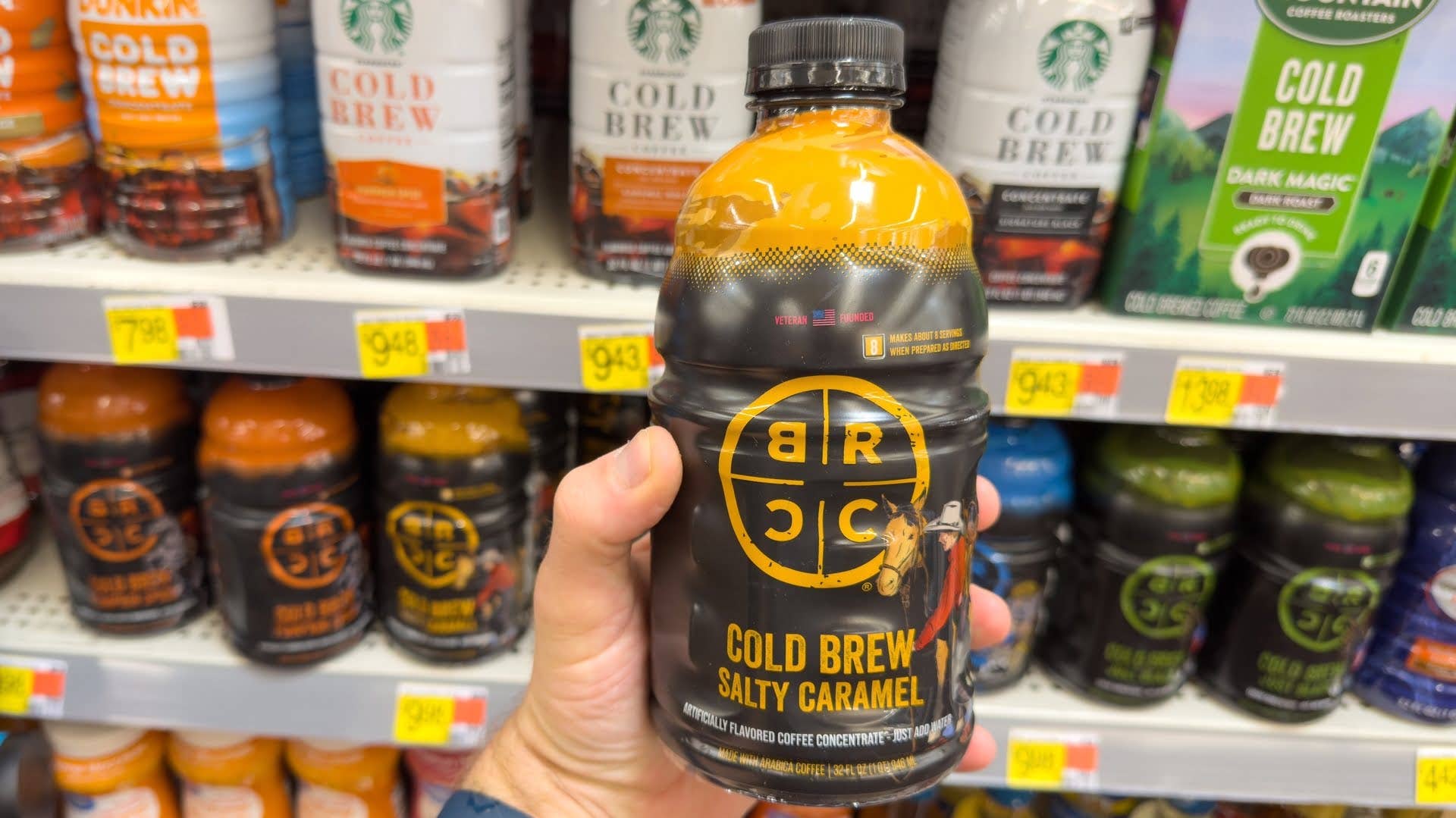 BRCC has increased its presence in retail stores.
Shutterstock
Taking a political stand limits your customer base
While Hafer portrays the brand as embracing veterans and supporting patriotism, that’s a simplified view of its actual positioning.
“There’s an undeniable political edge to the brand, which shares a blurry border with the owners’ personal views on polarizing culture war questions. The founders publicly doubled the company’s ad funding for the Joe Rogan podcast after Rogan was criticized for spreading COVID-19 misinformation,” according to San Antonio Report.
It’s not clear that the brand’s political leanings have contributed to its losses, but Starbucks, Anheuser-Busch, Target, and Walt Disney all lost sales over perceived liberal leanings. In an election year where Americans delivered a clear message to a polarizing president, it’s possible, probably likely, that some liberal-leaning coffee lovers made a choice not to support BRCC.
“Our results suggest that boycotting outweighs buycotting, implying that political brand communication is a risky strategy. Furthermore, we identify consumers’ political interest and category involvement as moderators of this imbalance,” according to the academic paper When Brands (Don’t) Take My Stance: The Ambiguous Effectiveness of Political Brand Communication.
BRCC has made its politics clear, and that’s going to push away some customers.
“Large companies understand that direct political messages risk driving away half of their customers, many of whom are otherwise politically inert,” Vikas Mittal, a professor of marketing at Rice’s Jones Graduate School of Business, told ABC News. “If a brand takes a specific position, it ends up creating a lot of acrimony.”
RTM Nexus CEO Dominick Miserandino thinks that BRCC has made the right choice in its marketing and positioning.
“It’s really sad. I loved the brand. I loved the cause. Frankly, I wish more brands had a cause to support, so it’s just sad, and I hope it’s a refocus,” he said of the closures.
Related: Netflix, Disney, HBO, and Peacock price hikes push consumers to the brink
