
Federal Reserve Bank of Kansas City President Jeff Schmid kicked off a busy week of Fed-speak Nov. 15 by saying that inflation pressures have only grown worse in recent months, leaving monetary policymakers with more work ahead.
“The Fed’s role is not to affect the price of any one good or service, but rather to maintain the aggregate purchasing power of the dollar relative to all goods and services in the economy,’’ Schmid said in prepared remarks before a speech in Hawaii.
Over the past two weeks, consensus among major Wall Street banks and analysts has solidified around a 25-basis-point rate hike at the December Federal Open Market Committee meeting, following hotter-than-expected October CPI and PPI inflation prints.
Several major Fed watchers have revised their forecasts to project consecutive rate hikes extending into early 2027, while acknowledging a tail risk of a jumbo basis point hike at the Dec. 8-9 meeting.
If December is only the beginning, how high might the Fed have to hike interest rates to bring inflation under control?
Fed Governor Christopher Waller sent Wall Street and Main Street trembling when he said, as I reported, a 50-basis-point rate hike should be considered at the December policymaking meeting if inflation continues to run hot.
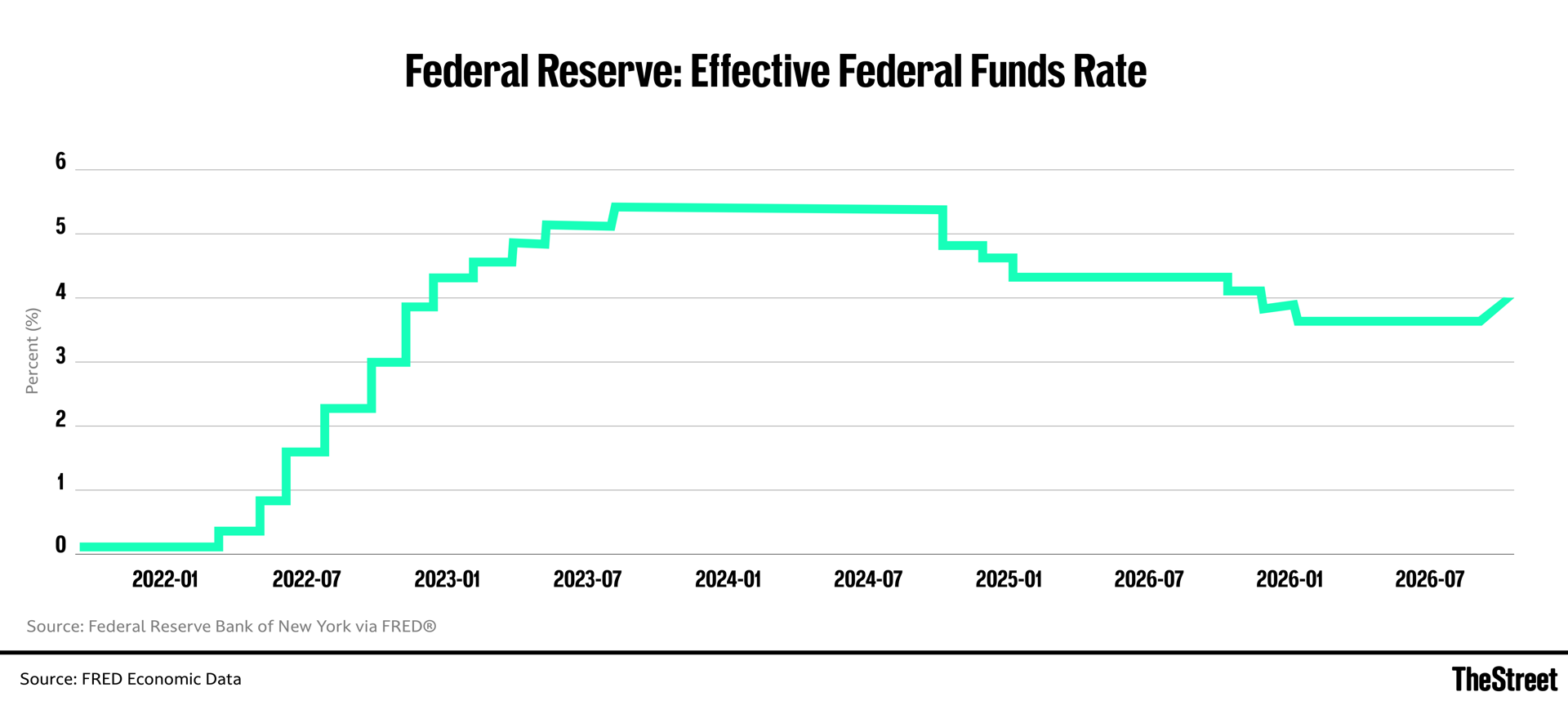
Meanwhile, I received an advance report of economist Edward Yardeni’s Nov. 16 Morning Report, which states that “without being able to influence structurally higher goods inflation as much, the Fed will have to lower services inflation by raising the federal funds rate,’’ currently at the 3.75% to 4.0% target.
“We think 50 more basis points will do it,’’ the report said. “Lower oil prices should help to moderate inflation in the near term; productivity should do so in the long run.’’
Schmid said that both narratives — that inflation is being driven by demand that is impervious to higher interest rates, or by supply shocks — share a common core.
“Mainly, that inflation is somehow beyond the Fed’s power to control. I don’t believe this to be true. The Fed does have the tools to address inflation and has the responsibility to achieve price stability,’’ Schmid said.
But as has been clear from comments from Fed officials in the past weeks, and the divided 10-2 vote to pause rates at the Oct. 28-29 FOMC meeting, opinion is divided as to the best approach for tackling inflation.
Inflation threats Fed rate hike bets into 2027
The CME Group’s FedWatch Tool projects roughly a 93% chance of a 25 basis-point hike at the FOMC December meeting, a 67% probability of another hike in January 2027 and roughly 63% odds of a third consecutive increase in March 2027.
There is still more economic data to be released before the December meeting, not to mention the possibility of geopolitical and market events that could move traders, economists and analysts in different directions.
Meanwhile, Fed officials themselves appear uncertain about what these price pressures mean for monetary policy decisions.
In addition to Schmid, six Fed officials are scheduled to speak this week.
As I reported, Federal Reserve Chairman Kevin Warsh is stepping into the heart of the artificial intelligence universe Nov. 16 while hosting a high-stakes Fed conference in Silicon Valley to examine whether generative AI will spark unprecedented economic productivity or trigger widespread financial instability and job disruption.
The Fed’s biggest concern: whether artificial intelligence will transform the economy with higher productivity and wages or doom it through rising inflation, financial instability and massive job losses.
Warsh has vowed that the central bank is committed to the price stability side of its congressional mandate, which has been above its own 2% target for nearly six years.
Massive outlays for AI data centers and power infrastructure present unexpected challenges for monetary policy and are increasingly spilling over into adjacent commodity and energy markets, concerns echoed by millions of American voters in the midterm elections.
TheStreet
Fed officials differ on monetary policy approaches
New York Fed President John Williams, who said Nov. 12 that inflation “is far too high” and that further tightening will be needed, also speaks Nov. 16 as well as the following two days.
But, according to Reuters, Williams did not say when he expects the Fed to raise rates again or how far it will go with the increases.
Williams suggested that over the medium term, widespread adoption of generative technology should boost operational efficiency and help lower production costs across multiple service sectors to provide a natural structural tailwind to price stability.
Cleveland Fed President Beth Hammack, one of two FOMC members who favored a rate hike at the October meeting, continued that hawkish tone on Nov. 12, saying the Fed needs to tighten policy in “smaller increments, more frequent, smaller rises.”
Related: Fed’s biggest AI challenge collides with fallout from Nvidia backlash
However, Hammack who speaks Nov. 17 at The Brookings Institution, added “I walk into every meeting with an open mind, ready to listen to what other Fed officials have to say.’’
In a more aggressive stance, Chicago Fed President Austan Goolsbee said Nov. 9 that Fed officials must tackle potential overheating in the economy.
“We’ve got to come to terms with this cost side and inflation side failure in the mandate,” said Goolsbee, who also speaks Nov. 19 at the Economic Club of Indiana.
St. Louis Fed President Alberto G. Musalem and Philadelphia President Anna Paulson are also slated to provide remarks this week.
Higher interest rates hurt your wallet and retirement portfolio
Increases in the benchmark federal funds rate impact short-term borrowing rates for home equity loans, credit cards and student loans. Indirectly, a Fed rate hike increases mortgage rates and the yields on Treasury Bonds.
Warsh has repeatedly said that the Fed is committed to its dual Congressional mandate: use interest rates and balance-sheet policy to keep prices stable and the labor market at full employment.
That’s tricky.
- Lower interest rates support hiring but can fuel inflation. This risks fueling further inflation, potentially leading to an inflationary spiral.
- Higher rates cool prices but can weaken the job market. This increases the cost of borrowing and further stifles economic activity.
Now come the AI complicating factors..
- AI’s untested productivity promise: Lower production costs could eventually help restrain inflation.
- AI’s exploding investment costs: Data centers, electricity and semiconductor infrastructure could add to U.S. inflationary pressures.
- AI’s employment risks: Automation could disrupt hiring and wages, complicating the Fed’s full-employment mandate.
To quote Kansas City Fed’s Schmid: “As Chairman Warsh said, we have work to do.”
Indeed, you do.
Related: Jumbo Fed rate-hike warning sends shock waves after inflation surprise
