
If you’ve glanced over at your 401(k) lately, you’d know how punishing this month has been for AI and mega-cap tech stocks. At the November 18 close, nine of the 15 largest publicly traded U.S. companies by market value were at least 10% below their 52-week highs, including seven that were more than 20% below.
Meanwhile, some wholesale beef prices have actually eased, offering relief from one of the more stubborn sources of inflation. That said, the picture at the grocery store is less clear: retail beef and veal prices fell in September but rose again in October.
On the November 18 edition of Mad Money, a young caller asked Jim Cramer if Shake Shack (SHAK) was worth sticking with for the next 35 years. Cramer passed on the burger chain and suggested Brinker International (EAT) and Texas Roadhouse (TXRH) instead, pointing to the potential benefit of lower beef costs for Texas Roadhouse.
Why Jim Cramer passed on Shake Shack as beef prices finally ease
Joseph, a New York viewer, has watched Mad Money with his father since age six. Looking out over a 35-year retirement horizon, he asked Cramer if Shake Shack is a stock worth holding on to for the long haul.
More Retail:
- Struggling home goods chain closing more stores
- Verizon makes changes to be more like T-Mobile used to be
- Home Depot drops generous offers as customers grow harder to win
Though Cramer respected the leadership, he quickly shot down the current pricing setup.
“It trades at 60 times earnings, but we really like the work of Rob Lynch,” Cramer said, adding that with so many strong performers in casual dining, “I’m going to say take a pass on Shake Shack.”
Instead, Cramer pointed to Chili’s parent Brinker International, fresh off Chili’s 22nd straight quarter of same-store sales growth at 10.1%, and steakhouse leader Texas Roadhouse Inc.
“I actually think you can go back to Brinker or even up here,” Cramer told him. “And Texas Roadhouse, because beef prices are finally coming down, it’s going to work.”
That said, recent beef price data paints an interesting picture. Retail beef and veal prices dropped 1% in September but rose 0.9% in October, according to seasonally adjusted Bureau of Labor Statistics data.
At the wholesale level, USDA data showed Select boxed beef fell $6.36 to $344.45 per hundredweight on November 18, while Choice boxed beef remained virtually unchanged.
Even meatpacking giant Tyson Foods (TSN) rallied this week after projecting its beef segment would improve from a $654 million fiscal 2026 operating loss to up to a $100 million profit (high-end forecast) in fiscal 2027 as Mexican cattle imports resume, as reported by Reuters.
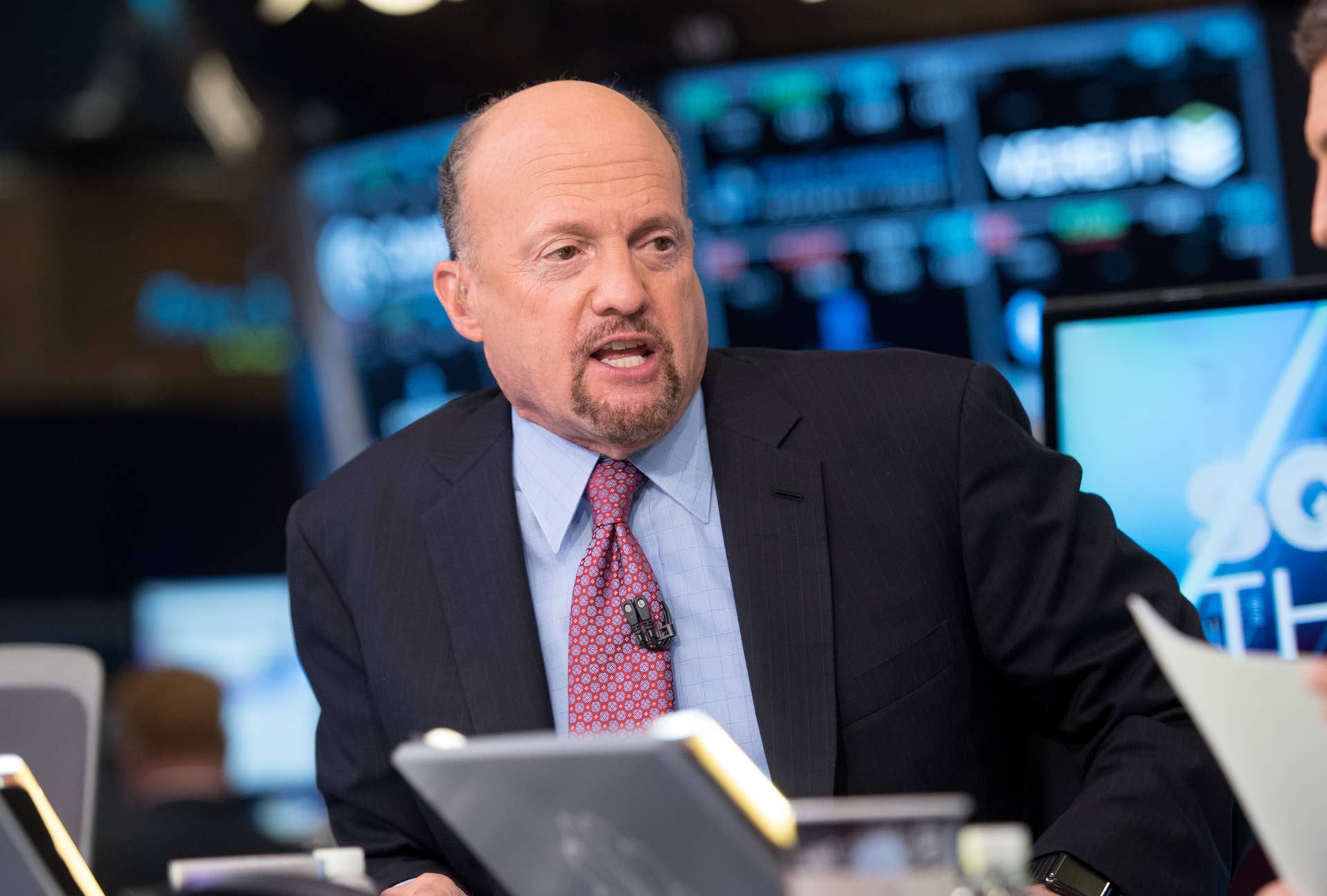 Jim Cramer suggests Texas Roadhouse and Brinker after passing on Shake Shack.
How Texas Roadhouse’s earnings and CEO Jerry Morgan validate the call
Texas Roadhouse’s Q3 earnings were released on November 5 and underscore why easing beef inflation acts as a catalyst.
Revenue shot up 9.5% year-over-year to $1.57 billion as comparable restaurant sales rose 4.3%, layering 0.7% guest traffic gains with higher checks across all three brands, including Bubba’s 33 and Jaggers. Also, average weekly sales reached $163,980 per store, backed up by a 10% jump in average weekly to-go sales.
More importantly, food-cost pressure is already loosening.
Quarterly commodity inflation tanked to just 2% in the third quarter, comfortably below its 5% year-to-date advance. That lifted restaurant margin dollars 11.9% to $228.6 million, expanded restaurant margins 30 basis points to 14.6%, and drove diluted earnings per share up 8.6% to $1.36.
On the November 5 earnings call, Michael Bailen, vice president of investor relations, said diners still wanted to eat out at restaurants that offered good food, service, and value, even as consumer sentiment remained subdued.
“Sentiment is still not the highest among the consumer, but I still believe the behavior when it relates to casual dining remains the same,” he said.
How Texas Roadhouse and Shake Shack compare on valuation and cash flow
Marrying Cramer’s beef-price call with retirement strategy potentially comes down to one primary rule, which is that durable cash flow beats paying for perfection.
Shake Shack is still growing, and Q3 sales jumped 15.2% to $423.3 million with 2.5% same-store sales growth, yet restaurant-level margins slipped 30 basis points to 22.5%, free cash flow margin fell by more than half from 6.5% to 3.1%, and the stock pays no dividend. At 60 times earnings, any business-related stumble leaves retirement savers exposed to severe multiple compression.
Texas Roadhouse offers far steadier compounding at around 31 times earnings, which is nearly half Shake Shack’s multiple. Backed by $585.9 million in year-to-date operating cash flow, management expected about 35 company-owned openings in 2027, repurchased $83.1 million in stock this year, and pays a $3 annual dividend (yielding about 1.6%), as per Morningstar, and raised more than 10% in February.
For savers tired of AI choppiness, a cash-generating steakhouse is now entering a better beef cycle.
Related: Peter Thiel makes new $161 million ETF bet, dethroning Amazon stock
