
A stock that looks like a bargain to one Wall Street veteran can be a position worth abandoning for another.
Google parent Alphabet (GOOGL) has become a striking example.
Despite rising demand for its cloud computing services and increasing use of artificial intelligence, the tech giant’s stock has plummeted. The sell-off has prompted concerns about whether investors are missing a good deal or foreseeing future difficulties.
Jim Cramer, host of CNBC, finds cause for hope.
On Nov. 19, Cramer highlighted a bullish analysis from veteran chartist Larry Williams, who believes Alphabet’s falling valuation and renewed institutional buying could signal an approaching rebound.
Also read: Nvidia stock soars 30% after brutal selloff as Jensen Huang returns
However, Stanley Druckenmiller, a wealthy investor, recently took a completely different approach.
His Duquesne Family Office sold 336,300 shares for around $120.2 million at the end of June, ending its entire stake in Alphabet during the third quarter.
The contrast comes as Alphabet’s stock closed at $265.29 on Nov. 20, approximately 34% below its record closing price in May.
The dispute raises a challenging dilemma for regular investors: Are Google’s enormous AI expenditures starting to jeopardize shareholder returns, or does the company’s dropping value offer an opportunity?
One financial metric that conventional stock-price charts cannot capture may determine the solution.
Why Jim Cramer sees an opportunity in Google stock
Cramer’s confidence stems from a unique blend of value signals and technical indicators.
He discussed veteran market technician Larry Williams’ research on Alphabet shares’ potential turning point on CNBC’s Mad Money on Nov. 19.
Williams discovered two signs that have traditionally been associated with significant rallies in the parent business of Google.
Valuation is involved in the first.
According to Cramer’s talk, Alphabet was selling at around 14 times expected 2026 profits, which is significantly less than the 20 to 30 times earnings multiple the company had regularly commanded over the previous five years.
The second relates to a patented indicator designed to detect purchasing behavior among significant market players, which Williams refers to as professional accumulation.
According to Williams’ methodology, big investors had been actively buying Alphabet stock throughout the preceding four weeks.
Related: Jim Cramer makes bold call on battered apparel stock VF Corp
The combo has shown up close to past Alphabet stock-market lows, including a time in early 2026 that came before a significant uptick.
According to Cramer, the scenario was especially intriguing since both technical and fundamental indications were improving at the same time.
“If Larry’s with it, then I’m with it,” Cramer said, according to his Nov. 19 Mad Money discussion.
The bullish interpretation does not mean Cramer announced a new Alphabet purchase or that Williams’ indicators guarantee a rebound.
However, the value argument makes sense.
Alphabet shares closed at a record $402.62 on May 13 before falling to $265.29 on Nov. 20.
With dividends excluded, an investor who bought $10,000 worth of shares at that record closing price would have around $6,589 left.
In less than six months, that amounts to a $3,411 decrease.
After a sell-off, a declining share price may attract value-oriented investors seeking successful firms.
Druckenmiller’s recent portfolio adjustments, however, indicate that not all seasoned investors are prepared to assume that risk.
Stanley Druckenmiller’s Google exit raises another question
By the end of June, Druckenmiller’s Duquesne Family Office had 336,300 Alphabet Class A shares, valued at around $120.2 million.
That stake had vanished from the company’s stated securities holdings by September 30.
The change was disclosed in Duquesne’s Nov. 16 Form 13F filing.
The filing does not explain Druckenmiller’s justification or whether the family office later reinstated a position.
It’s noteworthy that Alphabet sold before its third-quarter earnings on Oct. 28. It’s inaccurate to say Druckenmiller left because of those results.
However, the financial report shows why investors’ opinions of Alphabet have become more polarized.
Google’s parent company Alphabet reported third-quarter revenue of $127.6 billion, an increase of 25% from a year earlier.
While cloud operating income increased to $11.1 billion from around $3.6 billion, Google Cloud sales more than quadrupled to $30.7 billion.
These findings imply that the company’s expenditures in artificial intelligence are bringing in a significant amount of extra revenue.
But Alphabet’s expenditures are also rising sharply.
During the quarter, capital expenditures totaled $51.4 billion, surpassing the $42.3 billion earned from operations.
As a result, free cash flow was negative $9.1 billion rather than negative $5.9 billion in the preceding quarter.
The money left over after a business finances its capital investments is known as free cash flow. It may help with debt reduction, dividends, share repurchases, and other business objectives.
Even as revenue continues to rise, the decline has raised concerns that Alphabet’s expanding AI infrastructure needs may limit the funds available to shareholders.
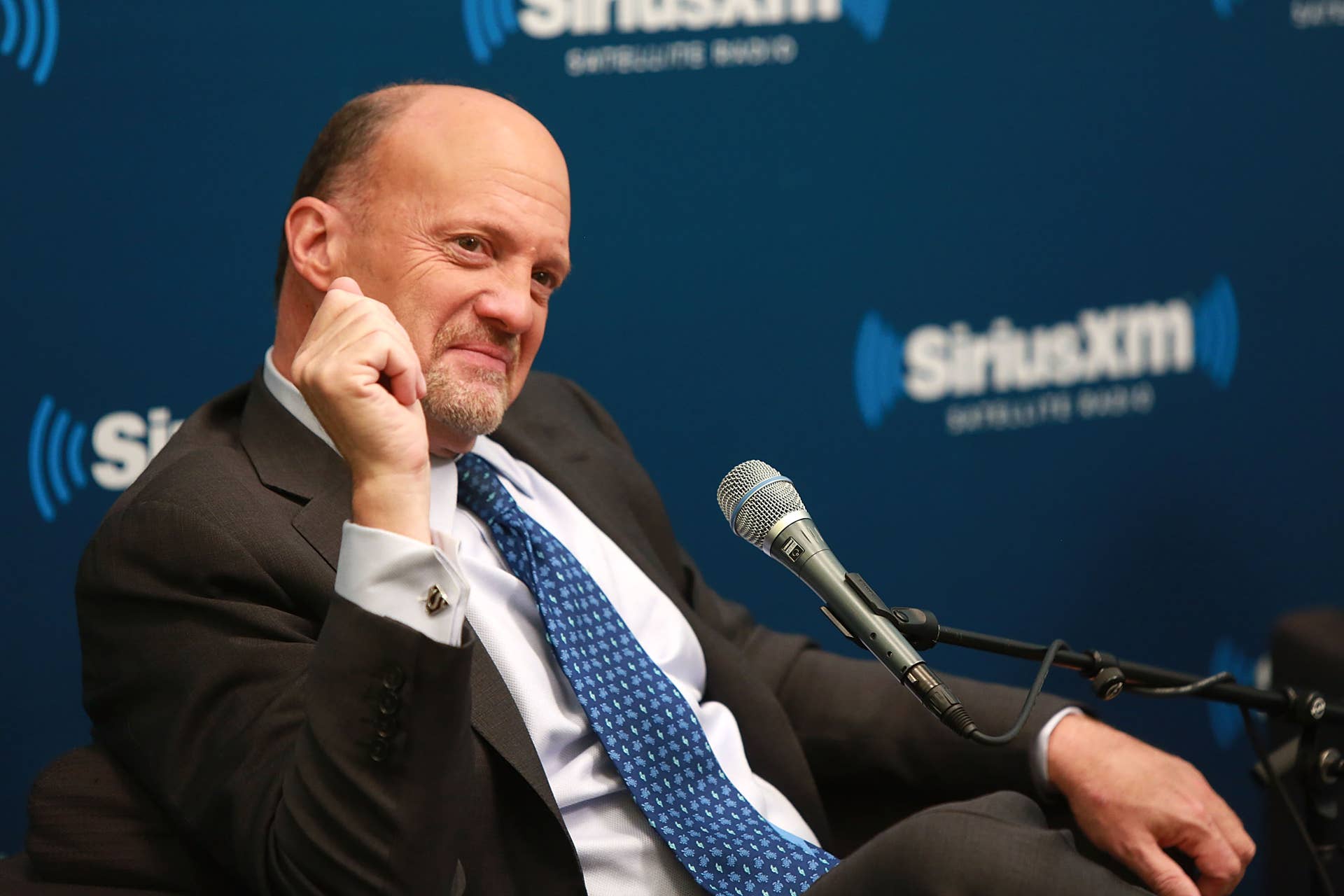 Jim Cramer sees a surprising signal in battered Google stock
Google’s attractive valuation comes with a costly catch
One issue complicates the argument that Alphabet is unusually cheap.
The company’s reported earnings have benefited from substantial investment gains that are separate from its core advertising and cloud businesses.
Alphabet reported a $98 billion net gain in other income during the second quarter, primarily reflecting unrealized gains on its equity investments.
Although such increases increased reported net income, they did not reflect ongoing revenue from cloud computing or advertising services.
When analyzing Alphabet’s price-to-earnings ratio, this difference is important.
When very high investment profits inflate the earnings number used to determine a company’s value, the stock may look cheap.
Investors may get a deeper understanding of the company by contrasting the share price with ongoing operational profitability.
More Artificial Intelligence:
- AI investments fail when companies ignore the hard part of transformation
- Morgan Stanley issues a fresh warning about AI stocks
- CrowdStrike gives companies a ‘kill switch’ as bots go off script
Additionally, reported profits may be quite volatile due to Alphabet’s investment portfolio.
A portion of the profit from prior investment gains was reversed in the third quarter, when the corporation recorded net losses on equity securities of approximately $8.7 billion.
In the meantime, management continued to project $195 billion to $205 billion in capital expenditures for 2026 and said that spending would rise dramatically in 2027.
The company has substantial financial resources to support those investments, including $265.1 billion in cash and marketable securities as of Sept. 30.
This offers a significant buffer against short-term financial stress.
However, if increasing cloud income and operational profitability ultimately outweigh the costs of developing additional AI infrastructure, that will determine the investment case.
This is where the financial worries that could be swaying other institutional investors collide with Cramer’s technical argument.
Although a low valuation may present an opportunity, it offers less safety if the profits used to support the price prove unsustainable.
What Google investors should watch after Cramer’s bullish call
Cramer and Druckenmiller’s divergent strategies show how even seasoned market players may have diverse perspectives on the same business.
Cramer is examining technical signs and value that suggest selling pressure is nearing exhaustion.
His family office had removed its exposure to Alphabet before to the company’s most recent earnings release, as shown by Druckenmiller’s reported departure.
By itself, neither development offers a convincing investment argument.
The most pertinent concern for regular stockholders is whether Alphabet can convert its explosive rise in AI-related revenue into steady free cash flow.
The third-quarter results for Google Cloud show that there is significant client demand. Operating income more than quadrupled, and revenue rose by 103%.
Additionally, the firm disclosed a $561 billion Google Cloud backlog, which is contractual business that may generate income in the future.
However, the corporation must continue to make significant investments to satisfy demand, as the backlog does not instantly convert into cash.
Therefore, when Alphabet releases its next results, investors should focus on three linked metrics: management’s capital investment projection for 2027, free cash flow, and cloud operating margins.
Increasing cloud profitability and reducing investment needs would strengthen the claim that Alphabet’s present valuation undervalues its profit potential.
On the other hand, consistent cash withdrawals or diminishing cloud margins may indicate that the company’s AI growth is proving more costly than investors had projected.
Cramer’s optimistic assessment could turn out to be accurate in the end.
But Alphabet’s next meaningful test will come from its financial statements, not merely from another stock-market chart.
The difference between a declining stock price and an increasing investment opportunity for shareholders ultimately depends on how much money Google’s expanding companies can make after covering the cost of the infrastructure required to support them.
Related: Nvidia’s new China threat could reach your 401(k)
