Canned cocktails fill a market niche, and sales continue to grow.
The space, however, has new players seemingly every day, and that has made it hard for smaller brands to stand out. That may have contributed to the Chapter 7 bankruptcy filed by Miami Cocktail Company, a 13-year-old player in the space.
It’s a Chapter 7 filing made more complicated by the fact that the company’s inventory can’t be sold. It has to be destroyed in accordance with federal Alcohol and Tobacco Tax and Trade Bureau requirements, a process that will carry additional costs, according to court documents.
Founded in 2013 by Ross Andrew Graham and co-founder Simon Benstead, Miami Cocktail Company makes a line of low-calorie, ready-to-drink craft cocktails and spritzes made with fruit juices and sparkling wine.
The company’s website remains up and simply says “we’re shaking things up behind the scenes, check back soon, our spicy cocktails are worth the wait.”
After filing for Chapter 7 bankruptcy, the company won’t be back unless a new owner steps in to buy the brand with the intent of relaunching it.
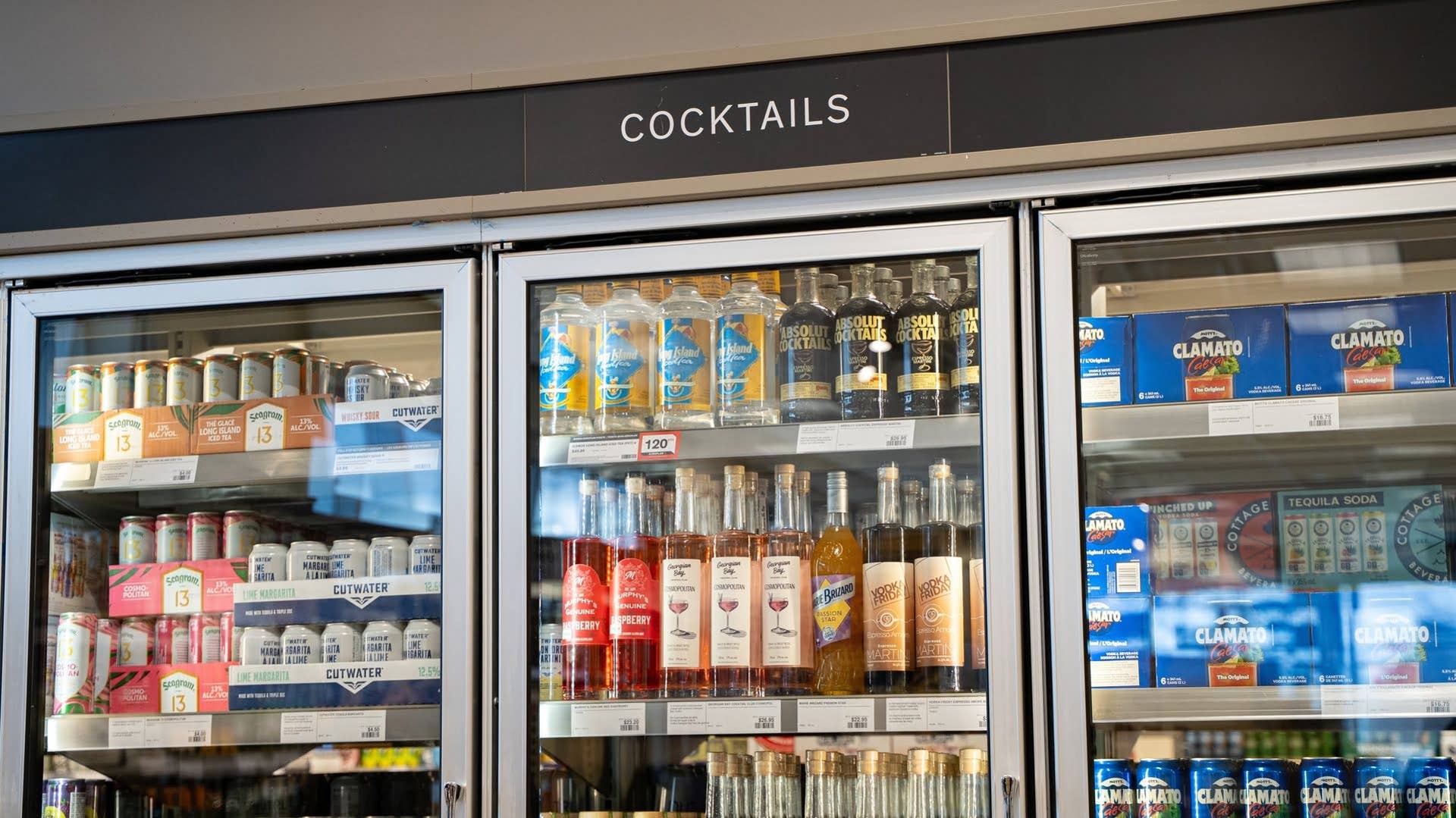 RTD cocktails have become a crowded space.
Shutterstock
The RTD cocktail space features major players
“Sales of spirits-based ready-to-drink cocktails strengthened in U.S. NielsenIQ channels in the four weeks ended November 14, with dollar sales rising 23% and volume climbing 26%,” according to Vinetur.
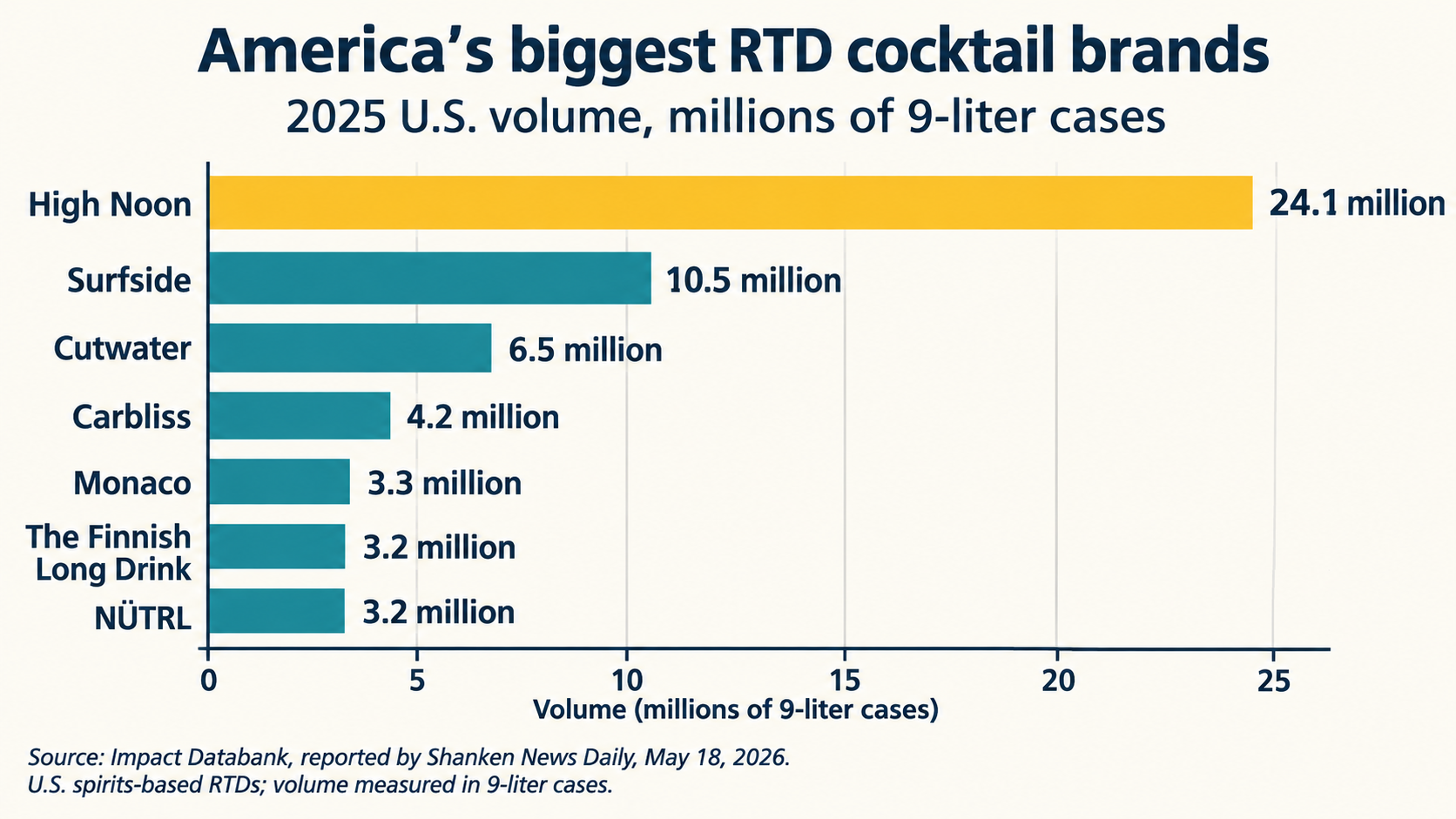
The category features a number of big brands and some of the biggest players in beverages:
- High Noon: Owned by E. & J. Gallo Winery. One of the biggest players in spirits-based canned cocktails. Vodka and tequila seltzers are its core products.
- Jack Daniel’s Country Cocktails: Brown-Forman. An established name in flavored malt and whiskey-based ready-to-drink beverages. (It also has a partnership with Coca-Cola.)
- Cutwater Spirits: Owned by Anheuser-Busch. Margaritas, mai tais, espresso martinis, and other recognizable cocktails.
- NÜTRL: Anheuser-Busch. Competes in the vodka-seltzer segment.
- Truly: Boston Beer Company. Its portfolio includes vodka-based canned cocktails and hard seltzers.
- Simply Spiked: Molson Coors, in partnership with Coca-Cola. A major name in flavored alcoholic beverages.
- On the Rocks: A premium cocktail brand associated with Suntory Global Spirits.
- Jose Cuervo: Proximo Spirits. A major tequila name with ready-to-drink margarita products.
Personally, I have found these products to be a poor imitation of a freshly mixed cocktail. It’s just not that hard to make a vodka tonic or a rum and Coke, but the category has continued to grow.
“RTD innovation has slowed in recent years as companies have learnt from the over-launch mistakes of the hard seltzer era, with cocktails and long drinks consistently holding the largest share of innovation through the consolidation period,” according to report from the IWSR.
More Bankruptcy:
- 39-year-old travel agency shuts down in bankruptcy, cancels all flights
- Major mattress chain files Chapter 11 bankruptcy
- 40-year-old fast-food franchisee files for Chapter 11 bankruptcy
Susie Goldspink, IWSR Head of RTD Insights, noted that where consumers have been drinking these beverages has shifted.
“The on-premise is growing twice as fast as the off-premise for spirit-based RTDs,” she said. “On-premise activation is the fastest path to premium positioning. The channel establishes the price reference point that follows a product into retail.”
TheStreet
Miami Cocktail Chapter 7 bankruptcy at a glance
Miami Cocktail Company has become the latest casualty in the space.
“The company lists 36 unsecured creditor claims. Its largest creditor is investment management firm Trio Capital Group, with $1.45 million owed. Goldman Holdings LLC, a real estate finance and advisory firm, has a $1.13 million claim and Park Street Imports, a firm that provides distribution, back office and financial services to the beverage industry, has two claims totaling $1.28 million,” South Florida Business Journal reported.
- Case Number: 1:26-bk-25456 (Chapter 7 liquidation)
- Judge: Robert A. Mark
- Interim Trustee: Ross R. Hartog
- Debtor Address: 3390 Mary Street, Unit 116, Miami, FL 33133 (Coconut Grove coworking space)
- Creditor Meeting: Dec. 21, 2026, at 11 a.m. via Zoom
- Debt & Assets: Court filings report nearly $7.7 million in debt across 36 unsecured creditor claims and no assets available to pay it off.
- Major Creditors: Trio Capital Group ($1.45 million), Park Street Imports (two claims totaling $1.28 million), and Goldman Holdings LLC ($1.13 million).
- Expired Inventory: Remaining canned cocktail inventory held at warehouses is expired, cannot be legally sold, and must be destroyed per Alcohol and Tobacco Tax and Trade Bureau rules at additional cost.
- Source: PacerMonitor
RTM Nexus CEO Dominick Miserandino likens this Chapter 7 filing to the shutdowns in the craft beer industry.
“The math catching up to the industry is incredibly straightforward: Too many breweries scaled up to do the exact same thing at the exact same time. Everyone built out a massive brewing operation to supply local retail stores, completely oversaturating the market,” he shared with TheStreet.
Hamza Imran, co-founder at Byte Bricks, sees these failures as inevitable.
“This happens in a lot of industries when growth becomes trend-driven instead of differentiation-driven. Once everyone builds the same model for the same shelves and same customers, margins start collapsing quietly before closures become visible publicly,” he shared in response to Miserandino’s comments.
