
Macy’s Thanksgiving Day Parade is celebrating its 100th edition with an unexpected financial twist that could benefit some of America’s biggest advertisers.
Additionally, the surprise includes 30-second television ads that cost over $1 million.
Following the disruption of Macy’s (M) historic Thanksgiving event due to inclement weather, NBCUniversal, owned by Comcast (CMCSA), has chosen to offer advertisers two commercial airings for the price of one.
Variety reported Wednesday, Nov. 25, that NBC will broadcast commercials purchased for the centennial parade twice, once during Thursday’s replay of the 2025 event and again during Saturday’s rescheduled live celebration.
The agreement comes at a time when advertising during the procession is more costly than ever.
A 30-second advertisement is expected to cost between $1.03 million and $1.2 million this year, increasing 15% to 20% from 2025, according to advertising tracker Guideline, cited by Variety.
During one of the biggest holiday shopping weeks in America, the second airing offers marketers unanticipated visibility.
However, there is a catch to this remarkable arrangement.
Particularly if the event has shifted from its customary Thanksgiving morning time slot, an extra commercial does not always translate into an equal gain in advertising value.
The centennial commemoration has presented NBC and Macy’s with a new challenge: managing an uncertain broadcast viewership while safeguarding a profitable advertising tradition.
Macy’s 100th parade creates an unexpected advertising opportunity
Since its beginning in 1924, the Macy’s Thanksgiving Day Parade has grown to be one of the most well-known holiday traditions in America.
After pauses during World War II, the festival will celebrate its 100th anniversary in 2026.
An unusual revenue arrangement for marketers has resulted from what was supposed to be a historic Thanksgiving event.
NBC confirmed its plan to show parade advertisements twice without compensating participating sponsors for the extra spot, according to Variety.
The stakes are high.
According to Guideline, advertising income from the parade last year exceeded $88.7 million.
Variety also reported that a 30-second commercial cost between $900,000 and $1 million during the 2025 event.
The expected costs for 2026 show how important the parade has become to big businesses.
The second airing, however, should not be confused with a guaranteed benefit with comparable value or an extra $1 million in cash.
The number of viewers and whether marketers can reach their target audience will determine its commercial worth.
NBC’s Thanksgiving advertising business breaks records
NBCUniversal reported high demand from advertisers going into Thanksgiving week.
The company announced Monday, Nov. 23, that its broader holiday programming business had attracted nearly 50 new advertisers and generated 30% more revenue than last year.
It also reported growing advertising investments across automotive, entertainment, luxury, pharmaceutical, and technology brands.
The parade itself is a particularly alluring marketing opportunity.
According to NBCUniversal, the 2025 Macy’s Thanksgiving Day Parade established a record with 34.3 million viewers across NBC and Peacock.
The original NBC broadcast drew 25.4 million viewers.
These numbers explain why businesses pay higher fees for ad placements.
In contrast to regular television shows, the parade unites millions of families around a single national holiday.
The challenge for NBC is preserving that audience when the live event moves to Saturday, Nov. 28.
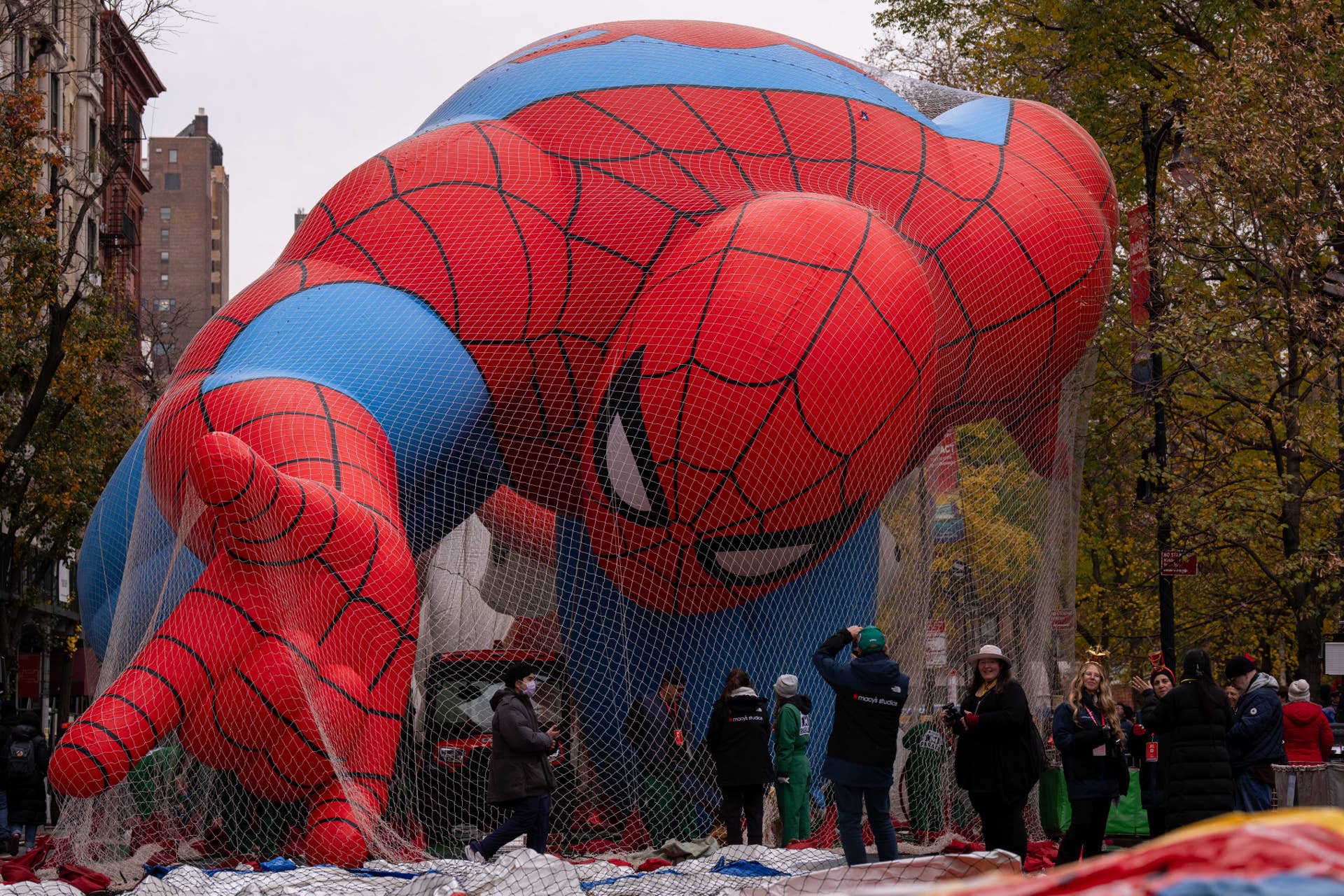 Macy’s 100th parade creates an unexpected TV opportunity
GEICO and Starbucks make big bets on Macy’s centennial
Several major companies have developed elaborate advertising campaigns around the parade’s 100th edition.
Berkshire Hathaway (BRK.B)-owned GEICO is taking part with its first parade float.
The GEICO Gecko, the Caveman, and the Hump Day camel are among the well-known promotional figures used in the insurer’s campaign.
GEICO also developed a two-minute stop-motion holiday commercial as part of its 90th anniversary celebrations.
Another significant player is Starbucks (SBUX).
NBCUniversal said the coffee chain planned to promote its holiday album, The Holiday Blend, through branded experiences, parade appearances, and a sponsored TikTok livestream.
These advertisements show how the parade has developed into something more than a traditional TV commercial.
Businesses employ digital promotions, floats, and performances to attract customers on a variety of media.
Although a second television broadcast provides an additional avenue for exposure, it may not replicate the value of all planned marketing initiatives.
Macy’s historic celebration faces an unexpected ratings test
NBCUniversal confirmed Thursday, Nov. 26, that the rescheduled centennial parade will air Saturday at 8:30 a.m. Eastern, Central and Mountain time and 7:30 a.m. Pacific.
Advertisers are apprehensive about the updated timetable.
Some families may watch both shows, giving businesses more visibility.
Due to holiday travel, shopping, or other obligations, some people may not be able to attend the celebration on Saturday.
The circumstance emphasizes for Comcast how crucial it is to preserve advertiser ties around high-end television events.
For Macy’s, it gives a celebration commemorating a century of parade history an unexpected commercial component.
Neither business has revealed the exact amount of money lost as a result of the delay.
However, Saturday’s viewing numbers will be used to assess if the extra commercial exposure yields significant advantages.
For the time being, NBC has made a unique choice about one of the most costly advertising possibilities on television.
Businesses that spent over $1 million for a quick cameo in Macy’s historic parade will get a free second airing.
The greater issue is whether it turns into a real advertising bonanza or just makes up for a broken holiday custom.
Related: Chinese cars face new U.S. roadblock as prices soar
