
One of the few good things to come out of the Covid pandemic was improved travel technology, like mobile check-in for flights and contactless payment at restaurants.
And how about the rental car experience?
💵💰Don’t miss the move: Subscribe to TheStreet’s free daily newsletter💰💵
Have you ever arrived at a car-rental agency and just walked directly to your car, grabbed the keys and been on your way, without having to sign a million screens or talk to the bored person behind the desk?
Once you’re able to take this shortcut, you’ll never want to be stuck waiting in the excruciatingly slow lines again.
But checking into a hotel is different. There is something reassuring about interacting with someone face-to-face in the place where you’re going to sleep.
Hospitality is, after all, a people business.
But one La Quinta location in Florida failed to get the memo about how to welcome guests.
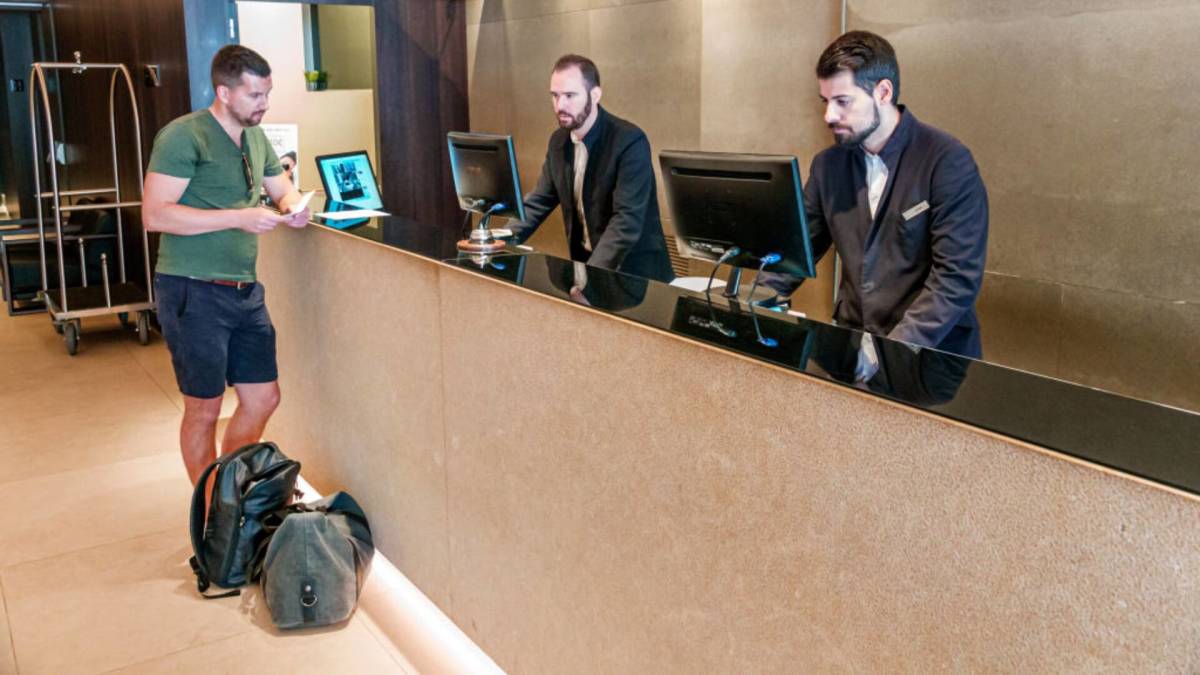 Some hotels are offering mobile and even remote check-in.
Image source: Universal Images Group via Getty Images
La Quinta using remote employees for hotel check-in
An unnamed Florida La Quinta Inn & Suites location is facing complaints for allegedly allowing remote workers to check in guests.
A video making the rounds on social media shows a guest filming his check-in experience at a location in Miami.
In the video, we see the guest interacting with a hotel employee at a digital kiosk, according to the view from the screen.
Related: Hyatt and American quietly share viable path to elite status
The employee whose name appears to be Stevensen asks the guest common check-in questions like, “one key or two?” before prompting the guest to sign the registration form on the screen.
While it’s not clear if this is the only option for guests to check in, Wyndham (WH) had something to say about it:
“This is a franchised location, meaning the hotel is independently owned and operated, and as such, we don’t control staffing. That said, this franchisee’s use of this equipment is not brand-approved nor is it being marketed to other franchisees,” a Wyndham spokesperson said in a statement to Syracuse.com.
Our “brand standards require hotels to have a team member physically stationed at the front desk at all times,” the Wyndam spokesperson added.
Wyndham said it is investigating the incident.
On X (the former Twitter), people had strong feelings about the practice. “I would immediately walk out and find another hotel,” wrote one user.
Some hotel technology is risky
The Florida hotel may just be giving people an extreme version of what they say they want: The majority of respondents who participated in a 2025 Jonas Hospitality survey — 94% — say they prefer mobile check-in and check-out.
While mobile and remote check-in might be efficient and cost-effective for the hotel, it’s not ideal for all guests. It’s only possible for people with smartphones, for one thing, and guests who have special needs or requests might not be able to get the assistance they need, especially if the check-in process is done remotely.
Cybersecurity firms have also found that self-check-in kiosks have significant vulnerabilities. Chief among the concerns from IT security firms, including the Swiss company Pentagrid, are kiosks that display sensitive information, such as room numbers and room entry codes, allowing unauthorized people to access guest rooms.
More travel:
- United Airlines grounds all flights out of a major hub
- American Airlines cancels more flights to multiple major cities
- Why your TSA experience at the airport is about to get worse
As redditor @howwouldiknow1492 wrote, “I hate digital check-in and especially pre-arrival digital check-in. You have to fool around with a tiny phone screen and provide a lot of information you already provided during the booking process. Chances are you’re driving or juggling luggage when the text comes anyway. I never do it. So forget that kind of enhancement of the guest experience and just staff the front desk.”
Over on X, @wallsstreetapes wrote, “Miami hotel has outsourced their front desk to India. Guests are checked in virtually on video call with an Indian representative. More American jobs outsourced overseas. At some point this should just become illegal. If you make money in America, you should hire Americans.”
As remote work technologies expand, it looks like even some traditional customer-facing roles are being outsourced, but it remains to be seen whether remote hotel check-in will catch on, or the La Quinta experiment is an exception.