
During years reporting on personal finance, I’ve written frequently that Social Security provides an important — though ideally not dominant — stream of income that helps cover essential expenses for Americans in retirement.
And a key decision people face as they approach retirement is choosing the optimal time to start drawing their Social Security benefits.
Jean Chatzky, longtime financial editor for NBC’s “Today” show and founder of HerMoney, warns Americans that collecting Social Security early can be a financial mistake and argues that waiting until age 70 is often the smartest move.
Related: AARP sends strong message on crucial Social Security strategy
“There’s not a single ‘best age’ for everyone and, ultimately, it’s your choice,” explained the Social Security Administration (SSA). “The most important thing is to make an informed decision.”
“Base your decision about when to apply for benefits on your personal and family circumstances,” the SSA continued.
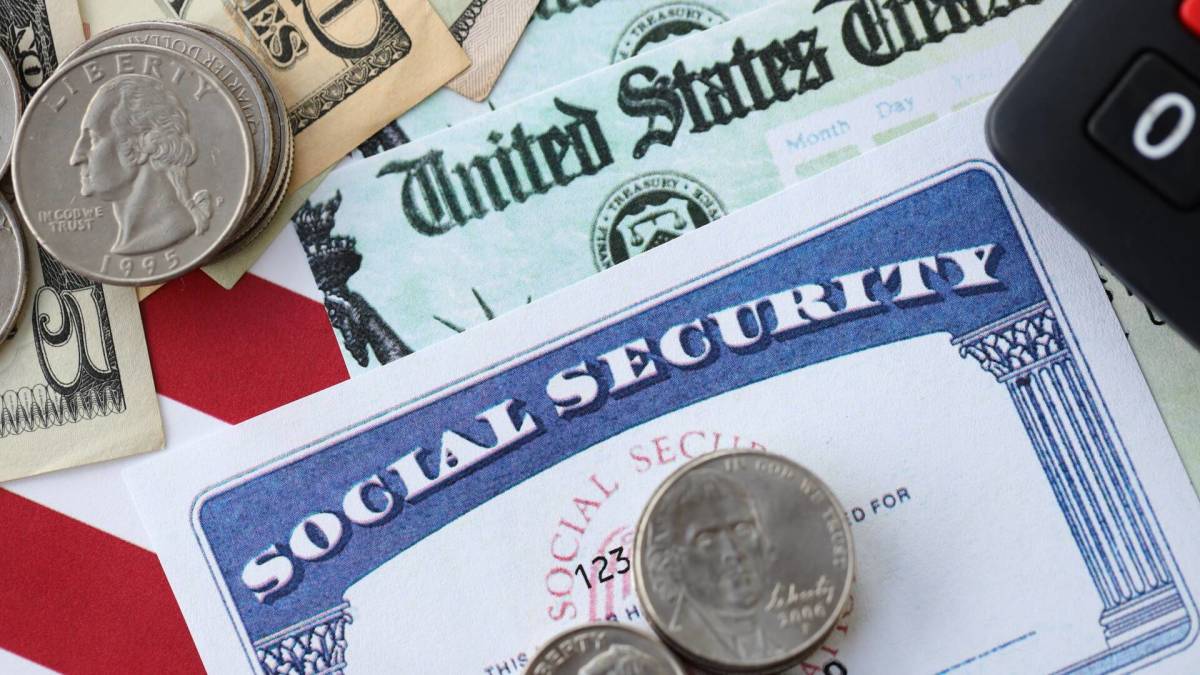 Jean Chatzky believes it is most financially advantageous to begin collecting Social Security benefits at 70.
Shutterstock
SSA explains weighing Social Security timing options
Consider how timing affects monthly payments. An SSA benefit reduction chart shows that a worker with a full retirement age of 67 receives 70% of their full benefit at age 62, 100% at age 67, and 124% at age 70 due to delayed retirement credits.
“Let’s say you turn 62 in 2024,” the SSA clarified. “Your full retirement age is 67, and your monthly benefit that starts at full retirement age is $2,000. If you start to get benefits at age 62, we’ll reduce your monthly benefit 30% to $1,400 to account for the longer time you receive benefits. This decrease is usually permanent.”
“If you choose to delay your receipt of benefits until age 70, you would increase your monthly ‘benefit’ to $2,480,” further explained the SSA. “This increase is the result of delayed retirement credits you earn for your decision to postpone receipt of benefits past your full retirement age.”
“The benefit at age 70 in this example is about 77% more than the benefit you would receive each month if you start to get benefits at age 62 — a difference of $1,080 each month.”
Jean Chatzky offers Social Security advice for couples
For married couples, Chatzky suggests evaluating who should delay claiming based on expected longevity, since optimizing one spouse’s benefit can strengthen the household’s long-term financial picture.
These choices matter, especially when determining how much income will be available to cover everyday necessities.
“There’s your basic lifestyle, which includes the expenses you need to cover: food, utilities, property taxes, healthcare premiums and the like,” Chatzky wrote.
“Because these are needs that you’re likely to have throughout retirement, you don’t want to take considerable risk (some people would say any risk) with the money you’re using to pay these expenses,” she added.
More on personal finance:
- Zillow forecasts big mortgage change for U.S. housing market
- AARP sounds alarm on major Social Security problem
- Dave Ramsey bluntly warns Americans on 401(k)s
During a person’s working years, Chatzky advises making saving a steady habit — ideally through automatic contributions to a 401(k) or similar workplace plan that pulls money out of each paycheck before it ever reaches a spending account.
Because those dollars never pass through someone’s hands, the temptation to use them disappears, making it much easier to stay committed to long‑term financial goals.
AARP outlines 401(k) features for retirement planning
AARP, the advocacy organization for Americans over 50, argues that the most important thing people can do for retirement security is to contribute regularly to an employer-sponsored savings plan such as a 401(k).
“That’s the verdict of a July 2024 study from Morningstar’s Center for Retirement & Policy Studies that projected retirement outcomes based on factors such as longevity, health care costs and participation in a workplace plan,” AARP wrote.
“Researchers found that 57 percent of Gen X, millennial and Gen Z workers who don’t contribute to a plan risk running short of money in retirement, compared with 21 percent who contribute for 20 or more years.”
AARP explains five ways Americans can add value to their 401(k) plans.
Auto‑escalation
- Automatically increases an employee’s retirement plan contribution each year, typically by 1% of pay, until reaching an employer‑set limit (capped at 15% by federal law).
- A worker starting at a 5% contribution would rise to 6% the next year, 7% the year after, and so on unless they opt out.
- Adoption has grown from 6% of plans in 2010 to 21% in 2022, according to the U.S. Bureau of Labor Statistics.
- SECURE 2.0 will expand use further by requiring most new 401(k) plans beginning in 2025 to include auto‑enrollment and auto‑escalation.
- Experts say removing the need for employees to initiate or increase contributions helps more workers reach adequate savings, though individuals should still review their accounts annually. Source: AARP
Automatic asset allocation
- Many workplace plans automatically invest contributions for workers who do not choose their own investments.
- Default options are designed to reflect widely accepted retirement‑saving best practices.
- Most plans use target‑date funds (TDFs), which adjust their mix of stocks, bonds, and cash as a worker ages.
- Younger savers are typically invested more heavily in stocks to pursue long‑term growth.
- As retirement nears, TDFs shift toward more conservative holdings to help preserve accumulated savings.
- This structure helps workers who may not have the time, interest, or expertise to manage their own investment mix. Source: AARP
Student loan match
- SECURE 2.0 now allows employers to make matching retirement contributions for employees who are using their own money to repay student loans.
- Workers can receive the same employer match they would have earned by contributing to a 401(k), even if their paycheck dollars go toward loan payments instead. Example: An employee earning $80,000 who contributes 5% and receives a dollar‑for‑dollar match could direct the $4,000 toward student debt while still receiving a $4,000 employer contribution.
- Adoption is limited so far but expected to grow in 2025, especially among larger employers seeking to attract younger workers.
- Smaller businesses may hesitate due to administrative complexity and cost. Source: AARP
Emergency savings accounts
- Many Americans lack adequate emergency savings; Bankrate reports that 27% have none and another 29% have less than three months of expenses.
- Without a cash buffer, workers are more likely to tap retirement accounts for unexpected costs.
- SECURE 2.0 allows employers to add an emergency savings feature to their retirement plans.
- Employees can contribute up to $2,500 through payroll deductions into a linked account for short‑term needs.
- Large employers such as Delta, Best Buy, and Starbucks have already adopted similar programs.
- A 2023 T. Rowe Price survey found that 85% of retirement‑plan consultants expect broader adoption within three to five years. Source: AARP
In‑plan annuities
- In‑plan annuities convert part of a worker’s retirement savings into guaranteed monthly income for life, similar to a traditional pension.
- They help address longevity risk — the challenge of making savings last 20 to 30 years or more.
- LIMRA estimates only about 10% of defined‑contribution plans offered annuities in 2023, but interest is rising among plan sponsors and workers with significant assets.
- Benefits include predictable income and protection against outliving savings.
- Trade‑offs include higher fees, limited investment flexibility, reduced access to funds once annuitized, and vulnerability of fixed payments to inflation.
- Workers should weigh these factors carefully before choosing an annuity option. Source: AARP
Related: Dave Ramsey, AARP sound alarm on Social Security, 401(k)s, IRAs