
The 19th Century journalist and short-story writer Ambrose Bierce once said lawsuits “are a machine which you go into as a pig and come out of as a sausage.”
Now, the arrival of artificial intelligence is throwing tons of pork in all directions.
💵💰Don’t miss the move: Subscribe to TheStreet’s free daily newsletter 💰💵
Authors, musicians and publishers have filed lawsuits charging that AI companies have infringed their copyrights by training AI models on their material without permission and that the AI systems’ output can create works that infringe on current copyrights.
Some notable cases include The New York Times’ NYT lawsuit charging OpenAI and Microsoft (MSFT) , which has invested billions in the ChatGPT creator.
The Times claims that the software giant and OpenAI used the media company’s copyrighted works to train the ChatGPT AI model.
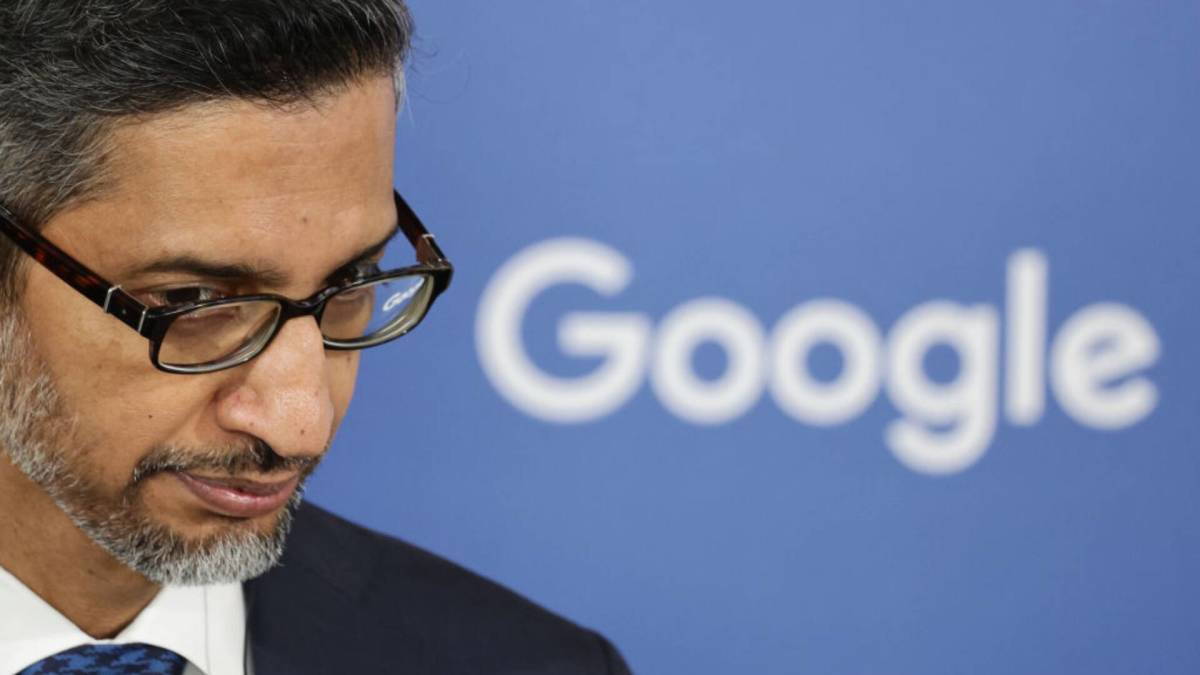 Alphabet CEO Sundar Pichai’s company is the target of a lawsuit by Penske Media.
Image source: Porzycki/NurPhoto via Getty Images
Law firm: Key AI questions still unanswered
The case, filed in December 2023 in U.S. District Court for the Southern District of New York, is in the discovery phase, with the court having largely denied the tech companies’ motions to dismiss the suit.
In another case, Disney (DIS) and Universal filed a lawsuit, in U.S. District Court for the Central District of California, against Midjourney, a provider of technology that generates images from text. The plaintiffs alleged copyright infringement, saying the AI image generator was trained on vast amounts of their copyrighted content, including iconic characters.
More Tech Stocks:
- Analysts turn heads with Nvidia rival’s stock target after earnings
- Analysts unveil surprising Dell stock target after slump
- AI stocks face a reality check after a $1.5 billion implosion
And authors Andrea Bartz, Charles Graeber and Kirk Wallace Johnson settled a lawsuit against Anthropic, alleging the AI company used their copyrighted books to train its AI chatbot, Claude.
The terms of the suit, filed as a class action in U.S. District Court for the Northern District of California, include Anthropic paying $1.5 billion. The settlement is subject to the court’s approval.
“Though much early media attention focused on copyright infringement claims,” the law firm Debevoise & Plimpton said in a Jan. 13 post, “more recent cases have advanced a variety of claims.”
These included trademark dilution, false advertising, right of publicity, and unfair competition claims that pose a new set of challenges for AI developers and companies that use generative AI outputs in their advertising and elsewhere.”
Despite the flurry of litigation, the firm said many key questions remain unanswered.
“We expect courts and regulators — including the U.S. Copyright Office — will begin to bring some clarity to AI issues, but there is a long road ahead,” the post said.
“We expect to see continued litigation, especially around the core fair use defense, and plaintiffs refining their theories as courts issue decisions in some of the earliest-filed cases.”
Fair use in U.S. copyright law says that limited portions of copyrighted material can be used in publishing things like reviews and criticism and in teaching and news reporting.
Penske Media, which owns publications including Rolling Stone, Billboard, Variety, Hollywood Reporter, Deadline and Vibe, is one of the latest companies to step into the AI legal arena.
Google: AI claims are ‘meritless’
The New York publisher became the first major American media organization to sue Google and parent Alphabet (GOOGL) , charging that the world’s largest internet search engine improperly used content to create AI summaries that damage their business.
The lawsuit accused Google of continuing to “wield its monopoly to coerce [Penske Media] into permitting Google to republish PMC’s content in AI Overviews” and to use that content to train its AI models.
Related: Google offers surprising reason for investors to cheer
The company said the AI overviews that often appear at the top of search results leave users with little reason to click through to the source material, hurting traffic and illegally benefitting from the work of its reporters.
“As a leading global publisher, we have a duty to protect PMC’s best-in-class journalists and award-winning journalism as a source of truth,” Penske Media CEO Jay Penske said in a statement.
“Furthermore, we have a responsibility to proactively fight for the future of digital media and preserve its integrity — all of which is threatened by Google’s current actions.”
Google spokesperson José Castañeda said in a statement to TechCrunch that AI overviews make Google search “more helpful” and create “new opportunities for content to be discovered.”
“Every day, Google sends billions of clicks to sites across the web, and AI Overviews send traffic to a greater diversity of sites,” Castañeda said. “We will defend against these meritless claims.”
The lawsuit said that Penske Media allows Google to crawl its websites in an “exchange of access for traffic” that is “the fundamental bargain that supports the production of content for the open commercial Web.” But Google has recently “begun to tie its participation in this bargain to another transaction to which PMC and other publishers do not willingly consent,” the suit says.
Related: The stock market is being led by a new group of winners