
We’ve all had that moment when you’re scrolling through an Amazon (AMZN) Prime Day deal, scoop something cheap, and feel like you’re winning.
Well, hold that thought.
Though Amazon may still be handing out headline discounts, something a little less obvious is unfolding behind the scenes.
💵💰Don’t miss the move: Subscribe to TheStreet’s free daily newsletter💰💵
It turns out that arguably the biggest name in retail just made a subtle move.
Though shoppers might not have noticed that right away, the reasons behind it have everything to do with politics, and a promise that suddenly feels a little slippery.
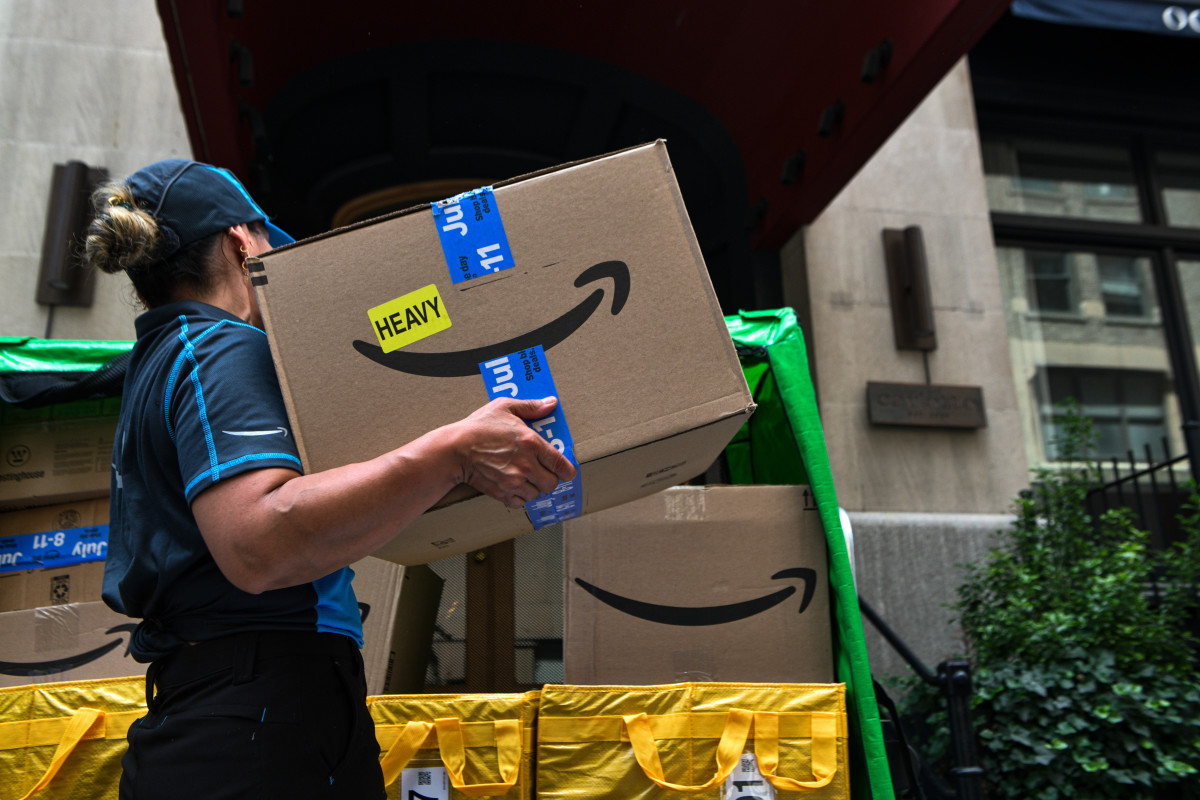 Amazon’s response to President Trump’s tariffs is subtle, but it’s showing up in everyday prices.
Image source: Bloomberg/Getty Images
Tariffs may aim at producers, but shoppers take the hit
Tariffs may sound like a win for American industry. In reality, though, they often end up costing regular people the most.
When policymakers slap duties on imports, they say they’re looking to protect domestic producers. However, history has shown that those taxes almost always impact consumer prices.
In 1930, the Smoot–Hawley Tariff Act raised U.S. import taxes by over 50%.
The result was that prices on clothing and home goods spiked, global trade tanked, and the Great Depression worsened.
Fast forward to 2002. President George W. Bush imposed steel tariffs as high as 30%. That helped steelmakers but weighed down automakers, appliance brands, and construction companies.
Related: Top economist drops 6-word verdict on Trump tariffs, inflation
On top of that, we saw a marked increase in unemployment, prices climbed, and economic growth took a hit.
Even “niche” tariffs ripple far. In 2018, washing machine duties led to a 12% jump in prices for washers and dryers (those weren’t taxed).
The University of Chicago estimated that it cost U.S. consumers a whopping $1.5 billion per year.
That’s because businesses can only respond to tariffs in three ways: stomach the cost, move production, or pass it down the line.
Most opt for the third, which leaves shoppers holding the bag, especially when smaller businesses aren’t able to negotiate better deals or spread out the pain.
More News:
- Bank of America quietly reboots Microsoft stock price target
- JPMorgan reveals 9 stocks with major problems
- Rigetti shakes up quantum computing with bold advance
President Donald Trump’s tariffs today follow a similar pattern.
The goal is to boost domestic output significantly, but it’s likely to end up shrinking choice while hiking costs for shoppers.
And when other countries hit back with their own tariffs, American exporters also feel the heat.
Amazon’s quiet pricing shift raises questions
Though Amazon insists it’s committed to keeping costs low, a recent report suggests otherwise.
According to the Wall Street Journal, the e-commerce giant has been quietly raising prices on hundreds of essential items since President Trump’s tariffs were announced in April.
From deodorants to pet food, shoppers are feeling the squeeze, even if they haven’t noticed yet.
Amazon tariff prices on low-cost goods increased by an average of 5% from April to July, the report said.
That may sound relatively low, but individual items paint a different picture.
Related: Major analyst revamps Nvidia stock price target after China surprise
For instance, a single can of Campbell’s clam chowder jumped nearly 30%. That’s far from being a rounding error.
It stings a lot more because Amazon CEO Andy Jassy had pledged to shield consumers from the fallout of Trump administration tariffs.
They even doubled down during Amazon Prime Day deals, underscoring the importance of savings and affordability.
However, in reality, it seems Amazon is absorbing costs on higher-ticket items while quietly letting prices climb on everyday goods.
What’s surprising is that Amazon sellers say they haven’t upped their wholesale prices, suggesting the retail giant is looking to make a call on its end.
Still, Amazon’s rivals aren’t following suit. Walmart recently lowered prices on comparable products, while Target is finding other ways to cut costs before touching prices.
All of these positions put Amazon in a tricky spot.
While it’s still offering discounts on big-ticket items, its strategy on essentials offers an entirely different take, one shaped more by tariffs than consumer relief.
As the Trump administration’s trade policies evolve, shoppers may want to look at their carts as closely as their savings.