
Twelve years ago, Lisa Su walked into her first day as AMD’s CEO. The company was worth about $2.5 billion then. Analysts were all over openly discussing whether it would survive.
Intel dominated the PC and server markets. Nvidia had locked up gaming GPUs. AMD was the distant third in every category that mattered.
Twelve years later, Su is personally flying between Taipei and Seoul to meet with the CEOs of TSMC, Foxconn, Samsung, and SK Hynix.
And it is not help she is looking for. Su is doing it to figure out how to source enough chips to meet the demand that is already waiting. I think “incredible” is such an understatement for such performance.
The performance is clearly evident in the company’s stock price. AMD hit a new all-time high of $658.52 on Oct. 6, according to Yahoo Finance. The stock is up 201.58% year-to-date, and 502.26% over the last three years.
On Oct.6 in Taipei, Su’s statement framed every conversation about AI infrastructure for the next several years:
There’s very, very high demand for the next several years.
ALSO READ: Advanced Micro Devices Inc. Latest News
The supply crisis AMD is navigating in real time
It is worth sitting with the specific language Su used in Taiwan and Seoul, because I don’t think it’s a typical communication of a CEO lacking confidence and commitment.
“The demand is even higher than our supply,” Su said about CPUs in the interview.
“We’ve been able to increase our supply as we’ve gone through 2026, and we’re going to substantially increase our supply in 2027. But we can definitely use more.”
To memory suppliers in South Korea, she said: “I encourage them to build faster, as fast as possible.”
The CEO cannot get enough chips. Why? Because demand for what AMD makes has accelerated beyond what any planning cycle anticipated. I have covered this dynamic across Micron, SanDisk, and SK Hynix earlier this year.
More AMD:
- Jim Cramer sends a blunt message to AMD stock investors
- Bank of America sends wake-up call to AMD stock investors
- Nvidia just sent a strong signal to AMD and Intel investors
- Does AMD pay dividends? How the chipmaker spends its money
Micron CEO Sanjay Mehrotra said more than 75% of the company’s 2027 output is already committed, as TheStreet reported. The memory crunch and the compute crunch are the same underlying story: Physical infrastructure is the real bottleneck in the AI buildout, not software or models.
Su also addressed memory beyond CPUs. She said HBM remains supply-constrained, and AMD needs more advanced packaging capacity.
Her Seoul meetings with SK Hynix and Samsung centred on high-level supply-chain and strategic negotiations to secure multi-year HBM supplies for AMD’s next-generation AI accelerators.
Remember, SK Hynix and Samsung are the two companies supplying the HBM used in AMD’s AI accelerators.
AMD is planning 3 to 5 years ahead
The most consequential detail from Su’s Taiwan visit was not actually the supply crunch but how AMD is responding organizationally.
“We used to plan capacity one or two years in advance,” Su said. “Now it is coordinating three to five years out to ensure wafer, packaging, and other capacity expands together.”
That is a fundamental change in the operating model of a fabless semiconductor company. Planning 12 to 24 months is standard practice.
But planning 36 to 60 months means AMD is making demand commitments with a level of visibility it simply did not have when data centers were ordering chips on annual cycles.
It also means the demand Su is describing is not a burst cycle. It is a sustained structural shift that she believes justifies multi-year forward contracts with suppliers. AMD’s more than $10 billion investment in Taiwan’s supply chain, announced in May, is now being expanded further.
A recent Benzinga report showed Morgan Stanley estimated that U.S. data center developers face a 32-gigawatt power shortfall through 2028. That means even if chips were infinitely available, the physical infrastructure to power them is still catching up.
I have recently covered this energy angle through Bloom Energy, Quanta Services, and Eaton. The constraint isn’t any single input, but the entire infrastructure stack reaching its limits simultaneously.
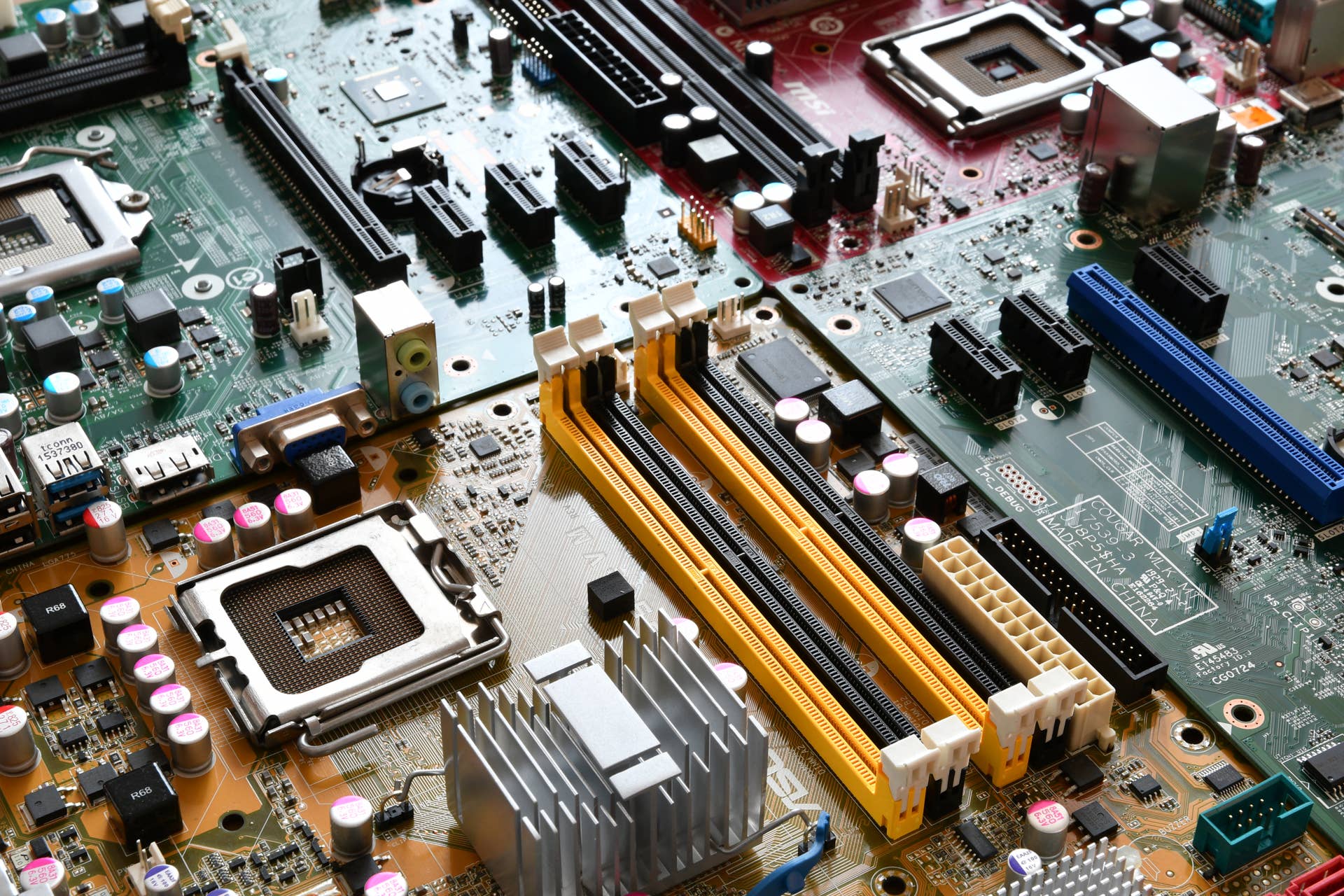 AMD CEO says that their CPU Demand is even higher than supply.
undefined undefined / Getty Images
What AMD’s all-time high means and what Jim Cramer saw coming
I covered Jim Cramer’s call on AMD at the end of September, when the stock briefly crossed $1 trillion in market capitalization for the first time. He said Lisa Su had orchestrated “one of the greatest turnarounds in history at AMD, arguably the greatest of all time,” and saw no sign of it stopping.
He was right about the direction. AMD reached a new all-time high of $658.52 on October 6. That was the same day Su was on her supply-chain tour in Asia, personally securing the chips and memory needed to fulfil orders already on the books.
The human dimension of this story is the millions of workers building AI infrastructure — the data center construction crews, the fab workers running advanced nodes in Taiwan and South Korea, the engineers designing the packaging that connects HBM to accelerators.
Su is personally coordinating the physical supply chains that will determine whether the AI buildout runs on schedule or stalls.
“I think we very much rely on the Korean supply chain,” Su said in Seoul. For a company worth over $1 trillion, I honestly think that kind of directness about dependency is its own form of confidence.
Related: AMD’s stock buybacks explained: History, balance & outlook
