
What’s going on?
American Eagle Outfitters (AEO) is a shopping mall staple that owns the iconic American Eagle brand, as well as the popular Aerie and fast-growing Offline by Aerie store brands.
The Pittsburgh company’s share price surged 35% at 3 p.m. EDT Thursday, Sept. 4, after its fiscal-second-quarter financial results outpaced Wall Street analyst expectations.
The strong results were mainly due to strong traffic following the launch of its marketing campaign featuring the “White Lotus” star Sydney Sweeney. The company also highlighted strength at Aerie and offered better-than-hoped guidance for the rest of fiscal 2025.
The numbers:
- Net revenue of $1.28 billion, down 1% year over year.
- Total comparable sales down 1%.
- Aerie comparable sales up 3%.
- American Eagle comparable sales decreased 3%.
Source: American Eagle Outfitters.
Why it matters?
The retail store chain has been battling to win back shoppers amid declining mall-based foot traffic at its American Eagle stores. Over the past five years it’s closed about 100 American Eagle stores as it shifts its focus to Aerie, Offline and e-commerce.
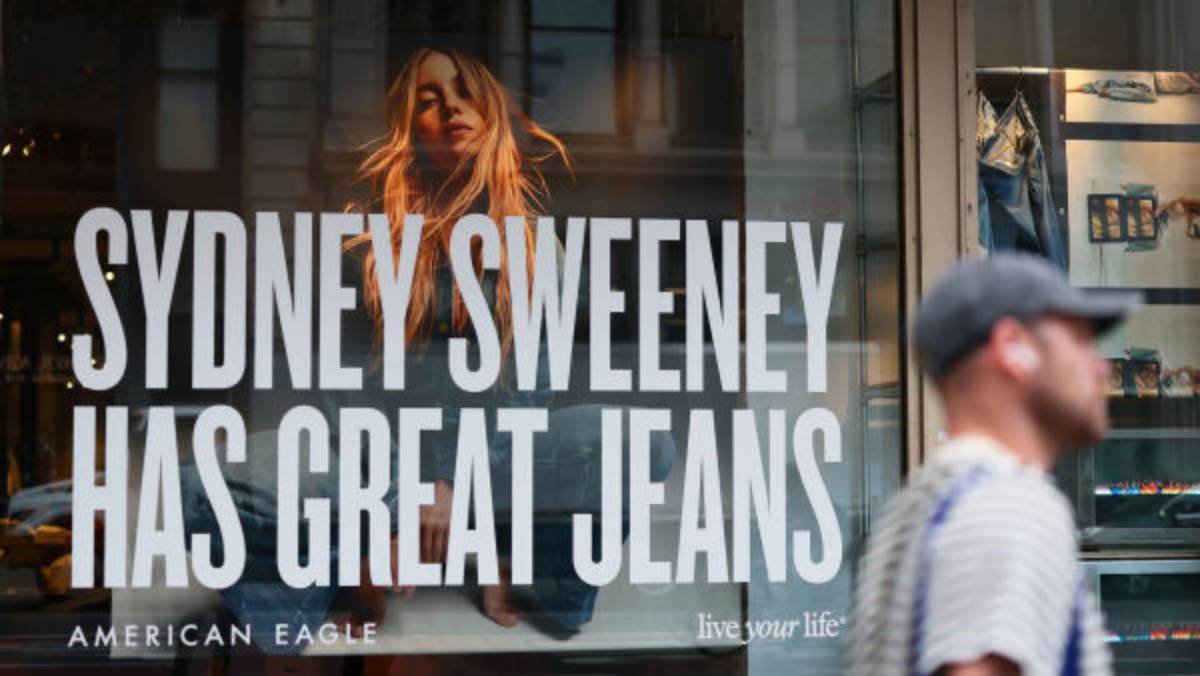 American Eagle Outfitters shares surged more than 30% following second-quarter financial results supported by its high profile Sydney Sweeney ad campaign.
Michael M. Santiago/Getty Images
The initial strength seen for its “Sydney Sweeney Has Great Jeans” ad campaign is encouraging, suggesting that sales growth in denim driven by the ads could reinvigorate American Eagle store sales, taking some of the pressure off Aerie and Offline, which have been doing heavier lifting this year.
“Sweeney’s Signature jeans sold out within a week and some products within 1 day. Demand for her curated online shop of Syd’s Picks has been very strong,” said President Jennifer Foyle on the company’s earnings conference call.
In the second quarter, total sales fell 1% companywide to $128 million, but that was $40 million above Wall Street’s estimate and a marked improvement from the 5% year-over-year revenue decline in the fiscal first quarter.
More Retail:
- Williams-Sonoma triumphs over tariffs while major rivals stumble
- Kohl’s takes drastic action to fix concerning customer behavior
- Costco Drops Long-Term Policy On Offering Only 1 Credit Option
A sharp pencil on expenses and a big share buyback that reduced its shares outstanding by 10% helped earnings per share jump 15% year-over-year to 45 cents, more than double Wall Street analysts’ 21-cent prediction.
The solid performance alleviates some concerns that heavy marketing spending on the campaigns and headwinds from tariffs would prove too challenging to overcome this year.
What’s next?
In addition to its high-profile campaign with Sydney Sweeney, American Eagle also launched a campaign one year in the making with the Kansas City Chiefs football star Travis Kelce in August. That was just before search interest in the tight end soared because of his announced engagement to the pop sensation Taylor Swift.
The Tru Kolors collaboration with Kelce includes items he designed that are hitting American Eagle stores this month.
Related: Travis Kelce’s net worth: How much wealth does Taylor Swift’s fiancé have?
The company says interest due to Sweeney and Kelce supported demand in August, providing a catalyst for better-than-feared financial guidance for the fiscal third and fourth quarters.
“We have seen periods of very strong demand from both campaigns fueling positive traffic in August, which was up consistently throughout the month,” said CEO Jay Schottenstein.
The company now expects comparable-store sales — those from stores open at least one year — will grow in the low single digits percent through year’s end, with operating income over the period clocking in between $255 million and $265 million.
The positive results, optimism about the ad campaigns, and improved guidance caused American Eagle’s share price to surge, but its stock may not be entirely out of the woods yet.
In a note to clients after the results, Bank of America analyst Christopher Nardone wrote, “We reiterate our Underperform rating; we think margin pressure from tariffs will limit earnings upside next year.”