
The tariffs announced by President Trump on April 2, so-called “Liberation Day,” surprised most because they were more widespread and harsher than expected.
The market reaction in the following days, including a 19% drop that nearly reached bear market territory for the S&P 500, led to President Trump pausing most reciprocal tariffs on April 9 for 60 days, kicking off a rip-roaring stock market rally back toward new highs.
💵💰Don’t miss the move: Subscribe to TheStreet’s free daily newsletter💰💵
Clearly, investors have cheered the reprieve, but many are still wringing hands as the 60-day window for trade deals closes. There’s been little substantive progress announced, suggesting that once the tariff pause expires, import taxes could surge, sending inflation soaring.
The possibility that reciprocal tariffs hit the economy, risking stagflation, or worse, recession, isn’t lost on long-time economist Torsten Slok.
Slok is the chief economist for Apollo Global Management, a money manager with $513 billion in assets under management, and he recently made an intriguing prediction on what could happen in the tariff war next.
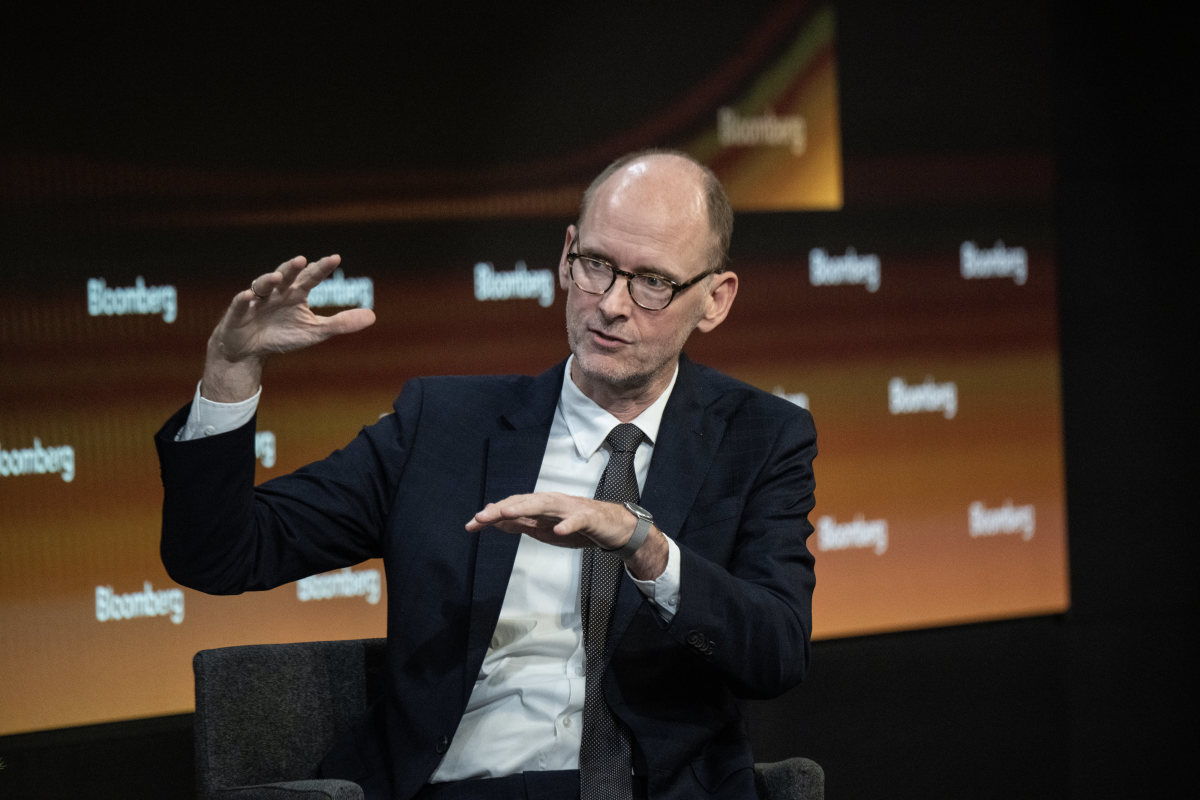 Torsten Slok, chief economist of Apollo Management, offered up a prediction on what could happen when the 60-day tariff pause expires.
Tariffs put Fed on hold over inflation worry
While President Trump paused most reciprocal tariffs, many tariffs remain, including 25% tariffs on Canada, Mexico, and autos, plus a 30% tariff on China, and a 10% ‘baseline’ tariff on all imports.
Those tariffs are smaller than what was originally announced in early April, but still represent the largest tax increase since the 1960s, according to hedge fund legend Paul Tudor Jones.
Perhaps, the biggest casualty from the tariff war has been Federal Reserve interest rate policy.
Related: Fed interest rate cut decision resets forecasts for the rest of this year
The Fed is tasked with setting rates at levels that encourage low inflation and unemployment, too often competing goals.
Lowering interest rates like it did in September, November, and December, shaving 1% off the Fed Funds Rate, helps lower unemployment but increases inflation. The opposite happens when it raises interest rates.
Because rate cuts and tariffs are inflationary, the Fed hasn’t cut rates this year, citing the risk of fanning the inflationary fire as tariffs hit.
Although companies are working with suppliers to lower costs and many will absorb some of the tariff hit, most say at least some of the higher cost will be passed along to customers, including Walmart.
Fed Chairman explained his hesitancy to cut rates because of tariff uncertainty last week when he held rates steady at their current 4.25% to 4.50% rate.
“The effects on inflation could be short-lived — reflecting a one-time shift in the price level. It is also possible that the inflationary effects could instead be more persistent,” said Powell.
The Fed’s reluctance to lower rates has drawn the ire of President Trump, who has called Powell a “numbskull” and “Mr. Too-Late,” suggesting the Fed is falling behind the curve.
It’s also caught the attention of Bill Pulte, Fannie Mae’s Chairman and Director of the Federal Housing Finance Agency (FHFA). Pulte has gone so far as to call for Powell’s resignation over the Fed’s hesitancy.
Tariff clarity could clear the way for markets, Fed
Spending decisions have likely been slowed by tariff and trade deal uncertainty. Until players understand the rules, most tend to stand on the sidelines awaiting insight.
So far, we’ve seen little in the way of meaningful trade deals. The UK struck a deal, but 10% tariffs remain and most view the deal as limited, impacting mostly autos and agriculture.
Similarly, the initial deal with China appears limited, leaving in place 30% tariffs, despite making some progress on rare earth minerals necessary for next-gen technology, including electric vehicle batteries.
The arguably ‘meh’ progress may signal that reciprocal tariffs will go into effect once the 60-day tariff pause expires.
“The longer uncertainty remains elevated, the more negative its impact on the economy,” wrote Slok.
While is possible that tariffs are reinstated after the pause expires, Slok thinks another outcome is more likely, given the administration may focus on giving the market what it wants rather than risk sending it back into a tailspin.
“Maybe the strategy is to maintain 30% tariffs on China and 10% tariffs on all other countries and then give all countries 12 months to lower non-tariff barriers and open up their economies to trade,” predicted Slock.
Slok believes extending the tariff deadline would provide participants to better model for the impact and make necessary decisions, limiting the negative impact to economic growth and inflation. He argues that certainty “would be positive for business planning, employment, and financial markets.”
Ultimately, extending the pause could leave everyone feeling like they’ve won. Countries who rely heavily on exporting to the U.S. would exhale at not facing even harsher tariffs, while the US could “produce $400 billion of annual revenue for US taxpayers,” according to Slok.
The possibility of such a win/win outcome led Slock to conclude:
“Maybe the administration has outsmarted all of us.”
Related: Veteran fund manager who predicted April rally updates S&P 500 forecast