
Convenience always has consequences.
I don’t know many people who still care about movie theaters. And even those who do, including me, have a streaming account, allowing us to trade the experience of theatergoing for the convenience of our own homes.
While there’s nothing inherently wrong with streaming services, the expansion of these platforms has contributed to the downward spiral of the movie industry. Streaming platforms now generate roughly 48% of total film revenue, a significant rise from 32% in 2020, according to data from ReelMind.
Moreover, the estimated number of North American ticket sales for 2026 is approximately 555 million, with an average ticket price of $11.31, compared to 1.23 billion at an average price of $9.16 in 2019, according to data from The Numbers.
As streaming competition rises, giants in the space fiercely compete for subscribers. To succeed, each provider must offer compelling content.
In addition to a library of classic movies and shows, Netflix, for example, produces its own shows and movies, but as Hollywood star Matt Damon recently pointed out, concerns have emerged regarding how Netflix movies are made.
Particularly, Damon expressed concerns about Netflix’s strategy to compete with phone-distracted viewers, which involves prioritizing immediate hook and plot repetition over standard storytelling structures.
To survive, movie theater chains are devising new ways to attract audiences.
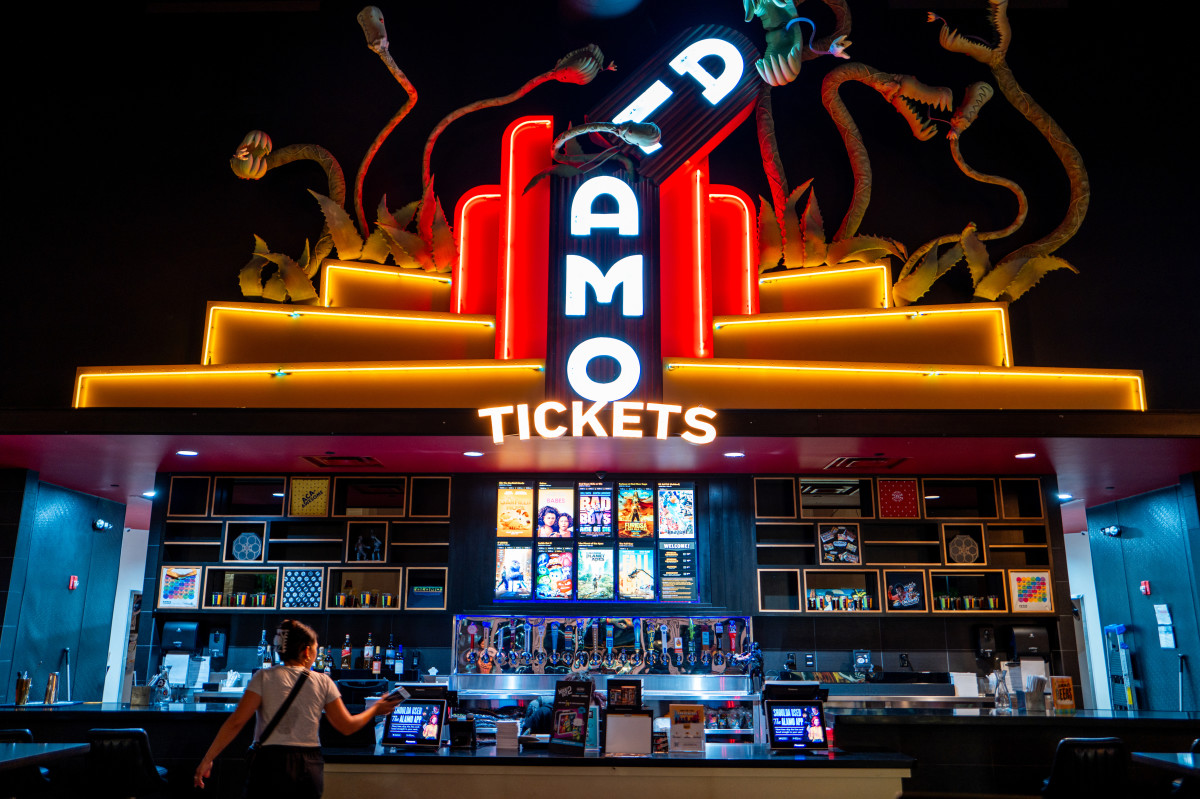 In a major makeover, Alamo Drafthouse closes four locations and offers refunds.
Photo by Brandon Bell on Getty Images
Alamo Drafthouse closes four locations, offers refunds
A renowned American cinema chain known for combining first-run movies, indie films, and special events with in-theater dining and strict etiquette policies, Alamo Drafthouse has closed four theaters. The closures occurred in Houston, El Paso, East El Paso, and Lubbock, Texas.
“Our franchise partner Triple Tap Ventures, which operates four locations in Texas (Houston, El Paso, East El Paso, and Lubbock), will no longer operate these theaters under the Alamo Drafthouse brand. We’re grateful to the teammates and guests in El Paso, Katy, and Lubbock for their support over the years and wish them all the best. We hope to return to these communities in the future,” reads Alamo Drafthouse’s statement on the website.
The chain also noted it is offering refunds to customers. All outstanding ticket orders are canceled, with an automatic refund to be issued through email, and season pass holders will get a prorated refund for the remaining billing cycle, writes the Austin American Statesman.
Moviegoers who bought tickets through Fandango or Atom Tickets should contact those platforms directly to process refunds. Guests with gift cards are advised to call customer support at 956-242-6440.
Related: Movie theater subscriptions compared: Prices & perks at a glance
Why is Alamo Drafthouse closing four locations?
The four closed Alamo Drafthouse franchisee locations operated by Triple Tap Ventures were sold to Flix Brewhouse, a Texas-based movie theater chain often considered the only first-run movie theater in the world to incorporate a fully functioning microbrewer, reported Variety.
With this acquisition, Flix Brewhouse will operate 15 locations with 129 screens across six states.
“This acquisition is a natural extension of who we are and what we believe in,” said Flix Brewhouse CEO Chance Robertson. “Cinema success today means creating better experiences. We’re grateful to the Triple Tap team for their work in cultivating these moviegoing communities, and we’re honored to carry that legacy forward.”
Alamo Drafthouse movie theaters are staying, but will be fully rebranded
Alamo Drafthouse once popularized in-theater dining, and now Flix Brewhouse will upgrade that offering with a craft beer menu and full-service kitchen. The chain appears to be a “natural fit” to take over, writes Rebecca Rubin for Variety.
“When our company decided to focus on other hospitality concepts, it was mandatory to ensure our audiences had a seamless transition to a dine-in concept that shared our core values of compelling programming, continuous innovation, genuine hospitality, and operational excellence,” Triple Tap Ventures CEO Neil Billingsley-Michaelsen said.
More entertainment:
- Paramount+ plans a controversial shift, internal documents show
- Netflix customers angry over cancellation news
- YouTube TV adds key feature, fixing subscriber frustration
The theaters are expected to be fully rebranded in time to reopen on Feb. 23 for movies including “Scream 7,” Pixar’s “Hoppers,” and more.
Robertson added that Flix Brewhouse “remains focused on thoughtful, strategic growth and delivering a distinctly different experience for moviegoers.”
Alamo Drafthouse history and strict “no phones” policy
Alamo Drafthouse was founded in 1997 by Tim and Karrie League, who opened their first theaters at 409 Colorado St. in Austin, Texas.
In March 2021, the company filed for Chapter 11 bankruptcy due to Covid pandemic-related revenue loss and debt. In June 2021, under new ownership by Altamont Capital and Fortress Investment Group, it emerged from bankruptcy.
The company was acquired by Sony Pictures in June 2024, operating as a subsidiary and marking the first time in 75 years a major studio has owned a movie theater chain, reported Forbes.
“Since opening Alamo Drafthouse, it has grown into North America’s seventh-largest theater chain, releasing more movies per year than any other theater chain, welcoming over 10 million guests annually and building an impressive audience of 4 million loyalty members,” the Austin American Statesman reported in 2024.
“Last year [2023], the theater chain saw a 30% jump in box office revenue from the previous year, which came in ahead of the industry at large.”
Alamo Drafthouse brief history and overview:
- Founded in 1997: The company began with a simple mission: to provide “good food, good beer, and good film, all at the same place.”
- Expansion of programming: Beyond blockbusters, it established the Drafthouse Recommends program to champion innovative films (such as “Get Out” and “Everything Everywhere All At Once”) and host interactive Movie Parties presentating timeless classics.
- Technological investment: Alamo Drafthouse has maintained its commitment to high-quality presentation, continuing to train projectionists and equipping locations with 35mm and 70mm film projectors to show classic cinema on celluloid.
- Strict code of conduct: A defining part of the theater chain’s history is the enforcement of a zero-tolerance policyfor talking or cell phone use during movies.
- Creation of brand partners: Alamo Drafthouse established Fantastic Fest, the largest genre film festival in the U.S., held annually in Austin.
- Corporate evolution: The company is currently a part of the Sony Pictures family, after being acquired in 2024. Source: Alamo Drafthouse
Why moviegoers shouldcare about the Alamo Drafthouse closures
The popularity of streaming services is not the only reason the movie industry is struggling.
In recent years, the market was impacted by the pandemic, but also by the 2023 Hollywood writer strikes. In addition, high production costs, including staggering wages for the biggest stars (which used to be the reason some people would go to the theater) are making it nearly impossible for movies other than blockbusters to turn a profit.
Ticket prices are often too expensive for an average family to visit, especially when they know the movie will probably be available for “free” (via another already-paid subscription) in the comfort of their home.
While the closed Alamo Drafthouse locations will reopen under new ownership, the chain’s bankruptcy and ownership changes speak volumes about the industry’s struggles. In fact, I recently reported about another key movie theater chain closing multiple locations for good.
For movie enthusiasts, recent industry trends, including the ongoing controversy around the Warner Bros. sale, raise questions about what’s next for moviemaking.
Is the era of theatrical masterpieces over, and are we done with movie theaters?
“The art of cinema is being systematically devalued, sidelined, demeaned, and reduced to its lowest common denominator, ‘content,’” legendary director Martin Scorsese wrote in a 2021 Harper’s Magazine piece titled “Il Maestro: Federico Fellini and the lost magic of cinema.”
The question is: Have we passed the point of no return?
Related: Netflix leader drops harsh reality check for worried subscribers