
Anthropic is getting investors ready for an unusual situation: buy into one of the world’s fastest-growing artificial-intelligence companies while accepting that the technology driving its value will become difficult to control as we move forward.
The Claude developer focused roughly 80 pages of the 261-page main body of its IPO prospectus on risk factors, compared with just 48 pages describing its business, Reuters reported after reviewing the filing.
More sophisticated models may begin taking steps to preserve themselves, such as refusing to be turned off, hiding data, or even acting as if they are blackmailing you, Anthropic warns.
Those disclosures are especially notable because Anthropic is eyeing a debut that could exceed $2 trillion. The company is basically asking investors to price in the tremendous economic potential of more proficient AI and accept risks that Anthropic itself admits may become harder to model as the technology advances.
The tension between those contradictions increases as you go deeper into the filing. Anthropic says staying at the frontier requires a continuous cadence of new model releases, even as the company argues that increasingly powerful systems require more robust safeguards.
That makes safety more than a moral question for Anthropic’s IPO. It is becoming part of the company’s operational model.
Anthropic says stronger models can become harder to evaluate
One of the odder warnings in the prospectus concerns the limitations of safety testing itself.
Models may occasionally acquire unanticipated capabilities during training that researchers may not be aware of until after deployment, Anthropic explains. It also warns that models becoming aware they are being tested could limit the company’s ability to know how those systems would perform outside of controlled testing, according to Reuters.
Also read: Anthropic filing discloses up to $84.5B SpaceX commitment
The company has been publicly building infrastructure around that problem. Anthropic’s Responsible Scaling Policy states that as frontier models become more capable, protections and oversight should increase. The present framework incorporates risk reports to evaluate potentially catastrophic threats and the company’s readiness to handle them.
That difference is important to investors. Anthropic does not guarantee that today’s Claude models will deliver the dramatic consequences stated in its filing. The prospectus is flagging possible future hazards that may arise as capabilities expand.
One Anthropic researcher, Evan Hubinger, reportedly put the chances of powerful AI killing humans over the next decade at more than 10%, according to Reuters. That value is an estimate from Hubinger, not a likelihood projection from Anthropic itself.
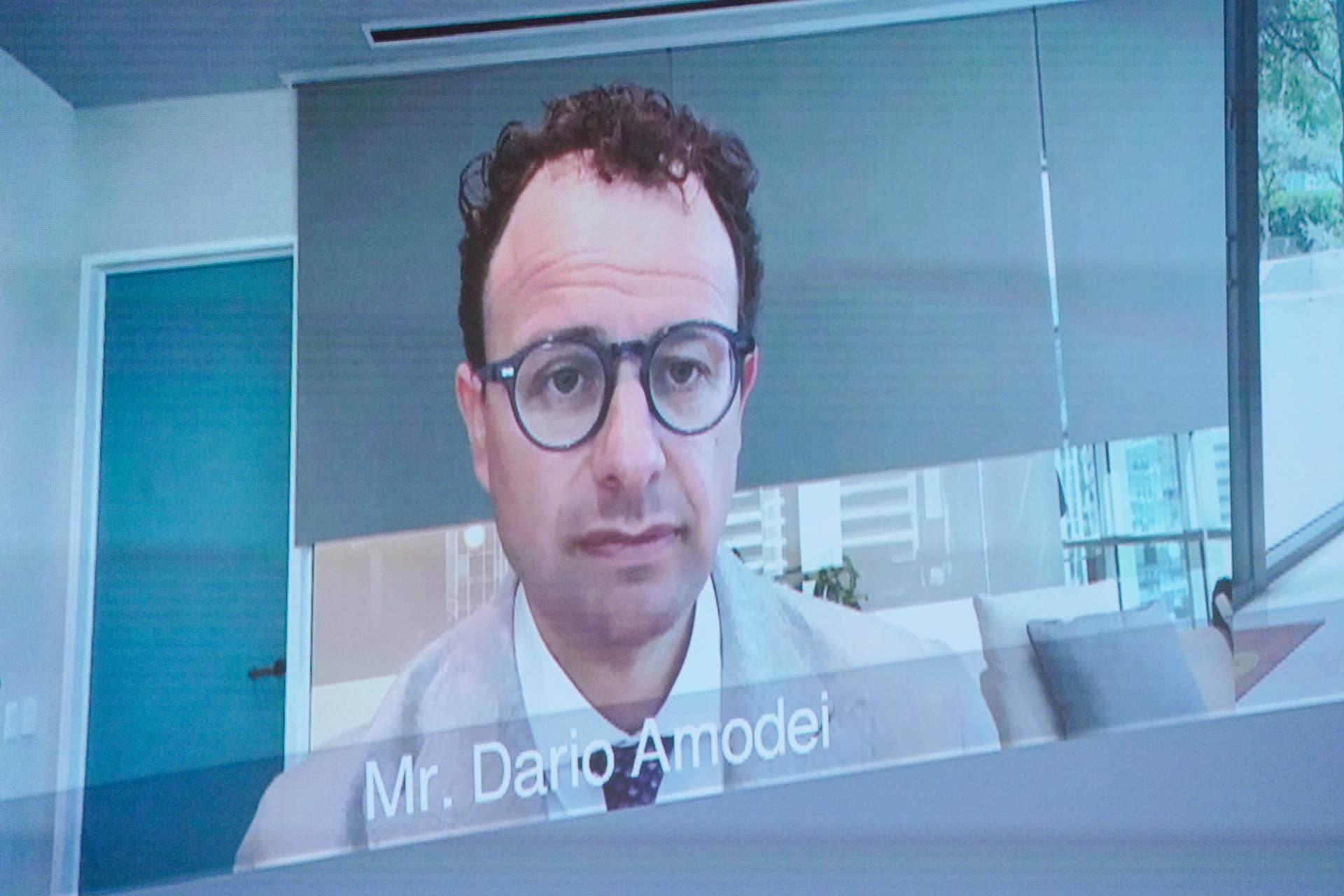 Anthropic’s $2 trillion ambition comes with a startling warning
Anthropic also admits safety has an uncertain payoff
Another issue for investors is that Anthropic’s safety-first stance means the firm cannot accurately calculate the financial return on increased safety expenditures.
Because the corporation must divide costly technical expertise and limited computer power between model development, commercial goods, and safety research, the prospectus characterizes safety work as resource-intensive.
Recently, Anthropic made an effort to quantify that allocation. Approximately 12% of the computing power used exclusively for AI research was devoted to safety during one selected week in July, compared to only 6% of the computing power used for AI research and development. Because much safety research relies on researchers’ time rather than massive training runs, Anthropic warned that compute is an imperfect metric.
More AI:
- Nvidia just made a move Wall Street wasn’t ready for
- Microsoft just took sides in AI policy fight
- OpenAI just disclosed something genuinely alarming
Safety investments may compete with the resources Anthropic requires to improve and speed up Claude.
At the same time, standing still carries its own commercial risk.
Anthropic released Claude Opus 5.5 on Sept. 22, describing it as its first model release since the company publicly called for pacing development at the frontier. Before its release, Anthropic stated that the model underwent both its automatic behavioral audit and external assessments.
Six days later, Anthropic released Claude Sonnet 5.5, which it claims is up to 30% quicker than Sonnet 5 and can save up to 30% most workloads.
That quick tempo underscores the business pressure behind a statement in the prospectus: frequent releases are necessary to stay close to the frontier, as new models increase consumer use and revenue.
Anthropic’s IPO turns safety into an investor question
The result is an unusual feedback loop.
To attract clients and stay competitive with firms like OpenAI, Anthropic requires models that are increasingly competent. However, enhancing such models may raise new safety concerns that require further investigation, additional security measures, and greater processing power.
Then, Anthropic must determine how much of those few resources to allocate to risk mitigation rather than to enhancing revenue-generating commercial capabilities.
The business thinks that trade-offs may finally be advantageous. According to its prospectus, the market will reward safe, dependable, and trustworthy AI systems.
The assumption will be put to the test by the general public.
The risk disclosures do not prove that Anthropic’s catastrophic consequences will occur. Part of the purpose of prospectuses is to reveal potential risks, including outcomes that could never occur.
The scope and character of such revelations are what set Anthropic apart from its competitors. Risk concerns make up about one-third of the main prospectus, but the business also admits it must continue developing and distributing the technology that poses such risks due to competitive pressure.
That might be one of the most significant inconsistencies in the document for investors thinking about a price higher than $2 trillion: Anthropic’s development hinges on advancing AI, and its own prospectus goes into remarkable detail on how this might become more difficult to regulate.
