
The best gadgets are the ones you stop noticing. They sit on your body, gather quietly, and ask nothing of your attention until you want it. That is the whole pitch of the modern health tracker, and it explains why a small Finnish ring has out-charmed a wrist computer that can take phone calls.
For years, the most valuable company in the world watched that shift from the sidelines. It owns the wrist. It sells tens of millions of watches a year and built an entire health story around them. Entering a rival format would mean competing with itself, so it didn’t.
That hesitation looked permanent. Wearable revenue had cooled, upgrade cycles had stretched, and the people who wanted a screenless tracker kept buying from someone else. The safe read was that the wrist was the finish line.
Then a leaker changed the math. On June 24, the prototype collector known as Kosutami posted that Apple (AAPL) is actively building a smart ring, an “iRing” aimed squarely at the Oura Ring 5 and the Samsung Galaxy Ring, 9to5Mac reported.
No price, no specs, no launch date. Just confirmation that the project most people had written off is alive.
Why Apple stayed out of the ring business
Apple’s absence was a choice, not an accident. In October 2024, Bloomberg‘s Mark Gurman reported the company had no near-term plans for a finger tracker, on the worry that it would cut into Apple Watch sales.
The category’s own leader agreed. Oura chief executive Tom Hale doubted Apple would enter soon, partly for that same reason, he told TechRadar.
More Tech Stocks:
- Wedbush spots clear investor opportunities in tech stocks
- Morgan Stanley resets Micron stock price target on strong Al demand
- Why a fatal crash threatens Tesla’s stock
That caution made sense. A ring that tracks sleep, heart rate, and recovery covers much of what the Watch already does, and the Watch is the more profitable product. Apple has sold the Watch as the center of its health push for a decade, and its install base keeps hitting new highs.
The economics reinforced the stall. Watch margins dwarf what a sub-$400 ring would earn per unit, so for years the math told Apple to protect the wrist rather than split its own customers across two devices.
The picture changed this year. Apple’s health group reportedly moved under new leadership in Eddy Cue, who has pushed for bolder health bets, the5krunner noted.
In my analysis, that internal change matters more than any patent filing, because it changes who inside Apple gets to veto the idea.
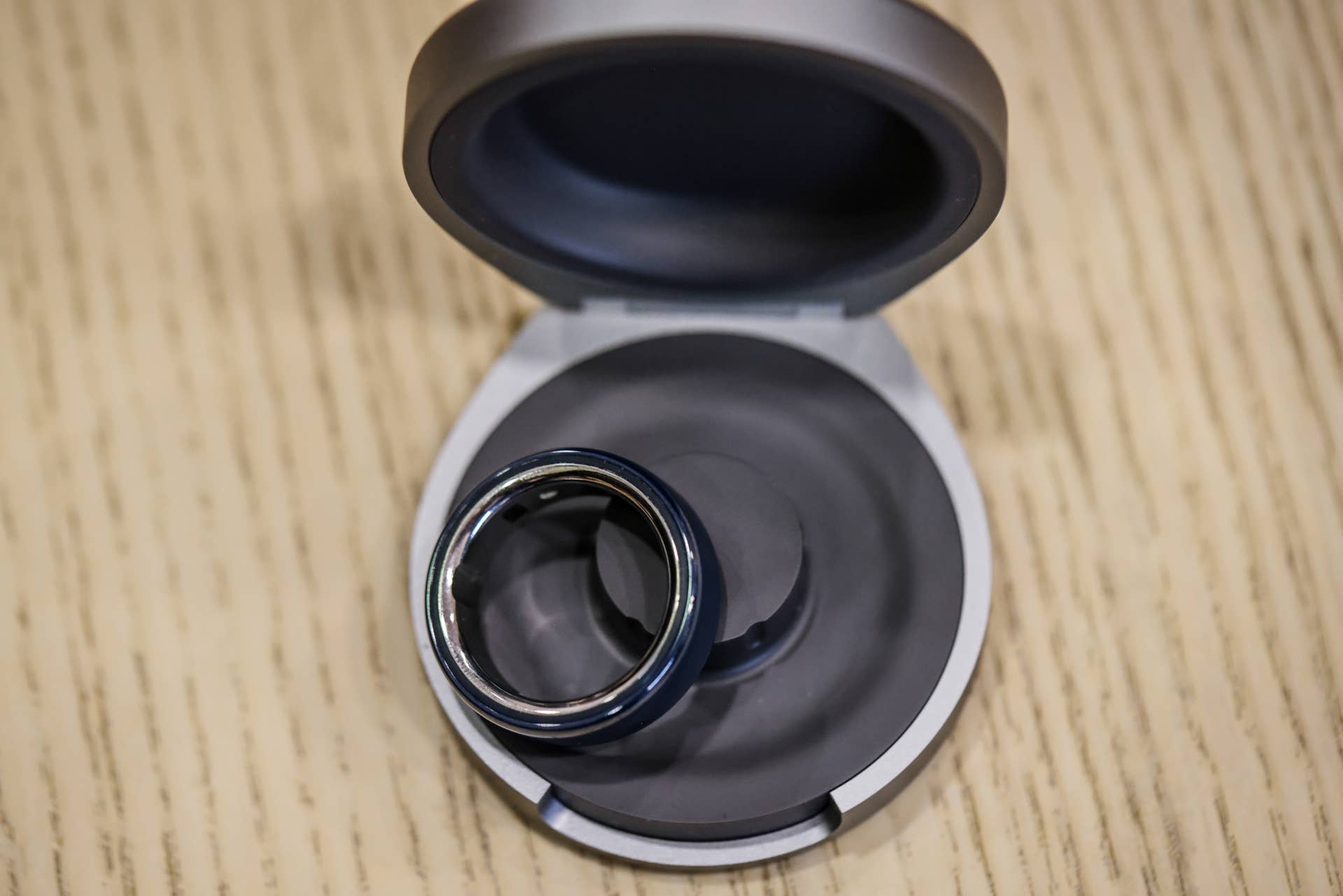 Oura’s biggest threat yet may wear an Apple logo.
What the smart ring market looks like now
The market Apple may be eyeing is small but climbing fast. Oura has spent a decade turning a screenless band of titanium into a status object that doctors, athletes, and sleep-obsessed executives actually wear to bed.
Oura still owns the room. It launched the Oura Ring 5 in May as the smallest smart ring yet, starting at $399, with new blood pressure trends, nighttime breathing analysis, and tools for tracking GLP-1 weight-loss medications, MacRumors reported.
Samsung (SSNLF) is the other serious name, though its momentum has stalled. Its first Galaxy Ring arrived in 2024 at $399 with no monthly fee, a direct shot at Oura’s subscription. The sequel has not kept pace. Here is where the category stands heading into the back half of 2026.
- The global smart ring market could grow from roughly $519 million in 2026 to $3.77 billion by 2034, according to Fortune Business Insights.
- Oura still controls more than three-quarters of smart ring sales, Global Market Insights estimates.
- Samsung’s Galaxy Ring 2 has slipped to early 2027 after soft sales and a patent fight with Oura at the U.S. International Trade Commission (ITC), Gagadget reported.
- Apple’s wearables, home, and accessories segment generated $37 billion in fiscal 2024, its lowest total since 2020, per the company’s results.
That last number is the tell. The segment that includes the Apple Watch has been shrinking, and a brand-new device priced near $400 is a low-risk way to put fresh growth back into the line.
What an Apple ring would mean for you
Here is why this matters beyond the gadget press. A ring would be the cheapest entry into Apple’s health ecosystem, and the first Apple health device you could wear to a wedding without anyone noticing it is there.
Price is the real story. A $400 ring does not threaten an $799 Apple Watch Ultra. It reaches the buyer who walked past the Ultra and bought an Oura instead, the person who wanted health data without a screen strapped to the wrist. When I look at that gap, the old cannibalization math reads backward. The bigger prize is the customer the Watch has never converted.
There is a money angle, too. Oura charges about $6 a month on top of the hardware. If Apple folds ring data into the Health app at no extra fee, it squeezes every subscription-based rival at once.
Many buyers can also spend health savings account (HSA) dollars on these devices, which quietly lowers the real cost.
The lock-in runs deeper than price. A ring tied to the iPhone, the Health app and even Vision Pro gesture control would be far harder for Oura or Samsung to match than any single sensor.
Apple’s edge has never been the hardware on your finger. It is everything that hardware already talks to.
This also fits a promise the chief executive has made for years. Apple’s “greatest contribution to mankind” would be in health, Tim Cook told CNBC in 2019. A discreet, all-day sensor on your finger is a more literal version of that pitch than a watch you take off to charge every night.
Not everyone bought the cannibalization story. Even back in 2024, Apple could build a ring that cements Cook’s health legacy, CCS Insight chief analyst Ben Wood argued, as AppleInsider reported. The leak suggests the people who said never were the ones reading it wrong.
For the millions who hold Apple through an index fund or a 401(k), the stakes are quieter but real. A new product category is one of the few levers left that can move a $3 trillion company’s wearables narrative, and health is the story Apple most wants Wall Street to believe.
My read is that the timing favors Apple more than the leak’s brevity suggests. The wearables line needs a fresh on-ramp, the cheapest health buyers keep choosing someone else, and the one company that can bundle hardware, software, and a billion existing iPhones has every reason to stop sitting it out.
Developments to watch for Apple smart ring
None of this is a product yet. There is no price, no launch date, and no comment from Apple, which never confirms a rumor until it walks one onstage.
What is real is the opening. Samsung’s sequel is delayed into 2027, Oura is defending its lead in court, and the company that owns the wrist is, for the first time in years, reportedly building for the finger.
If Kosutami is right, the next Apple health pitch may not be something you strap on. It may be something you forget you are wearing, on the one part of the body its rivals reached first.
Watch the fall hardware calendar, not the leak feeds, for the real signal.
Related: Apple just billed you for the AI buildout you never asked for