
AI is now the largest battleground in technology.
Over the last two years investors have pumped hundreds of billions of dollars into firms promising to lead the next stage of the AI revolution.
At Apple (AAPL), that talk has become more and more about the iPhone.
Many experts have said AI might fuel the company’s next major upgrade cycle, when millions of customers replace outdated devices with newer versions that can run advanced capabilities.
That’s why one of Apple’s less-covered announcements at its Worldwide Developers Conference may be worthy of more attention than its other headline-grabbing AI features.
The company said iOS 27 will retain support for all devices now compatible with iOS 26, including the iPhone 11 series that originally launched in 2019.
It’s simple to see how shoppers would choose.
But for investors, it poses a greater question.
Why is Apple making it easier for users to maintain older phones if it’s expected to fuel a large surge of new iPhone purchases?
Apple’s ecosystem has become bigger than the iPhone
For a long time, analysts largely assessed Apple by one statistic.
Can it sell more iPhones?
The smartphone is still the company’s biggest business, bringing in tens of billions of dollars in revenue every quarter and serving as the backbone of Apple’s broader product range.
But Apple’s business has changed a lot during the past 10 years.
It’s not wholly reliant on getting people to buy a new gizmo every few years.
Instead, it has established one of the world’s most valuable digital ecosystems.
- Apple Music.
- Apple TV+.
- iCloud.
- The App Store.
- Apple Pay.
- AppleCare.
Every service is another link in the chain between Apple and its customers.
More significantly, they each generate recurring revenue.
That recurring revenue has grown increasingly essential as the overall expansion of the smartphone sector has stalled.
The worldwide smartphone market is huge, but it’s also mature.
Devices are lasting longer for consumers.
Each year the hardware upgrades become more gradual.
Battery life is better.
Performance has been enhanced.
The camera technology has got better.
Consequently, many users no longer need to upgrade as often as they used to.
That’s not just a trend for Apple.
Similar problems confront Samsung and other manufacturers of smartphones.
The difference is that Apple has spent years establishing alternative ways to monetize consumers who don’t upgrade.
As long as consumers stay within Apple’s ecosystem, the tech giant can continue to rake in revenues from services, subscriptions and software purchases.
Perhaps that truth helps explain why software support remains such an important strategic instrument.
Related: Apple closing stores for one clear reason
Apple’s AI strategy may be different from what investors expected
Much of the past year on Wall Street has been spent searching for evidence of an AI-driven iPhone supercycle.
The theory is sensible.
Artificial intelligence needs a lot of computational power. New AI features tend to be tuned for newer hardware. Eventually, consumers will need to upgrade their gadgets to take advantage of these capabilities.
That should go nicely for Apple.
But Apple’s moves show the firm is taking a more measured attitude.
Apple is still spending extensively in areas like Apple Intelligence and a new Siri experience. It also keeps adding compatibility for legacy hardware.
These two decisions seem incompatible at first look. In practice, they might be a mirror of Apple’s wider priorities.
It seems Apple is less about pushing upgrades and more about keeping people engaged. AI strategy may be less about moving hardware right away and more on deepening client relationships.
That is an essential distinction to investors.
An AI-driven supercycle could give a massive boost to iPhone revenues. An AI-driven ecosystem strategy might result in slower but potentially more enduring growth.
Neither method is necessarily better. But they set distinct expectations for financial performance going forward.
Those looking for AI to change iPhone demand in the short term might need to watch closely how Apple balances innovation with device longevity.
More AI:
- Micron sits at the center of a red-hot chip rally
- IBM CEO sends blunt message on AI and quantum computing
- Anthropic CEO makes shocking admission about AI
The company’s new software move shows that management is still determined to keep people locked into its ecosystem, no matter when they decide to upgrade.
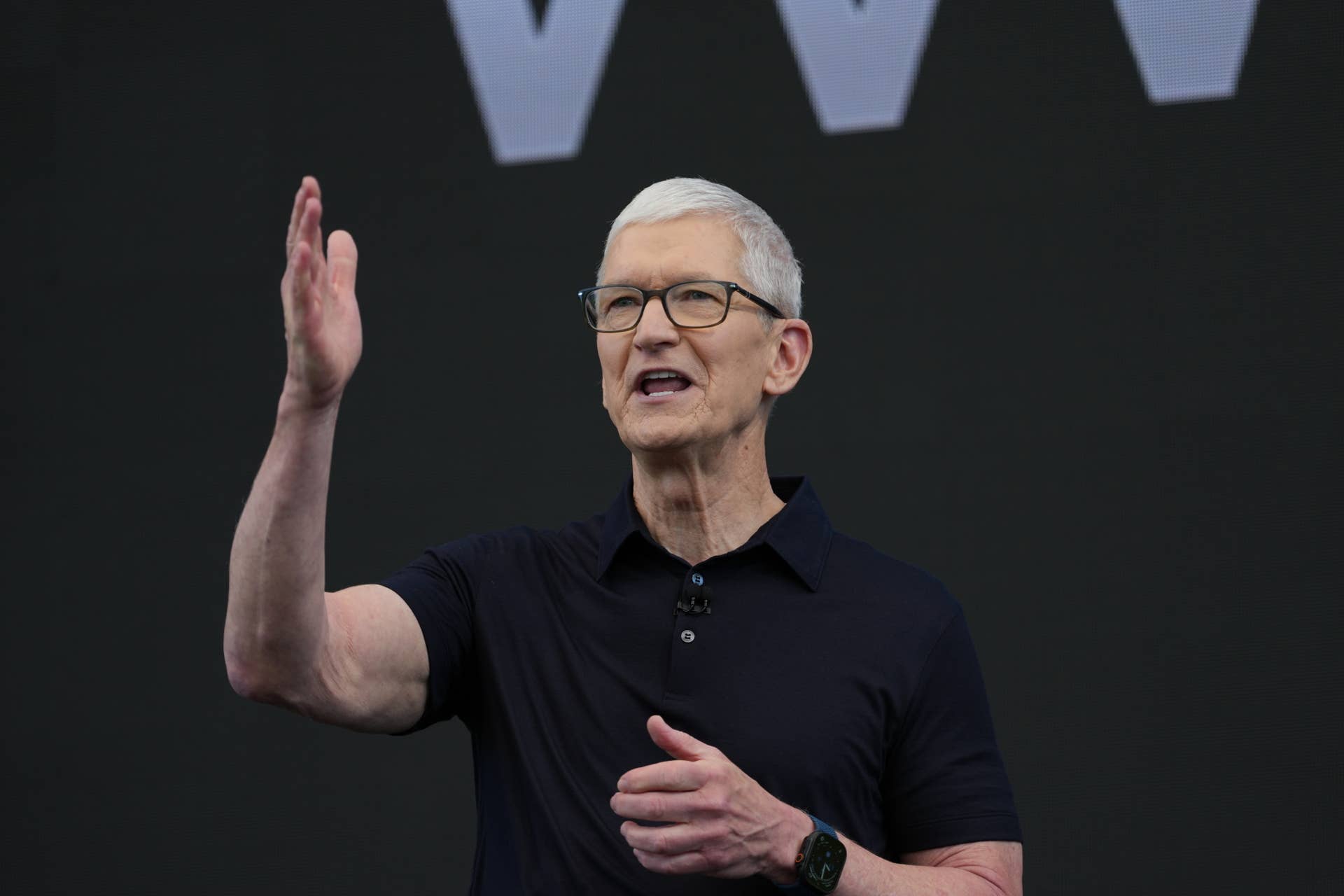 Apple’s newest iPhone move may reveal what it really thinks about AI
What investors should watch next
Apple will face its next big test later this year when it reveals its newest lineup of iPhones. Management discussion around AI deployment could be as crucial as the hardware itself.
Investors will be looking for evidence that Apple Intelligence is changing purchase decisions. They will also be looking at increase in Services revenues.
If Services continues to grow faster than hardware sales, it may further cement the view that ecosystem monetization is Apple’s most important long-term growth driver.
Also, how quickly the device is upgraded will matter.
Wall Street has been waiting years for another big iPhone replacement cycle. AI is only the latest contender. Whether it will be the catalyst investors expect in the end remains to be seen.
Apple’s moves show the business is not betting on that result. The idea seems to be to keep customers interested, whether they upgrade this year or several years from now.
Key takeaways
- Apple extended iOS 27 support to older iPhone models.
- The decision strengthens Apple’s ecosystem strategy.
- AI may not immediately create the upgrade cycle some investors expect.
- Services revenue continues growing in importance.
- Apple appears focused on engagement as much as hardware sales.
- Future earnings reports may reveal how AI influences customer behavior.
AI is now the largest battleground in technology. It may have been a sign of the company’s vision of its future.
The market is still hoping for the next iPhone supercycle. Apple, on the other hand, looks increasingly to be interested in squeezing value from its existing customers.
So the biggest AI signal from Apple could not be Siri at all. It could be the corporation wants to keep outdated iPhones relevant for even longer.