
If you invested $10,000 in Cathie Wood‘s ARK Innovation exchange-traded fund (ETF) five years ago, you would have about $6,200 left today.
You would have also paid a 0.75% annual management fee over that period, compounding the cost alongside the fund’s steep decline in value.
ARKK has shed more than $313 million in net outflows this year, even as the broader American ETF market pulled in over $1 trillion, Benzinga reported.
Total assets under management have dropped to $7.2 billion, a fraction of the fund’s $29 billion peak. Those losses have come even as the fund continues to charge premium fees for active management.
ARKK’s five-year loss dwarfs the broader market’s gains
The performance gap between ARKK and the major passive index funds now spans five years, longer than a typical market-cycle explanation can absorb.
Morningstar analyst Robby Greengold criticized ARK for insufficient risk management, warning that its negligence has already harmed investors and could continue to do so.
ARK could do more to avert severe drawdowns of wealth, and its carelessness on the topic has hurt many investors of late. It could hurt more in the future
Over the past five years, ARKK has lost 37.88%, while the Invesco QQQ Trust gained 103.96% and the SPDR S&P 500 ETF Trust returned 72.6%, 24/7 Wall St. reported.
Year to date, the fund has returned just 2%, compared with 20% for the Nasdaq 100 and 9% for the S&P 500.
ARKK’s fees buy active management that has missed its targets
ARKK charges an expense ratio of 0.75%, which translates to $75 per year on every $10,000 invested in the fund.
A passive Nasdaq 100 fund like QQQ charges 0.18%, or about $18 per $10,000, after Invesco reduced the fee from 0.20% in December 2025, meaning ARKK investors pay roughly $57 more annually for active management.
Fund manager buys and sells:
- Warren Buffett’s Berkshire triples stake in newspaper giant
- Cathie Wood sells $16M of surging semiconductor stock
- Bill Ackman discloses new $2.09 billion stake in megacap tech stock
Robby Greengold, a Morningstar analyst who covers ARKK, wrote in an April 2026 assessment that the fund’s broad calls on artificial intelligence, biotechnology, and robotics have often been directionally correct.
The fund has not shown a strong ability to identify the biggest winners within those themes while prudently managing the portfolio’s extreme risks, Greengold wrote in his Morningstar analysis.
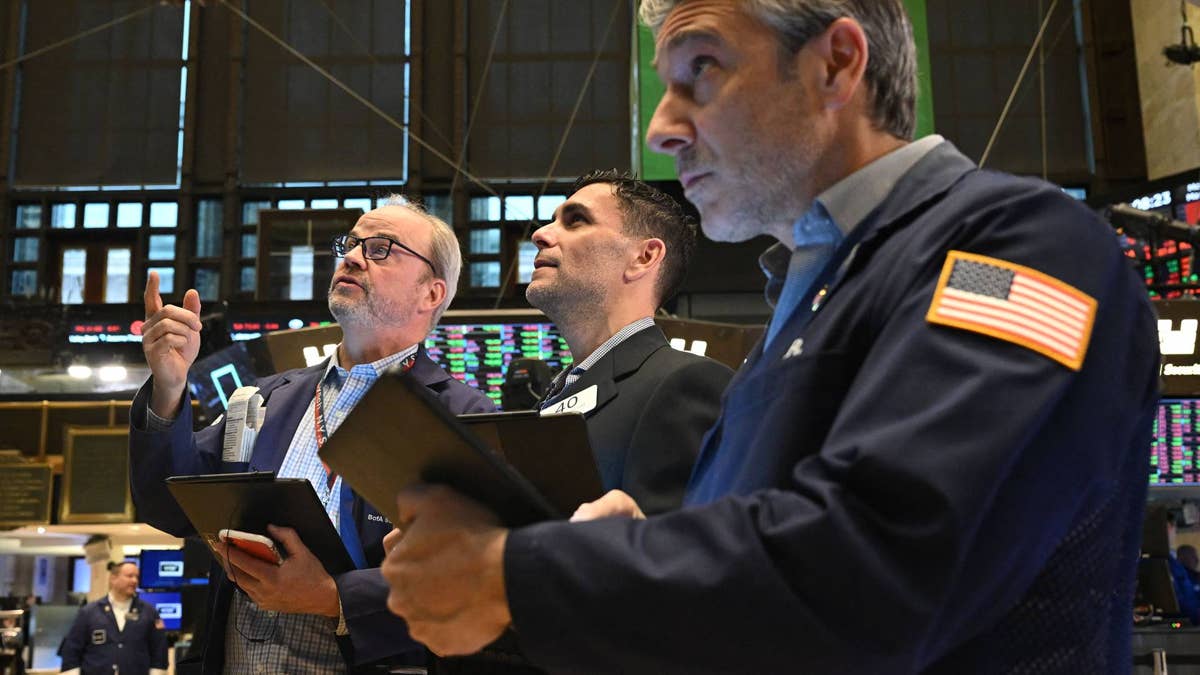 ARKK’s higher fees have not translated into superior stock selection, leaving investors paying more for underwhelming active management.
TIMOTHY A. CLARY/Getty Images
Concentrated bets on Tesla, SpaceX, and private companies add risk
ARKK’s portfolio is built around high-conviction positions that amplify both upside potential and downside exposure in ways most index funds do not.
Tesla alone accounts for approximately 9.7% of the fund’s assets, while Robinhood Markets, Tempus AI, and CRISPR Therapeutics each hold roughly 5%, with Advanced Micro Devices (AMD) close behind at around 4.6%.
Wood’s trading activity has been aggressive in recent weeks, including a $529.7 million SpaceX purchase, a $99 million Alphabet buy, and a $16.2 million Tesla sale.
The fund also holds private positions, including an approximately $175 million stake in OpenAI that is less liquid than publicly traded stocks inside a daily-traded ETF structure.
ARKK reflects a broader pattern of active fund underperformance
The fund’s struggles are not unique; they align with a well-documented trend across the entire active management industry over multiple decades.
The most recent S&P Indices Versus Active (SPIVA) Scorecard from S&P Dow Jones Indices found that 79% of actively managed large-cap equity funds underperformed the S&P 500 in 2025.
Over a 15-year window, not a single 1 of 22 domestic equity fund categories had a majority of active managers beat their benchmark, Anu R. Ganti, Senior Director and Head of U.S. Index Investment Strategy at S&P Dow Jones Indices, confirmed in the report.
Ganti, who leads index investment strategy at S&P Dow Jones Indices, also noted that active outperformance tends to be fleeting rather than a sign of repeatable skill.
That finding is directly relevant to ARKK, because the fund’s entire pitch depends on the idea that Wood’s stock picking will eventually be vindicated.
What ARKK’s decline signals for active versus passive investing
Investors who want broad exposure to technology and innovation themes can already access it through passive index funds like XLK or VGT at a fraction of ARKK’s 0.75% expense ratio.
The State Street Technology Select Sector SPDR ETF (XLK) charges 0.08%, while the Vanguard Information Technology ETF (VGT) charges 0.09%, according to fund prospectuses from State Street and Vanguard.
QQQ returned 584% over the past decade at the 0.20% expense ratio that applied for most of that period, compared with ARKK’s 338% return at 0.75%, 24/7 Wall St. reported.
The $313 million in year-to-date outflows tracks with a broader investor shift toward lower-cost passive alternatives, a trend documented in Morningstar’s annual fund flows report.
Related: Cathie Wood buys $9.6 million of megacap tech stock