
There is no doubt that AT&T has been operating in a challenging market that is experiencing heightened competition as phone carriers and even cable companies battle for new customers with increased promotions.
Many consumers nationwide have been exploring different options for phone services as their phone bills become increasingly expensive.
How higher phone bills are impacting Americans:
- The average cost of a single-line phone plan is $76 per month.
- Approximately 42% of Verizon, T-Mobile, and AT&T customers have seen their phone bills increase in the past year, which is 7% higher than average.
- Also, 58% of Verizon, T-Mobile, and AT&T customers are considering switching to a different phone carrier as their monthly bills become less affordable.
- All three companies risk losing 230 million customers due to high mobile plan pricing. Source: WhistleOut
Amid this shift in consumer behavior, AT&T reported in its latest earnings release that its postpaid phone churn (the number of customers who canceled their phone service) increased by 14 basis points year over year during the third quarter of this year.
During an earnings call in October, AT&T CEO John Stankey said that rivals such as T-Mobile and Verizon have been “pretty aggressive” with their tactics to attract new customers, making the market “more competitive.”
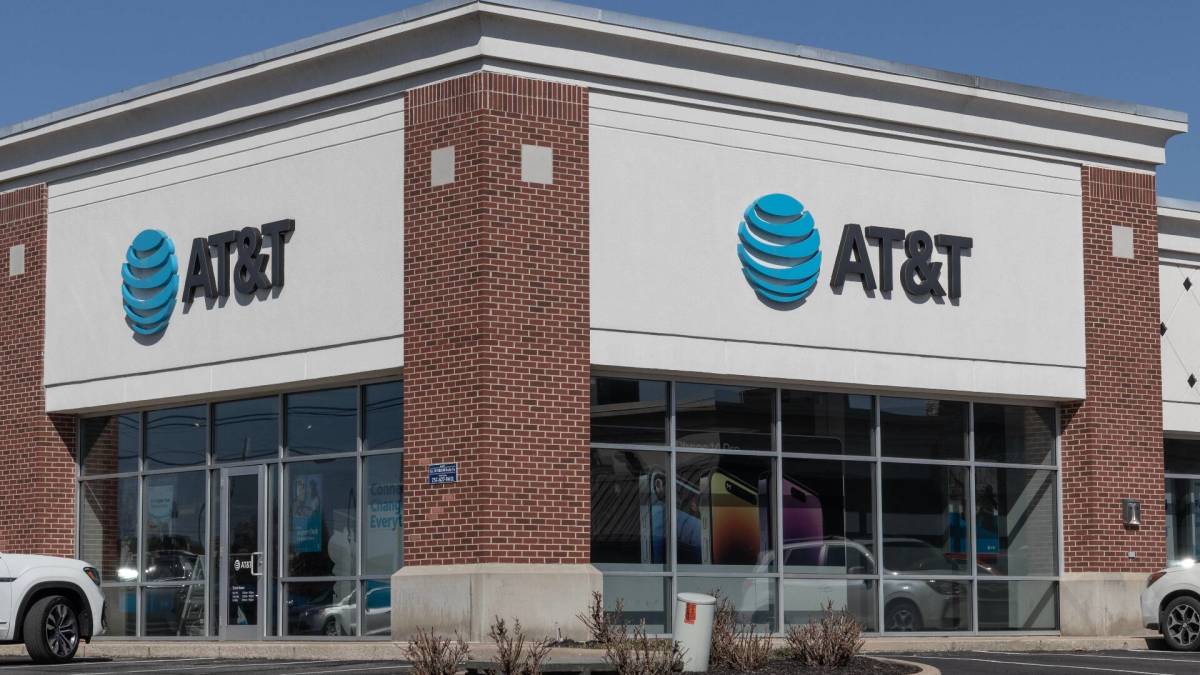 AT&T is losing customers at a concerning rate.
Jonathan Weiss/Shutterstock
AT&T shifts gears to compete with T-Mobile
On Dec. 1, T-Mobile launched a new initiative called “15 Minutes to Better,” which aims to make switching from rival phone carriers easier and faster for consumers, following its initial announcement on Nov. 20.
The initiative ensures it takes no more than 15 minutes for consumers to switch phone carriers. The switching process is completed through T-Mobile’s T-Life app, where consumers can log in to their current plan from a rival phone carrier and select an option called “Easy Switch,” which will match them with a competitive T-Mobile offer.
Now, AT&T is planning to follow in T-Mobile’s footsteps amid increased competition. During a UBS conference on Dec. 9, Stankey said the company will soon develop its own digital switching tool for customers.
“Customers impart on us their experiences with other industries and services,” said Stankey. “And they like having digital experiences.”
Related: T-Mobile makes bold move to lure AT&T and Verizon customers
He said that AT&T’s approach to digital switching, which will begin to launch next year, will be “a little bit different” from T-Mobile’s.
“What T-Mobile did is consistent with where we see the market is going, and we think it’s consistent with what customers want,” he said. “We’re taking a little bit different attack as to how we’re doing it. Some of that will start rolling out early next year. But we absolutely see this consistent trend that more and more of our transactions with customers will be fulfilled digitally and through a very well-integrated supply chain supporting that moving forward and that will give customers flexibility.”
Stankey clarified that moving towards digital experiences doesn’t mean customers will no longer have the option to receive in-person assistance.
“It doesn’t mean they won’t have physical points to go and satisfy their needs if they choose to do that,” said Stankey. “They may be different in how they get those physical points of distribution, but they will have far more choices about how they do things digitally. And I think that’s good for our business. It will take friction out of things.”
AT&T recently sued T-Mobile over its new switching tool
His comments come after AT&T filed a lawsuit against T-Mobile on Nov. 26, requesting a temporary restraining order, over the launch of its “Easy Switch” tool.
In the lawsuit, which was obtained and viewed by TheStreet, AT&T alleged that T-Mobile’s new tool reflects its “ongoing intrusion into AT&T’s computer systems,” which has “persisted” even after it told T-Mobile to stop via a cease-and-desist letter.
AT&T claimed that T-Mobile’s “unauthorized and illegal access” to private information, including personal account information, phone plans, contracts and billing history, puts customers at risk.
More Telecom News:
- T-Mobile announces free offer for Verizon and AT&T customers
- Verizon CEO sounds alarm on why customers are leaving in droves
- Spectrum raises red flag on cause of fleeing customer problem
“On information and belief, T-Mobile is retaining this AT&T customer data T-Mobile’s own records, regardless of whether the customer becomes a T-Mobile customer,” reads the lawsuit. “T-Mobile’s wholesale scraping of AT&T data threatens customer security and privacy, including exposing AT&T customers to the risk of identity theft, fraud, or other illegal uses of their data.”
T-Mobile has since filed an opposition, obtained by TheStreet, against AT&T’s request for a temporary restraining order, claiming that the original version of “Easy Switch” is no longer available to AT&T customers, and it doesn’t plan to revert to that version.
“Instead of competing with T‐Mobile on the merits of its plan offerings and wireless network, AT&T technologically blocked its customers from using the original version of the Easy Switch feature,” said T-Mobile in its filing.
AT&T has applauded T-Mobile’s decision to make the original version of the tool unavailable for AT&T customers.
“We appreciate T-Mobile says they will stop recklessly scraping customer data for now,” said AT&T in a statement to TheStreet. “We ask that they commit — on the record — to never employing these unlawful tactics that put customers and intellectual property rights at risk again.”
It is no surprise that AT&T has switched gears and is now planning to launch a digital switching tool of its own to better compete in attracting new customers. The company currently falls behind its top competitors in terms of consumer satisfaction for postpaid phone plans, according to a recent survey from J.D. Power.
Phone carrier consumer satisfaction rates for postpaid phone plans:
- The average consumer satisfaction score for postpaid plans offered by mobile network operators is 593 (on a 1,000-point scale).
- T-Mobile ranks the highest with a satisfaction score of 636.
- Verizon takes second place with a 583 score.
- AT&T falls behind Verizon with a satisfaction score of 573. Source: J.D. Power
“The findings show that value is the most important driver of the overall experience, followed closely by service quality,” said Carl Lepper, senior director of technology, media and telecom at J.D. Power, in a press release.
Related: AT&T sues T-Mobile for bold new tactic to lure customers