
Americans have been suffering from an annoying problem that seems to be getting worse each year: robocalls.
Almost every American has received one of those phone calls from an unknown number where, when answered, there’s an awkward silence on the other line. Or those threatening phone calls about a nonexistent student, mortgage or auto loan that defaulted.
Some robocall scammers have even impersonated Microsoft or Apple tech support, calling to “fix” a nonexistent computer problem.
According to YouMail’s Robocall Index report in May, during the first four months of 2025, Americans received 18.9 billion robocalls, an 11.93% increase compared to the first four months of 2024.
“We’re seeing robocalls continue to trend higher in 2025, after a long stretch of being stable or trending down,” said YouMail CEO Alex Quilici in the report. “The robocall problem clearly hasn’t been solved, and there’s still a need for apps and services that protect consumers.”
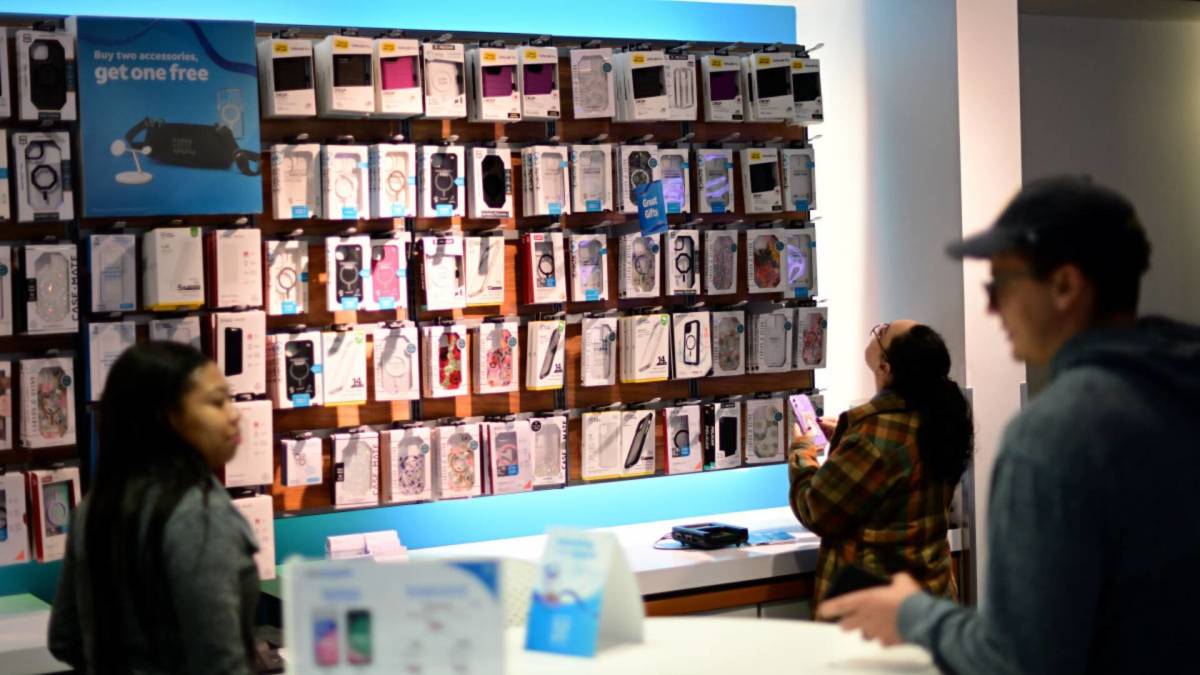 Shoppers shop at an AT&T store.
Image source: Mark Makela/Getty Images
AT&T rolls out unique solution to spam calls
Amid this alarming trend, AT&T (T) is piloting a new tool that customers can use to block unwanted calls.
The phone carrier has developed a “digital receptionist” powered by artificial intelligence that can screen customers’ calls when activated, according to a new press release.
AT&T claims the digital assistant answers incoming calls and asks questions such as “Who may I say is calling?” and “What is this in regard to?” It determines “whether the caller is human, how urgent the call is,” and if it meets a customer’s “customized criteria.”
If the call does not check all these boxes, the digital receptionist hangs up, and if it does, the call goes through. Customers can watch a live transcript of the call and choose to pick it up at any time.
Related: Verizon angers customers with new tactic to boost loyalty
Also, if customers don’t want certain phone numbers to be screened, they can put trusted contacts on a “Do Not Screen” list.
In addition, AT&T states that the digital receptionist can take a message or accept a delivery window.
“We’re uniquely positioned to build this directly into the network itself to work with your phone number,” said AT&T in the press release. “It’ll work without any cumbersome downloads. It won’t drain a phone’s battery. And it’ll still work even if you’re out of cellular service range or not connected to the network.”
AT&T said it is “rolling out the new tool to select customers throughout this year.”
The new tool from AT&T comes shortly after it launched a new Wireless Account Lock feature for phone customers in July that protects them from data breaches. The feature can be activated by switching a button in the myAT&T app.
When toggled on, it disables several key account changes, such as updates to billing information, phone number changes or transfers, SIM or eSIM swaps, device upgrades, adding a new line, or changes to authorized users.
AT&T is suffering from a major customer problem
AT&T’s increased focus on security comes during a time when it is losing loyal customers. The phone carrier’s second-quarter earnings report for 2025 revealed that its postpaid phone churn (the number of customers who ended phone service) increased by 17 basis points year-over-year.
More Telecom News:
- DirecTV customers threaten to leave after latest warning
- T-Mobile suffers massive boycott from customers
- Verizon quietly backtracks on harsh change that angered customers
The startling loss in customers follows recent price increases and several data breaches last year that impacted millions of customers.
During an earnings call on July 23, AT&T Chief Financial Officer Pascal Desroches said the company is operating in a “competitive environment,” and the conclusion of customer contracts and worries over President Donald Trump’s tariffs contributed to elevated churn this year.
“This year we had a higher percentage of our customers coming off of financing contracts, and we, all things being equal, expected a higher level of churn plus a continued normalization of the number of net adds,” said Desroches. “On top of that, in the first half of the year, I think it’s fair to say, we probably saw a little bit more impact from those than anticipated (at the) beginning of the year, as well as probably a little bit of pull forward of demand on the consumer side, because of tariffs.”