
AT&T (T) , like a few of its top competitors in the telecom industry, is suffering from a growing problem.
The phone carrier revealed in its second-quarter earnings report for 2025 that while it added 401,000 new postpaid phone customers during the quarter, its postpaid phone churn (the number customers who ended phone service) increased by 17 basis points year-over-year.
💵💰Don’t miss the move: Subscribe to TheStreet’s free daily newsletter 💰💵
The loss of phone customers comes after it issued a significant price hike in August last year for its retired unlimited wireless plans. The monthly price for customers with one line on those plans increased by $10; for multiple lines, it spiked by $20.
Related: Verizon hopes a new tactic will fix fleeing customer problem
In April this year, AT&T even decreased its autopay discount from $10 to $5 for customers who pay their bills with debit cards.
During an earnings call on July 23, AT&T CEO John Stankey said that recent price increases aren’t the main reason more customers are choosing to discontinue phone service.
“I don’t view pricing as being our issue in terms of managing churn,” said Stankey. “Obviously, every time we take a pricing action, we’re cognizant that there’s going to be some dislocation that we have been historically pretty good at assessing, modeling and managing. We try to do our pricing in a way where we tie prices to value. So we find places where there’s maybe recaptured value that we can price out differently so that the customer feels like it’s not just a price increase, but they understand they’ve gotten something over time or in return for it, where they’re less likely to go.”
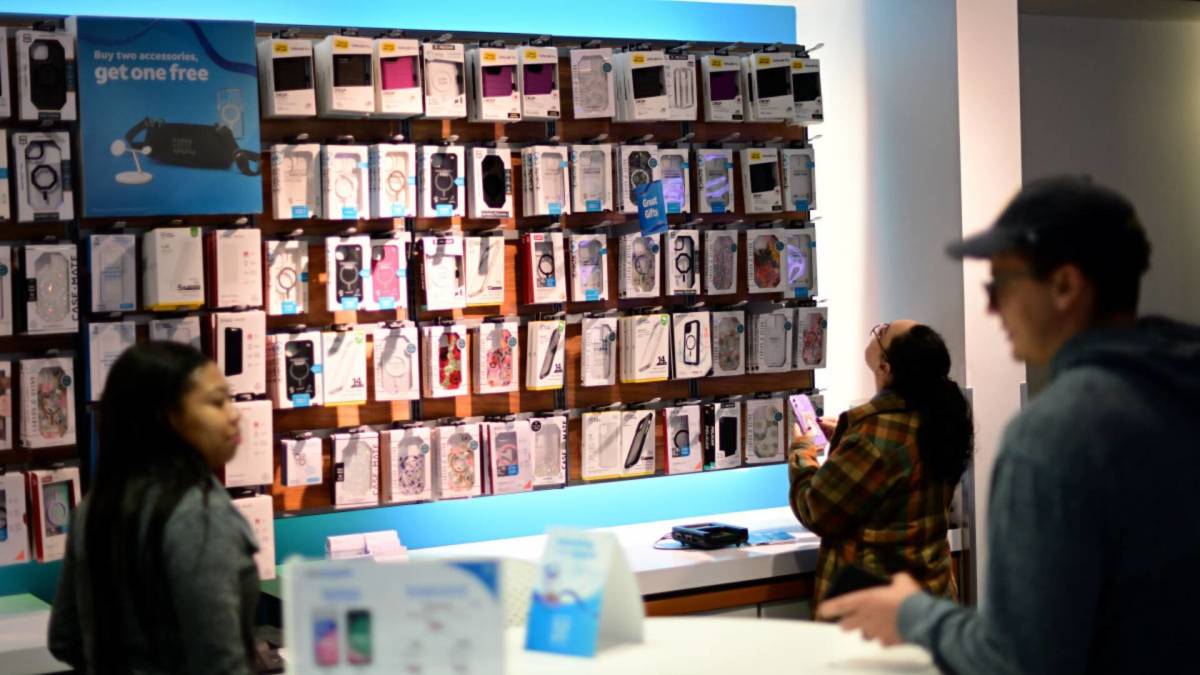 Shoppers shop at an AT&T store.
Image source: Mark Makela/Getty Images
AT&T CFO flags the main sources of the problem
AT&T Chief Financial Officer Pascal Desroches said during the call that the company is operating in a “competitive environment,” and the end of customer contracts and concerns over President Donald Trump’s tariffs contributed to elevated churn this year.
“This year we had a higher percentage of our customers coming off of financing contracts, and we, all things being equal, expected a higher level of churn plus a continued normalization of the number of net adds,” said Desroches. “On top of that, in the first half of the year, I think it’s fair to say, we probably saw a little bit more impact from those than anticipated (at the) beginning of the year, as well as probably a little bit of pull forward of demand on the consumer side, because of tariffs.”
Related: T-Mobile announces generous offer for conflicted customers
He also said that the Trump administration’s recent immigration crackdown has had an impact on AT&T’s wireless business. Since Trump took office in January, his administration has arrested and deported over 132,000 undocumented immigrants.
“If you look at what’s gone on in the postpaid the prepaid market this quarter, I do believe some of that falls through to immigration and some of the dynamics that are occurring there,” said Desroches.
Consumers have had enough of high prices
The recent decline in AT&T phone customers comes after Stankey warned investors during an earnings call in April that the company may have to increase prices for its handsets due to Trump’s tariffs.
“So I think that if ultimately costs are passed to us from those that we buy handsets from, unfortunately for the customer, we’re going to have to come up with some new ways for them to figure out how to digest that increase in pricing,” said Stankey in April.
Many consumers across the country are sick of high prices. According to a recent report from Doxo, the average amount of money 94% of Americans spent on phone bills each month last year is $121, a 2% increase from what they spent monthly in 2023.
More Telecom News:
- Verizon’s push to make switching harder for customers hits a snag
- T-Mobile announces generous offer for conflicted customers
- Amazon pulls the plug on a free service for customers
As consumers battle higher phone bills, AT&T’s top competitors, T-Mobile and Verizon, also saw a large number of customers canceling their phone services during the second quarter of this year.
T-Mobile’s postpaid phone churn increased by 10 basis points year-over-year during the quarter, while Verizon’s remained flat despite announcing new deals and perks for customers over the past few months.
Amid this startling trend, cable companies have grown to become a major threat to traditional phone carriers over the past few months. Cable giants have increasingly been offering customers bundle options on TV, mobile and internet, which allows them to save money on these services.
A recent report from MoffettNathanson, found that Spectrum, Comcast, and Altice USA added 886,000 new phone customers during the first three months of 2025, up from the 804,000 they added during the same time period last year.