
Diversification only works if your holdings don’t all ride the same wave. You can own a dozen stocks in different industries and still be making one big bet without realizing it.
For years, owning an industrial giant was the classic way to balance a tech-heavy portfolio. Bulldozers, mining trucks and engines rose and fell with construction and commodity cycles, not with Silicon Valley.
The artificial intelligence boom has scrambled that playbook. Data centers need enormous amounts of electricity, and they need it fast, and the companies that can deliver power equipment have quietly become AI stocks in their own right.
That shift can leave everyday investors more concentrated than they think, especially if an “old economy” name is supposed to be the steady part of the mix. The next pullback in AI stocks could hit the very holdings you counted on to cushion it.
Few companies show this better than Caterpillar (CAT). A fresh deal from one of its customers, backed by a frontier AI lab, just gave Bank of America another reason to back the stock.
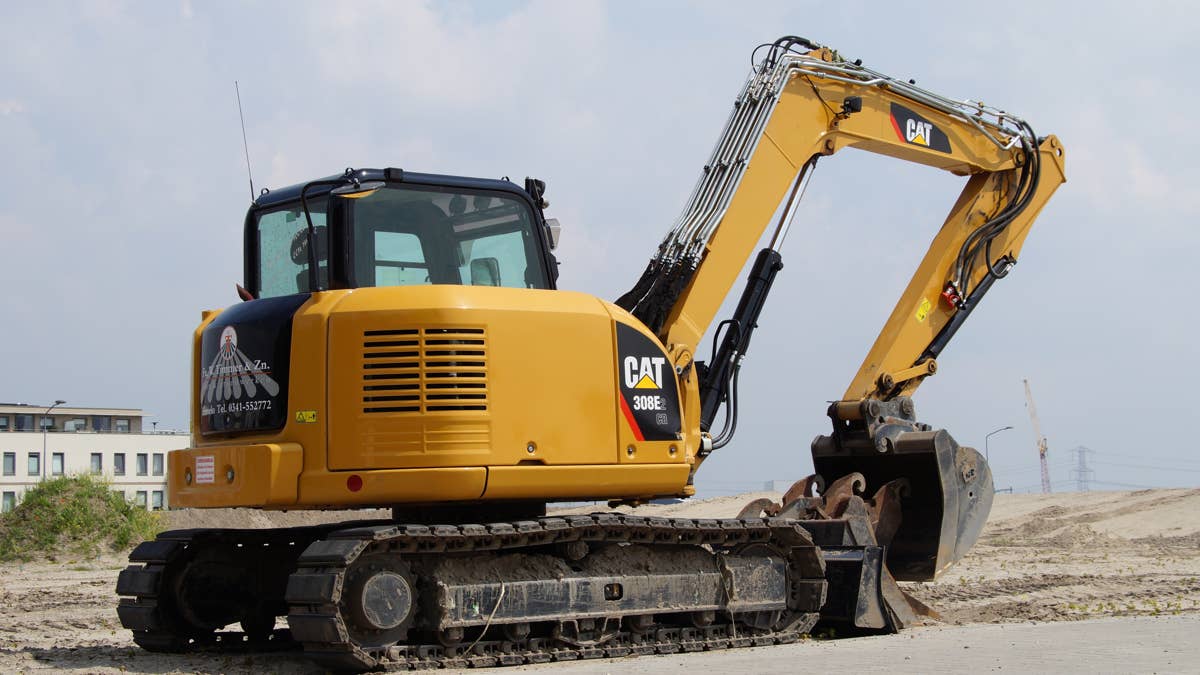 Bank of America maintains its buy rating and $989 target after Caterpillar secured 283 MW in AI-backed orders.
How a bulldozer maker became a data center power supplier
Caterpillar posted its first quarter ever above $20 billion in sales and revenues in the second quarter, up 24% to $20.5 billion, according to the company’s earnings release. Adjusted earnings jumped to $8.17 a share from $4.72.
More Wall Street:
- Piper Sandler revamps Meta stock price target after cutting it 3 weeks ago
- Jim Cramer drops another stock market warning
- Palantir’s CEO just sent a message Silicon Valley won’t ignore
Power is the engine behind that growth. Power generation retail sales rose 72% on demand for large generator sets and turbines for data centers, and the company’s backlog hit $72 billion, Manufacturing Dive reported.
Power and energy customers are already placing orders through 2030. That kind of visibility is rare for a company once known mostly for yellow construction machines.
Bank of America sees 20% upside after an AI lab deal
BofA Securities analyst Michael Feniger reiterated his buy rating and $989 price target in a Sept. 28 note. That target sits about 20% above the $821.58 reference price in the report.
The catalyst came from Atlas Energy Solutions (AESI), an oilfield services company pivoting into power. Atlas announced two cost reimbursement agreements with an unnamed frontier AI lab for two separate data centers, and its shares jumped 13% on Friday, Sept. 25, BofA said.
Related: Bank of America resets AMD price target after major milestone
One agreement supports an extra 283 megawatts of Caterpillar power equipment, on top of the 1.4-gigawatt framework deal Atlas and Caterpillar announced in March. Atlas also locked in 328 megawatts of Caterpillar generating capacity for 2027 deliveries, according to a company statement.
“De-risking the supply chain and the project timelines is of paramount importance,” Atlas CEO John Turner said in the statement.
Feniger pulled several takeaways for Caterpillar investors from the deals, according to the note:
- AI labs want power quickly and are willing to lend their balance sheets to get it built
- A delayed data center project freed up production slots that Caterpillar redirected to key customers
- Caterpillar’s dealer network sells full power setups, not just engines
- Prime power, rather than backup generators, is where Caterpillar is better positioned than rival Cummins
Tariff costs are landing on buyers, not on Caterpillar
The pricing detail may matter most for shareholders. Atlas agreed to pay $273 million for the 328 megawatts, or roughly $830,000 per megawatt, which BofA noted is higher than past agreements.
Atlas’ regulatory filing says that price includes tariffs, passed through at the amounts Caterpillar charges, according to the note. BofA believes power equipment carries enough pricing power to offset higher shipping, transportation and tariff costs better than other sectors.
In my analysis, the deal structure also answers a question many households care about. When an AI lab backstops the cost of on-site generation, more of that power bill stays with the tech company instead of landing on local utility customers.
Why Caterpillar shares trade well below their high
Strong demand hasn’t kept the stock from swinging. Caterpillar has traded between $467.46 and $1,073.46 over the past 52 weeks, per BofA, which leaves it about 23% below its high.
Shares fell 4% to $783.15 on Sept. 14 as investors questioned how long the data center buildout can last, 24/7 Wall St. reported. CEO Joe Creed has said the company hasn’t seen customers back away from demand.
Valuation is the other debate. BofA’s $989 target equals 29 times its 2027 earnings estimate, well above Caterpillar’s 15-year historical range of 15 to 18 times, which the firm justifies with a multiyear earnings recovery.
Is your diversified portfolio secretly one big tech bet?
Jim Cramer recently reclassified Caterpillar as a data center stock, after finding that four of one viewer’s five supposedly diversified holdings depended on AI spending, TheStreet reported. That’s a useful gut check for your own account.
List your largest holdings and mark every one that depends on AI spending, including chipmakers, cloud providers, utilities and power equipment makers like Caterpillar. When I run this exercise, the AI share almost always comes out higher than expected.
BofA’s downside risks include a tariff-driven recession, spending cuts from mining and oil and gas customers, pricing pressure and dealer destocking. Caterpillar’s AI tailwind is real, but it now moves with the same wave as the rest of your tech stocks.
Owning great companies is only half the job. Knowing which bets they share is how you keep one bad week from turning into a bad year.
Related: Bank of America makes fresh 33% call on surging quantum stock
