
Oil spiked above $100 when the Iran war started in late February. It pulled back toward $70 by July. Then fresh attacks on shipping and energy infrastructure pushed it back above $90.
Bank of America said in a Sept. 22 research note shared with TheStreet that it no longer expects prices to stay where they are.
The bank raised its year-end Brent crude forecast to $95 a barrel from $83, CNBC reported. It also warned that Brent could climb well above $150 if disruptions continue into spring 2027. Brent was trading near $91.21 on Sept. 22.
What Bank of America said about Brent crude
The BoA note came from a team led by Francisco Blanch, Bank of America’s head of global commodities and derivatives strategy. “Continued skirmishes into year-end are now our most likely scenario,” Blanch wrote, according to Benzinga.
Alternative shipping routes and escorted Hormuz passages have offset some of the lost supply. But the bank said that is not enough. “Although alternative routes and escorted Hormuz shipments have mitigated some of the shortfall, damaged infrastructure and rising geopolitical tensions make rapid normalization unlikely,” the team wrote.
BofA raised its second-half 2026 Brent forecast, not its full-year average. The bank still sees Brent averaging around $80 in 2027 if the conflict doesn’t worsen.
But it’s the second-half outlook that matters for consumers and energy markets right now, since $95 by year-end means prices are going up from here, not down.
More Oil & Gas:
- Goldman Sachs doubles down on oil price forecast for 2026
- Drivers lose control over gas price squeeze
- A big shift in the U.S. energy market is about to happen
Oil futures are flashing a warning sign. Contracts for delivery right now are trading well above contracts for delivery months from now. That pattern, called backwardation, shows buyers paying a premium to get oil today. Blanch said it points to acute near-term scarcity in the physical market.
Iran has been in negotiations with the U.S. over reopening Hormuz for months. Each round of talks has ended without a deal. The escort program, in which naval vessels accompany commercial tankers through the Strait, has kept some oil moving but nowhere near pre-war volumes.
How close the market is to $150 oil
The $150 figure is BofA’s tail risk, not its main forecast. Still, Blanch put a specific condition on it: If disruptions run into spring 2027 or more energy infrastructure is hit, Brent may need to go “well above $150 to curb global oil demand.”
Before the war started, roughly 125 large commercial vessels crossed the Strait of Hormuz each day. On the Monday (Sept. 21) before BofA’s note was published, only two made the crossing, according to Kpler vessel-tracking data cited by Benzinga.
The East-West Pipeline shut down on Sept. 11. BofA estimates peak Hormuz disruptions may have reached 14 million barrels a day, against pre-war flows of 4 million to 8 million.
Tools that absorbed the initial shock, including strategic reserve releases, commercial inventory draws, and escorted shipping, have largely been used up, Chevron CEO Mike Wirth said last week, as TheStreet reported.
Thin inventories mean small disruptions move prices fast. There is less cushion than there was six months ago.
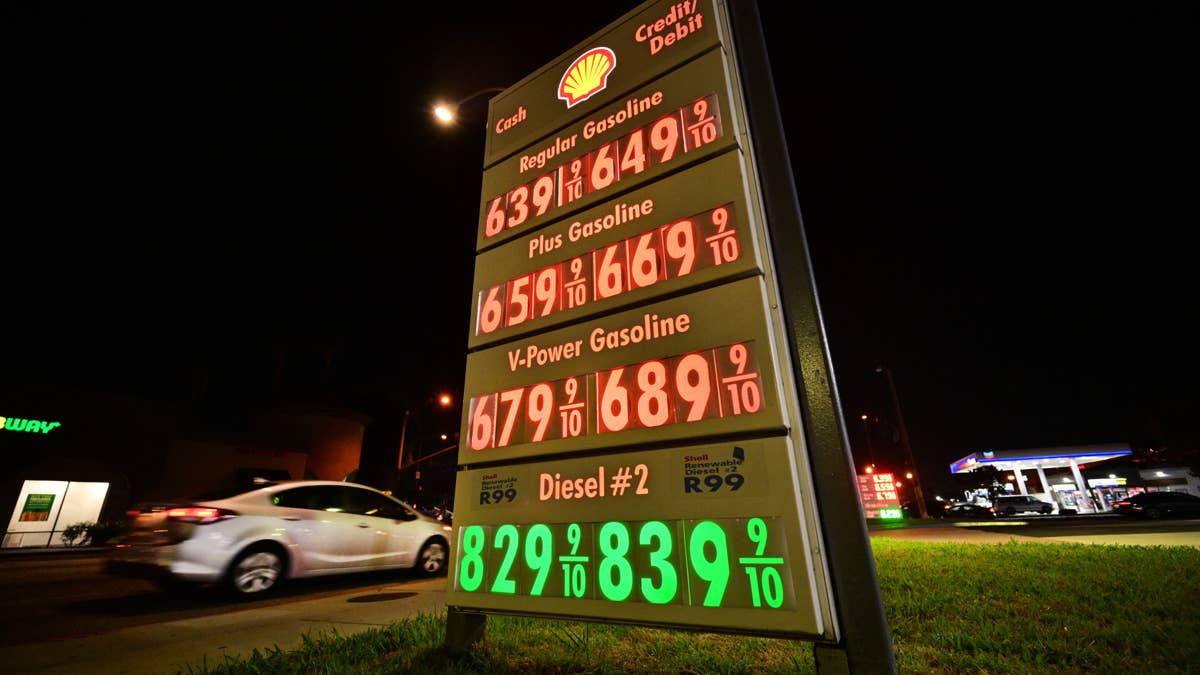 Diesel is already at record levels.
FREDERIC J. BROWN / Getty Images
What $95 or higher oil means at the pump
Diesel is already at record levels. Gasoline came back to about $4.32 a gallon after falling below $4 during the summer. A move in crude toward $95 adds more pressure to both.
Trucking, farming, and construction run on diesel. Higher diesel costs push up shipping and production expenses. Businesses pass those along. That feeds inflation.
Airlines are also exposed. Jet fuel tracks crude. Several U.S. carriers have already warned about fuel cost pressure in their earnings guidance. If Brent moves from $91 toward $95, the cost increase runs through every part of the economy that depends on moving goods or people.
The Federal Reserve raised rates by 25 basis points on Sept. 16. Oil above $100 makes that fight harder. Rate hikes slow demand. They do not add supply. If crude keeps rising, the pain runs from the pump through the whole economy.
The dot plot released after the Sept. 16 decision showed 16 of 18 Fed officials expect at least one more rate hike.
December is the date most are pointing to. A Brent move toward $95 or higher means the Fed may still be tightening into a fuel-driven inflation spike, the combination central bankers try hardest to avoid.
What BofA still expects for 2027
Blanch also put a 2027 number in the note. He expects inventory draws to hold Brent near $80 a barrel next year, according to CNBC. That would be a significant drop from where prices sit now.
Iran said it could reopen Hormuz within seven days if Washington eases military pressure. Saudi Arabia restarted its East-West Pipeline. Both could pull prices lower.
Yet BofA’s note does not count on either. “Continued skirmishes into year-end are now our most likely scenario,” Blanch’s framing noted.
Blanch also flagged that the global economy has absorbed the shock better than many predicted. Governments are spending freely. Monetary conditions outside the U.S. remain relatively loose, which has cushioned demand.
If conditions tighten while oil stays high, demand destruction eventually brings prices down. Blanch is not betting on that happening quickly.
The $95 year-end target sits close to where Brent is already trading. The bigger question is the $150 tail risk.
Another major attack on Gulf infrastructure, a broader escalation, or a failure of the Hormuz escort operation could get prices there faster than anyone currently projects.
Related: Chevron CEO sends a strong message on oil price and the economy