
Micron (MU) stock closed the June 25 trading session up 15.81% at $1,213.56. The stock soared following the release of the third-quarter (Q3) fiscal year 2026 (FY26) earnings report on June 24.
The stock is up 313.14% year-to-date, at the time of writing, Friday afternoon, June 26. Meanwhile, the SPDR S&P 500 index (SPY) is up about 7.74% in the same period.
The third-largest supplier of memory chips has outpaced the S&P 500, thanks to its participation in the broader semiconductor rally driven by the AI boom.
Positive news driving Micron’s stock includes:
- Intel’s first-quarter earnings boosted confidence in the semiconductor sector.
- Bank of America revised its semiconductor industry forecast.
- Micron confirmed that it had started 1-alpha (1α) DRAM manufacturing at its Manassas, Virginia, fab.
Analysts have been resetting their price targets just before earnings, Bank of America included. Now that the earnings have dropped, Bank of America has raised its price target again.
The real strength of Micron’s Q3 earnings report
Micron reported revenue of $41.46 billion, with a huge 73.76% quarter-over-quarter (QoQ) growth and an impressive 345.8% year-over-year (YoY) growth.
GAAP net income increased almost 1400% year over year, hitting $28.24 billion, or $24.67 per diluted share.
Memory stocks are known for suffering from boom-and-bust cycles. The AI data center build-out and huge capital expenditure plans from hyperscalers have created an abnormally long boom part of the cycle for memory stocks.
More tech stocks:
- Bank of America resets Intel stock price target
- Morgan Stanley resets Nvidia stock forecast after key event
- Bank of America resets Broadcom stock price target after earnings
Many investors are worried about how long the cycle can last and what would happen if the AI bubble bursts. Long-term risk for Micron would be a slowdown in data center infrastructure spending. If data center expansion winds down, so does the demand for Micron’s HBM.
Micron has made moves to improve revenue visibility. The company has confirmed that it has completed 16 strategic customer agreements (SCAs) with customers across the data center, consumer, and auto market segments.
Sumit Sadana, executive vice president and chief business officer at Micron, said on the earnings call that these SCAs cannot be canceled and are structured as take-or-pay agreements.
Micron provided impressive guidance for Q4:
- Revenue of $50 billion ± $1 billion
- GAAP gross margin of 86%
- GAAP diluted earnings per share (EPS) of $30.73 ± $1.00
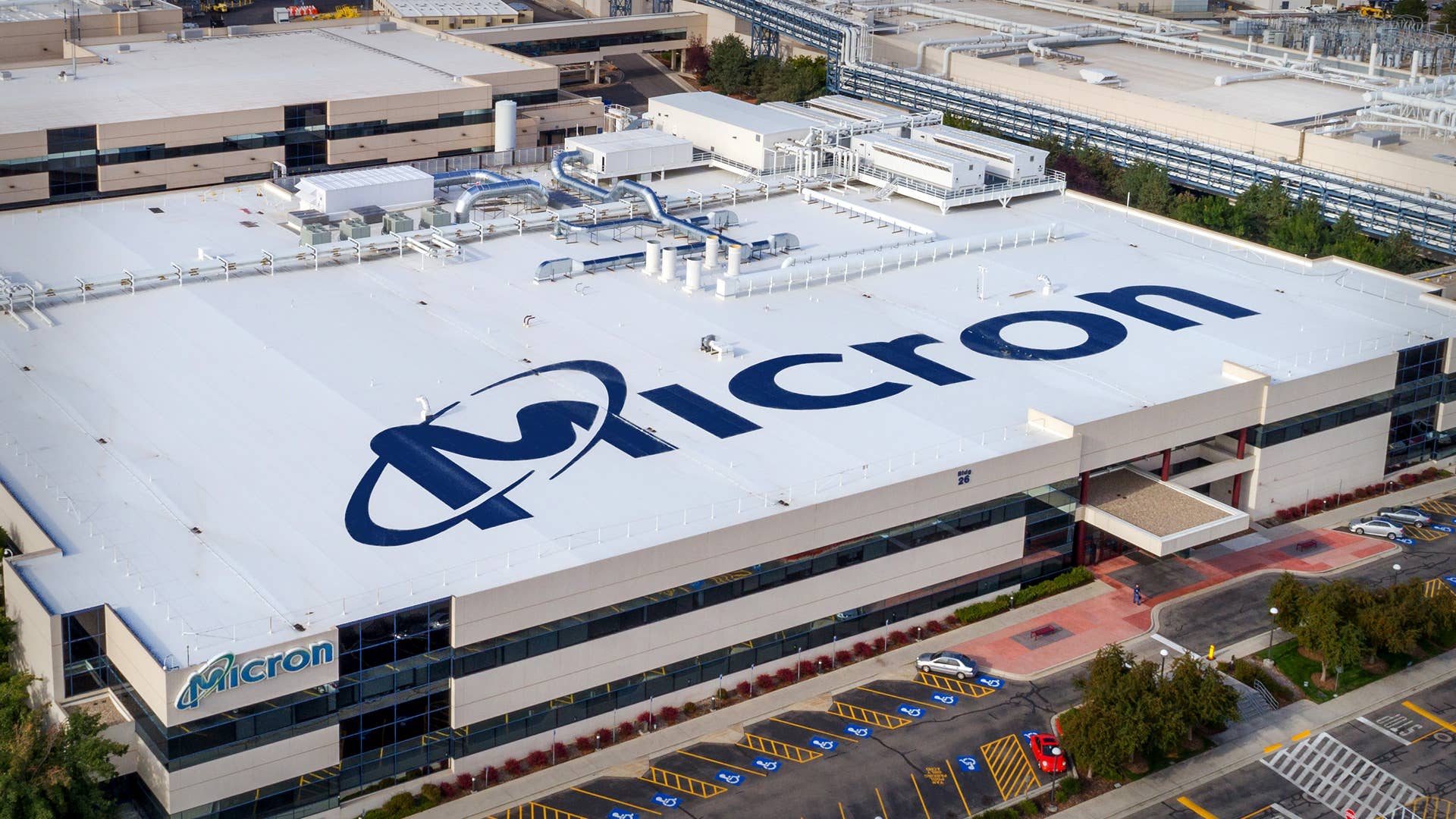 Bank of America raised Micron stock price target.
Shutterstock
Bank of America raises Micron stock price target
In a research note shared with me, Bank of America analyst Vivek Arya and his team updated their opinion on Micron stock.
The team said that Micron’s strong report supports their view on memory’s role in AI. They believe that the “increasing supply-side discipline” will lead to a more durable cycle.
Analysts said that strategic customer agreements materially enhance visibility and reduce volatility.
Arya wrote: “Elevated memory pricing could act as a ‘tax’ on data center customer capex growth while also leading to potential demand destruction in price-sensitive end markets like mobile and auto, thus posing a headwind to [Micron’s] growth.”
The team raised their non-GAAP EPS estimates for fiscal years 2026, 2027, and 2028 to $71.13, $140.24, and $145.45, from $69.73, $136.99, and $136.60, respectively.
Arya reiterated a buy rating on Micron and raised the price target to $1,550 from $1,500.
Analysts noted downside risk factors for Micron:
- Larger-than-expected memory average selling price decline.
- Greater competition from China’s newcomers.
- Share loss to large competitors.
- Softening of demand across major end markets such as data centers, smartphones, and PCs.
What do other analysts think, and how does Bank of America’s opinion compare? According to MarketBeat, 36 of the 39 analysts covering Micron stock rate it a buy. Three give a hold rating. The average price target is $1,228.30.
The stock is currently trading at $1,179.00, down 2.85%. The earnings report caused a brief pause in the tech sell-off, but that pause seems to have ended.
Investors might be reacting to The New York Times’ report that OpenAI is likely going to wait until 2027 for its I.P.O.
Related: Goldman Sachs resets Micron stock target with a twist