
The stock market’s under duress, but Wall Street’s biggest banks feel it’s still pretty expensive.
Bank of America warns that theS&P 500 is priced for perfection as we progress deeper into 2026, ruffling bullish investors in the process.
For perspective, the S&P 500 wrapped up 2025 with a robust 16% gain, ABC News reported, marking another double-digit year for U.S. stocks.
However, the pace cooled into year-end, with the S&P 500’s three-month return at 6.02% (as of November 2025), down from 7.90% in the prior month.
In my experience of covering stock markets, warnings don’t usually mean a crash is imminent.
They can, however, change character when leadership narrows, and easy gains disappear, which is what Bank of America is seeing now.
Clearly, the tech sector, led by AI, has spearheaded the S&P 500 over the past few years.
As of Q3 2025, the “Magnificent 7” (led by giants like Nvidia) contributed an eye-popping 54% of the S&P 500’s price gain and 44.1% of its earnings growth, per First Trust.
However, BofA argues the current makeup looks a lot different.
Investors need to rotate toward less-loved corners of the market, where valuations remain attractive and fundamentals are improving.
As a result, it’s more about hunting selective opportunities, particularly in health care and real estate.
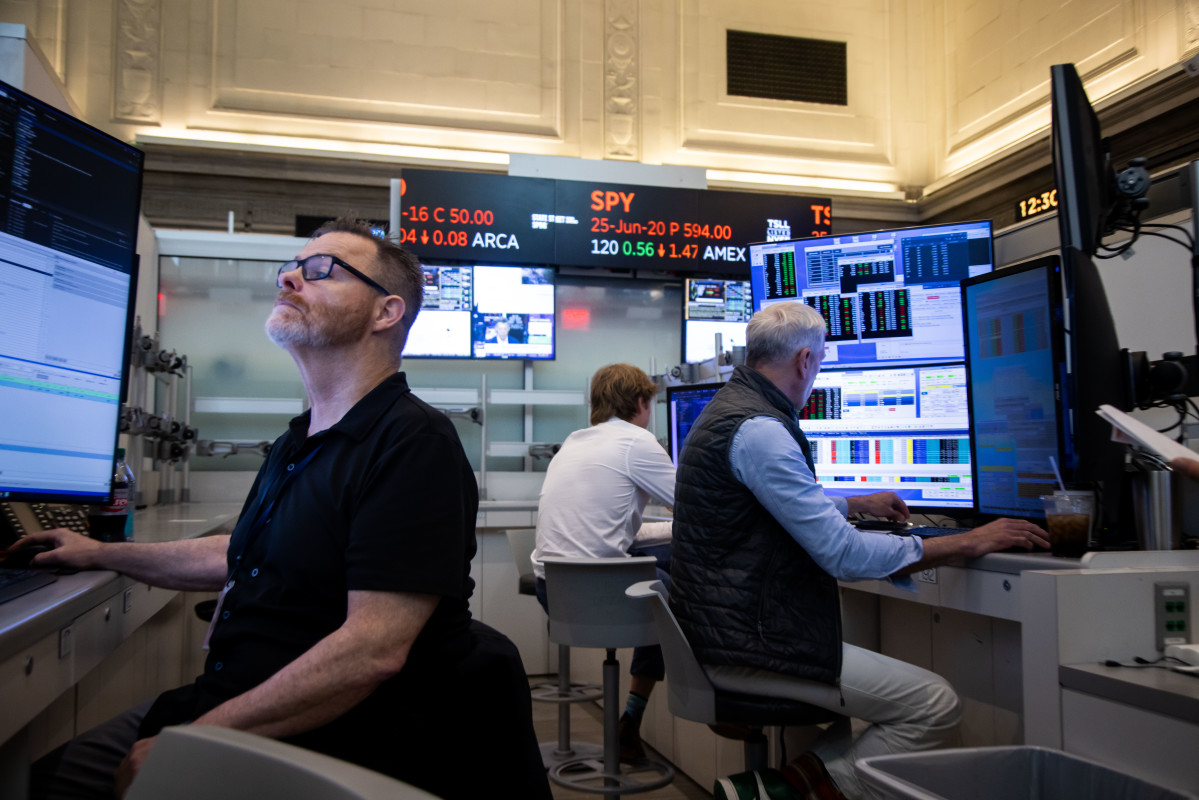 Bank of America warns high expectations leave little margin for error in today’s stock market.
Photo by Bloomberg on Getty Images
Bank of America thinks the S&P 500 looks overpriced
In a recent strategy note, BofA’s chief equity strategist, Savita Subramanian, presented the S&P 500 as appearing overbought across 18 of the 20 valuation measures the firm tracks.
These metrics included the following.
- Market cap-to-GDP: Looks at the stock market’s value compared to the size of the U.S. economy (higher levels point to overvaluation).
- Price-to-book: Shows that investors are paying compared to the company’s worth on paper.
- Enterprise value-to-sales: Measures a company’s value in comparison to the sales it generates.
Nevertheless, Subramanian also notes that today’s index is remarkably different than past cycles.
The S&P 500 of today is led by higher-quality, asset-light businesses with fortress-like balance sheets and healthy margins, which warrant a premium.
More Experts
- Longtime fund manager sends blunt message on P/E ratios
- Jim Cramer issues blunt 5-word verdict on Nvidia stock
- What the White House decision really means for Nvidia
- Michael Burry shares bold predictions for OpenAI, Palantir
The issue lies in expectations.
When valuations surge to such high levels, the markets stop forgiving mistakes.
Growth needs to remain elevated, while margins must also hold steady, and surprises must break in the right direction.
That’s exactly why Bank of America has set a 7,100 year-end 2026 target for the S&P 500, which is the most cautious forecast the big banks have for the index.
The case for health care and real estate in a fully priced market
Subramanian argues that health care and real estate are two sectors that look cheaper than tech, and the numbers are moving in the right direction.
Having assigned an overweight rating on both with a nearly one-year time frame, she suggests the appeal isn’t just about low valuations, but about improving fundamentals.
In Q3 2025, FactSet data indicate that the health care sector experienced a strong 10.3% year-over-year growth in sales, one of the strongest among the S&P 500. Notably, the figure jumped 8% at quarter-end as companies posted positive top-line surprises.
Related: Veteran analyst delivers blunt 3-word take on Tesla after report
Perhaps just as importantly, the sector’s blended earnings growth rose to 5.2% (from 1.4%), with the health care space delivering a 12.1% aggregate earnings surprise compared to estimates, FactSet shared.
Additionally, the real estate sector reported approximately 2.5% year-over-year growth in EPS, alongside nearly 6.5% year-over-year sales growth, according to a DWS report tracking Q3 2025 earnings.
Despite the strong performances, the Health Care Select Sector SPDR Fund delivered a 13% return last year, while the Technology Select Sector SPDR Fund posted a massive 24% gain. Real estate was the quietest trade, with just a 0.3% gain.
That performance gap could potentially be the fuel that sparks a rotation out of the tech sector.
AI’s productivity boom could pressure the U.S. consumer
Subramanian’s outlook also covers an overlooked area in the growing tension between AI and the U.S. consumer.
She notes that professional and business services workers have driven the most consumption growth since the 1980s and are likely to face challenges as companies turn to AI to automate white-collar tasks.
Related: Top analyst resets price target on Micron stock
That sentiment was effectively confirmed by the BLS November 2025 jobs report, which showed “little change” in employment for the professional and business services sector.
That’s exactly why Amazon CEO Andy Jassy’s warning lands so well.
Recent hiring trends suggest that demand for some professional roles is likely to slow down before new AI-related jobs take over.
If that gap persists, consumer spending will probably decline.
That’s exactly why Bank of America remains underweight on consumer discretionary and communication services, citing greater risk than reward in these sectors.
Related: How Netflix could benefit by losing the Warner Bros. deal