
In 1982, independent retailers captured nearly half of all retail spending. Historically, that independent retail’s share of overall US spending has declined, as larger chains and franchises boomed.
Closures hit hard those “Mom & Pop” shops, known for offering unique products, personalized services, and focusing on local community, unlike large corporations run by central management and, oftentimes, only profit-driven.
Those independent stores are what give a place its charm and character. They have a soul, a story to tell.
By the 2000s, their share dropped to around 31% and then to 28%, as larger chains grew faster, according to the Institute for Local Self‑Reliance, based on the U.S. Economic Census data.
Nowadays, even larger chains are struggling, as close to 20 retail brands have been closing stores across the country, totaling over 4,100 locations in 2025. Last year, UBS analysts projected that the number of retail store closures in the U.S. could climb to 45,000 by 2029, driven largely by the shutdown of smaller businesses, according to Business Insider.
It is an amazing achievement that some of the independent businesses have managed to survive decades, or even a century. During that time, an independent retailer had to deal with a number of challenges, including the Great Depression, World War II, several recessions and periods of high inflation, changes in consumer trends, and the pandemic, among others.
An independent retailer who managed to survive all that is without a doubt one that offered high-quality service and products — key traits that kept customers coming back.
Now one such independent home improvement and gardening specialist retailer with a more than century-long tradition of serving the local community is forced to close its doors for good, as national players like Home Depot and Lowe’s continue to dominate the industry.
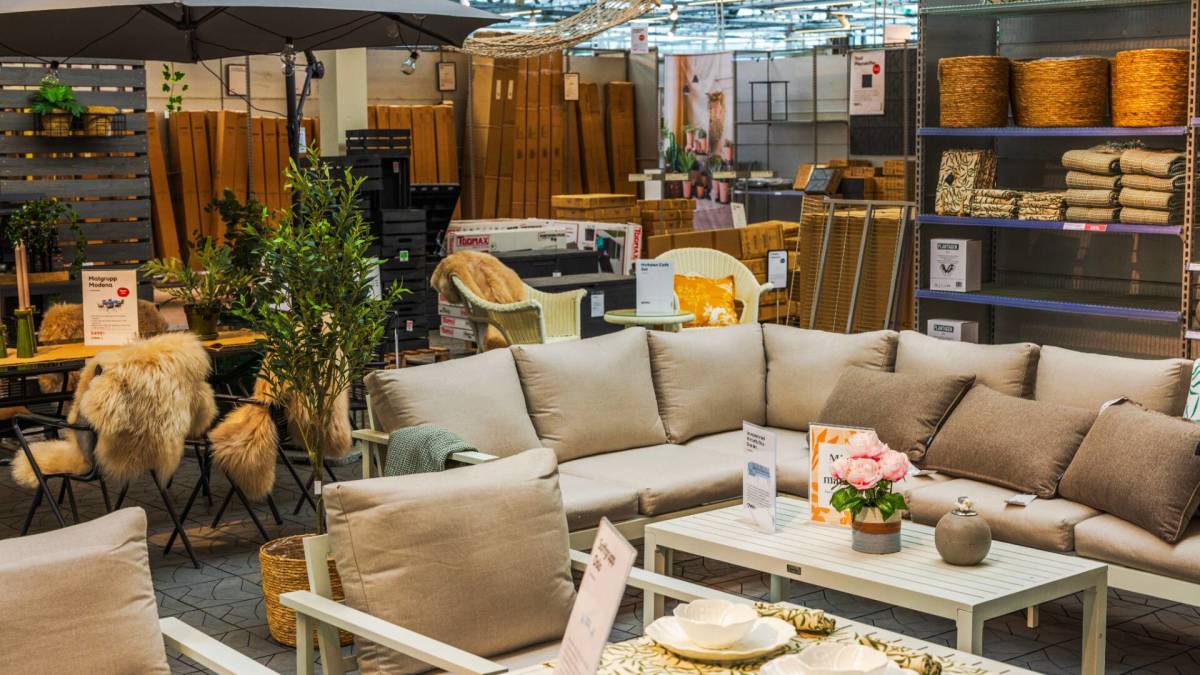 Downtown Home and Garden has been a community staple for more than 100 years.
Mulevich/Shutterstock.com
Downtown Home and Garden closes permanently after almost 120 years
Downtown Home and Garden in Ann Arbor welcomed and served customers for the last time on Christmas Eve. Then, it closed its doors for good, saddening generations of customers, WXYZ Detroit reported.
The home improvement and gardening retailer located on Ashley Street near Liberty Street opened back in 1906 and has been a staple in the community for decades.
Over time, “it has evolved from a livery stable and feed mill into an urban emporium for garden supplies plants for your home (and in season plants for your garden & home), classic housewares, durable outdoor clothing, quality dog gear, and unique kitchenware,” reads the description on Downtown Home & Garden’s About page.
The store’s history goes back to the 1890s when the building was constructed for Mann and Zeeb Elevator, a supplier of field seed for farmers and grain for poultry. In 1906, the Hertlers bought it and renamed it to Hertler Bros. In 1975, Mark Hodesh, who started a nearby diner, bought the property and store. In 1997 Hodesh, who in the meanwhile sold the business, and then regained it, renamed it Downtown Home and Garden.
About 10 years ago, Hodesh sold the business to Kelly Vore, one of his employees, but kept the property.
“In some form or another, it has always been a general store that met the needs of the community at large,” Vore said.
Downtown Home & Garden was popular for a vast offering of a variety of brands across categories such as outdoor and apparel, kitchenware and home brands, outdoor cooking, pet and dog gear brands, outdoor accessories and more.
Name brands featured at Downtown Home & Garden
Outdoor & Apparel Brands
- L.L. Bean
- Muck Boots
- Darn Tough
- Fox River Socks
- Stormy Kromer
Kitchenware & Home Brands
- Le Creuset
- Zwilling J.A. Henckels
- Weck
Outdoor Furnishings
- Big Green Egg
- Kingsley Bate
- Fermob
Pet & Dog Gear Brands
- Hurtta
- Ruffwear
- Muttluks
- Dog Mocs
- Source: Downtown Home and Garden
Why is Downtown Home and Garden closing for good?
The local Home Depot, Lowe’s rival, announced the closure in August 2025, on its Instagram page, saying, “To echo the message of another beloved Ann Arbor small business that closed in May, ‘financial burdens have become insurmountable.’”
The owner, Kelly Vore, explained in a post that the pandemic had a huge impact, and that the business has been facing “pre-pandemic volume with post-pandemic expenses. That makes a tight formula even tighter.”
Rising rent prices and shifting consumer spendings were among the major factors leading to the store closure.
“When I opted in for a 2025-2029 rent renewal, I was granted one year (2025) with conditions: Circumstances had to improve in order to absorb a 26% rent increase in 2025 and +12% in 2026. So, even with the progress we have made reducing expenses and downsizing, the push to market-align with Ann Arbor’s soaring rental rates, is not sustainable.”
Vore told WXYZ Detroit that “it doesn’t mean that this kind of business can’t succeed in other places but right here right now with the way things are, this is the natural course.”
The owner added that the community’s support in the last several months leading up to the closure turned out better than she expected.
“All of our knowledge of people’s affinity for this place and what we do is about a million times greater than we imagined,” Vore said.
Last day of operations, Christmas Eve, was emotional
Instead of focusing on sorrow around the closure, Vore chose to express gratitude for a century-long successful operation, bidding farewell to long-time customers and loyal staff.
“It’s very hard for everyone. And especially as vacant and cavernous as we are right now, a lot of times people walk in and it’s kind of like the tears well up,” Vore told MLive.
Ron Pisoni, a long time customer, came to say goodbye, saying it’s sad it is closing.
“It’s always been such a welcoming place,” Pisoni told the outlet. “This is a really unique place,” he said, adding that the store and the people who made it special will be missed.
Downtown Home & Garden employees also shared their gratitude for the historic building and the value it brought to the community.
“The physical building itself is amazing. It has served so many people for so long. It brings so much to the city and it will be sorely missed,” said Daryl Strong, a staff member.
Vore said that over the last couple of weeks she had unforgettable encounters with long-time shoppers.
“Customers have been phenomenal. The response to our exit has been the entire range that you would expect. Everybody’s going to miss us a great deal,” Vore told MLive.
The property owner, Hodesh, said that the location will most likely become a home to a new bar or a restaurant.
Community responds to the store closing
The announced closure quickly spread over social networks, where long-time customers and locals expressed their frustration with the news. On a Reddit thread, a number of commenters expressed the sentiment that the closure is a loss for the community, and frustration about how current economic conditions are making it impossible for local shops to survive.
“Oh no! DHAG is my favorite place to shop downtown, I go there all the time … Everyone there is so lovely and helpful. This is a true loss for the community,” user We_Four said.
User groggu was one of many not happy with the idea of seeing another bar or restaurant instead of the gardening and home store. “Nearly the last of the old downtown businesses. We bought plants, containers, clothes, and pet stuff there all the time. Now there will be another failing bar there next spring, sadness.”
A number of users just wrote “Nooo,” “Devastating,” or “Awful,” while others focused on trying to figure out whose to blame for it.
User holyd1ver83 wrote “Heartbreaker. Bad loss for the city. That rent increase should be fucking illegal.”
More Closings:
- 91-years-old historic bar is closing permanently
- Beloved 80-year-old steakhouse closes for good, customers upset
- Popular pasta chain closing dozens of restaurants
What Downtown Home and Garden closure means for consumers
E-commerce has dealt a significant blow to many industries, including home and gardening retail.
According to Deborah Weinswig, Coresight Research CEO, “Inflation and a growing preference among consumers to shop online to find the cheapest deals took a toll on brick-and-mortar retailers in 2024.”
“Last year we saw the highest number of closures since the pandemic. Retailers that were unable to adapt supply chains and implement technology to cut costs were significantly impacted, and we continue to see a trend of consumers opting for the path of least resistance,” Weinswig said in a statement.
This trend affects both small independent stores and larger chains. Business Insider reports that retailers including Party City, Big Lots, Walgreens, and Macy’s have announced large closure programs this year, illustrating that economic pressures and shifting consumer habits are reshaping the retail landscape.
Small independent stores often cannot match online prices or offer the seamless omnichannel experiences provided by larger retailers, making their struggle for survival even more challenging. As consumers increasingly turn to online shopping for convenience and lower prices, independent retailers face mounting pressure that directly affects their ability to serve local communities.
Beyond economics, smaller independent stores play an essential role in the consumer experience. They not only maintain closer relationships with their customers than corporate chains but also offer distinctive, unique products. With the closure of these businesses, consumers lose access to original items and personalized service that cannot be easily replaced by larger retailers or online shopping.
The disappearance of independent stores like Downtown Home & Garden marks a noticeable loss of variety, legacy, and character for the local community.
Related: 73-year-old furniture chain shuts stores for good, customers upset