
Sen. Bernie Sanders (I-Vt.), long known for challenging America’s wealthiest public figures, has renewed his criticism, targeting a familiar television investor. The confrontation centers on remarks made by investor and television personality Kevin O’Leary about young workers’ spending habits.
On the debut episode of the MeidasTouch program “On Sunday with Jack Cocchiarella,” Sanders responded to a clip of O’Leary criticizing younger workers for spending $28 on lunch.
O’Leary originally made the comments on “The Diary of a CEO” podcast with Steven Bartlett. Sanders used the exchange to broaden his critique of how ultra-wealthy figures view everyday financial pressures.
Federal Reserve data underscore the backdrop, showing wealth concentration at its highest level in more than three decades.
Sanders rips O’Leary’s lunch critique as disconnected from reality
O’Leary’s argument was blunt: Young workers earning $70,000 a year who buy expensive lunches are wasting money that could compound into serious long-term wealth.
On the podcast, O’Leary urged listeners to imagine that same $28 invested in an index fund returning 8% to 10% annually for 50 years.
Fortune ran the math using an 8% annual return and found a weekly $28 investment would compound to roughly $800,000 over five decades.
Sanders dismissed the framing entirely, calling O’Leary someone who is “completely separated from the reality that ordinary Americans are experiencing.”
“They have no clue, and they live in their own world,” Sanders told Cocchiarella, describing wealthy investors as fundamentally out of touch with how most American households experience their finances.
The senator went further, claiming that wealthy individuals who built fortunes through hard work too often believe that success entitles them to control broader society.
“They think they have the divine right to rule,” Sanders said, adding that the belief extends across many of the nation’s wealthiest executives.
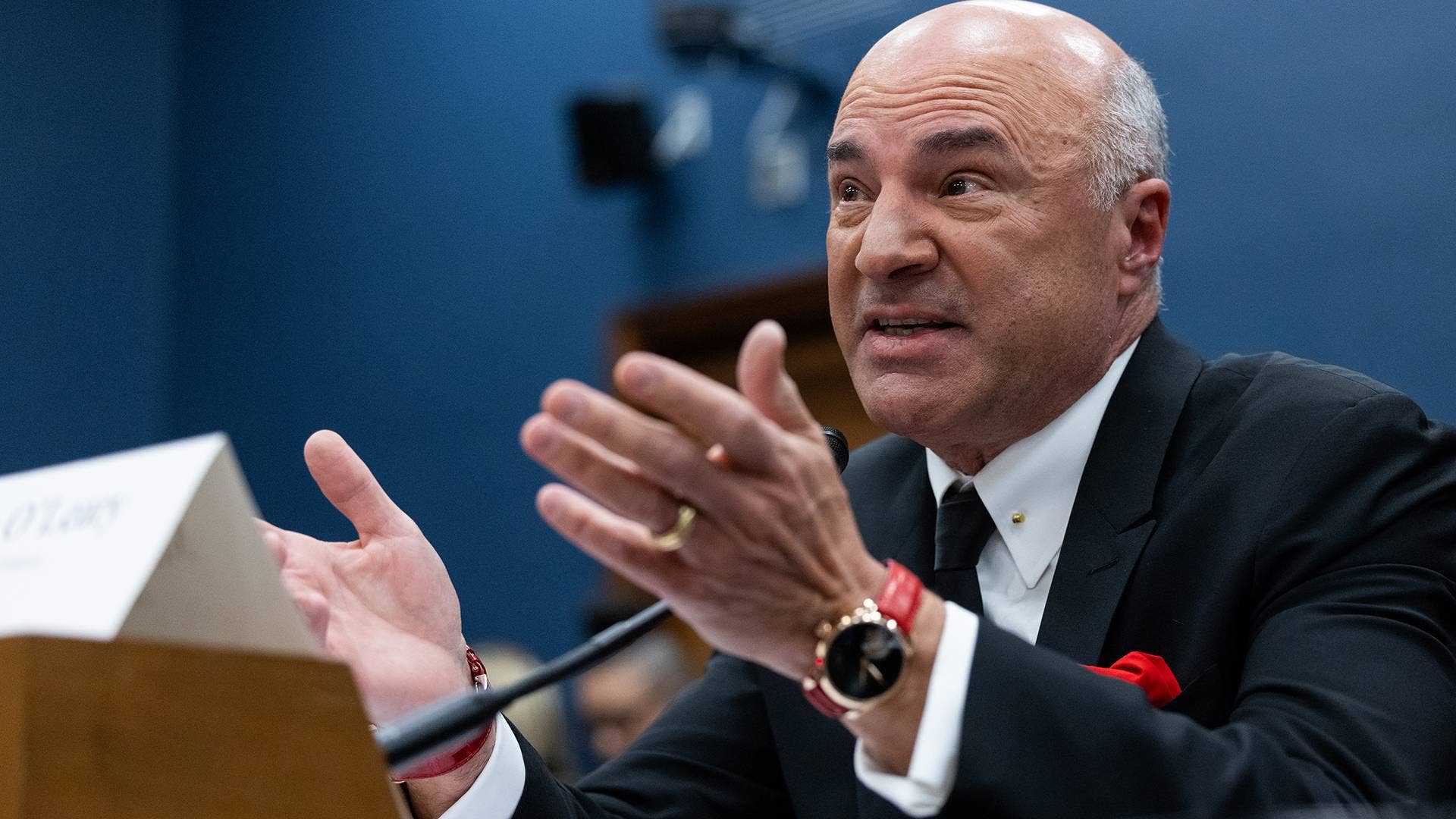 O’Leary’s savings formula works mathematically, but income realities and rising costs make it difficult for many young workers.
O’Leary’s compound interest math adds up, but the salary doesn’t
O’Leary’s compound-interest math holds up on paper, but the salary assumptions that drive the critique paint a different picture for young workers.
Median household income for Americans age 15 to 24 falls below $50,000 in more than half of all U.S. cities, SmartAsset reported.
That means setting aside $28 every single day, roughly $10,200 a year, would eat up a significant share of a young worker’s after-tax income.
Bank of America’s 2026 Better Money Habits study found that 42% of Generation Z workers described themselves as living paycheck to paycheck.
Nearly seven in 10 reported cutting back to cope with a worsening emergency savings crisis and rising costs, the report noted.
“They’re cutting back on dining out, picking up side hustles and starting budgets, so clearly the discipline is there,” said Bank of America head of specialized consumer client solutions Matt Gellene.
…When nearly half of Gen Z still points to the high cost of living as their biggest barrier while wages aren’t keeping pace, you have to see that the math just isn’t working in their favor.
Sanders connects O’Leary’s clash to his broader anti-oligarchy crusade
The O’Leary exchange fits into a much broader campaign that Sanders has waged since Donald Trump’s second inauguration in January 2025.
At that ceremony, billionaire executives Jeff Bezos, Mark Zuckerberg, and the world’s richest person, Elon Musk, were seated in prominent positions that drew widespread public attention.
Sanders and Rep. Alexandria Ocasio-Cortez took their “Fighting Oligarchy” tour across roughly 40 stops through the end of 2025, drawing more than 261,000 total attendees.
Sanders has also pushed for legislative action alongside Rep. Ro Khanna (D-Calif.), introducing the Make Billionaires Pay Their Fair Share Act, which would impose a 5% annual wealth tax on billionaires.
More Federal Reserve:
- Federal reserve reveals troubling reality about wealthy Americans
- Fidelity, Fed raise red flags on 401(k)s and IRAs
The proposal would raise approximately $4.4 trillion over a decade, targeting 938 billionaires currently residing in the United States.
“Liberal democracies around the world are now among the most unequal societies ever to have existed in human history,” Northwestern University Political Science Professor Jeffrey Winters told Democracy Now.
Sanders also drew a sharp distinction during the interview, entirely rejecting the label of “businesspeople” for ultra-wealthy figures like O’Leary.
“The guy down the shop who owns a mom and pop is a business guy,” Sanders said, separating small business owners from billionaires. “These people are not businesspeople, they are oligarchs,” he added, framing the wealth divide as a direct threat to American democracy.
Sanders warns concentrated wealth is reshaping public debate
Sanders closed the interview by linking the wealth gap to what he called a growing imbalance in media and public discourse. He argued that the ultra-wealthy not only shape the economy but also influence which conversations the public can have.
The senator told Cocchiarella that major corporate television networks almost never provide meaningful coverage of the economic concerns of tens of millions of Americans.
He pointed to Elon Musk’s $250 million political spending and his use of X (the former Twitter) to endorse political candidates as one example of how billionaire ownership narrows the scope of public conversation.
“It’s our world, not Mr. Musk’s and not Mr. Bezos’,” he said on the program, asking viewers to decide what kind of future they want.
Related: Kevin O’Leary says this is the highest-paying job right now