
When I first read Bill Ackman’s new post, I didn’t nod. I felt called out.
If you’ve spent the past few weeks refreshing your portfolio app and thinking “Maybe I should just sit in cash,” his message is aimed at you, too.
The Pershing Square Capital Management CEO is not selling you on a hot stock or a clever options trade. He’s telling you that some of the best businesses on earth are quietly going on sale while you’re glued to scary headlines.
“Some of the highest quality businesses in the world are trading at extremely cheap prices,” he wrote in a March 29 post on X (formerly Twitter). This is “one of the best times in a long time to buy quality,” he added, before closing with a blunt directive to “ignore the bears.”
That’s a lot to process if you’re stressed and staring at red numbers. So I want to walk you through why Ackman’s comments matter, how they line up with what he’s doing with his own money, and what a regular investor can realistically take from all this.
When fear starts to look like an investing opportunity
You don’t need a Bloomberg terminal to know markets have been shaken by the war in Iran. You feel it in every push alert about missiles, oil spikes, and “market routs.”
The S&P 500 is down almost 9% from its recent peak, its worst run since 2022, as the Iran conflict has dragged into a fifth week, as highlighted by MarketWatch. War‑driven anxiety has combined with worries about rates and artificial intelligence, pulling money out of stocks and into cash and safe‑haven trades.
Related: Warren Buffett’s $373 billion stance against the market is winning
World‑beating U.S. companies have been “left extremely cheap” in the wake of this wobble. That phrase came from Ackman’s public comments reported by MarketWatch and was highlighted as the key takeaway from his post, which framed the sell-off as an overreaction in price, not a permanent hit to business quality.
I know what it’s like to watch a tape like this and think, “I’ll just wait until things calm down.”
The problem with “calm” is that it usually shows up after prices have already moved. His post is a reminder that the emotional low in markets almost never lines up neatly with the price low.
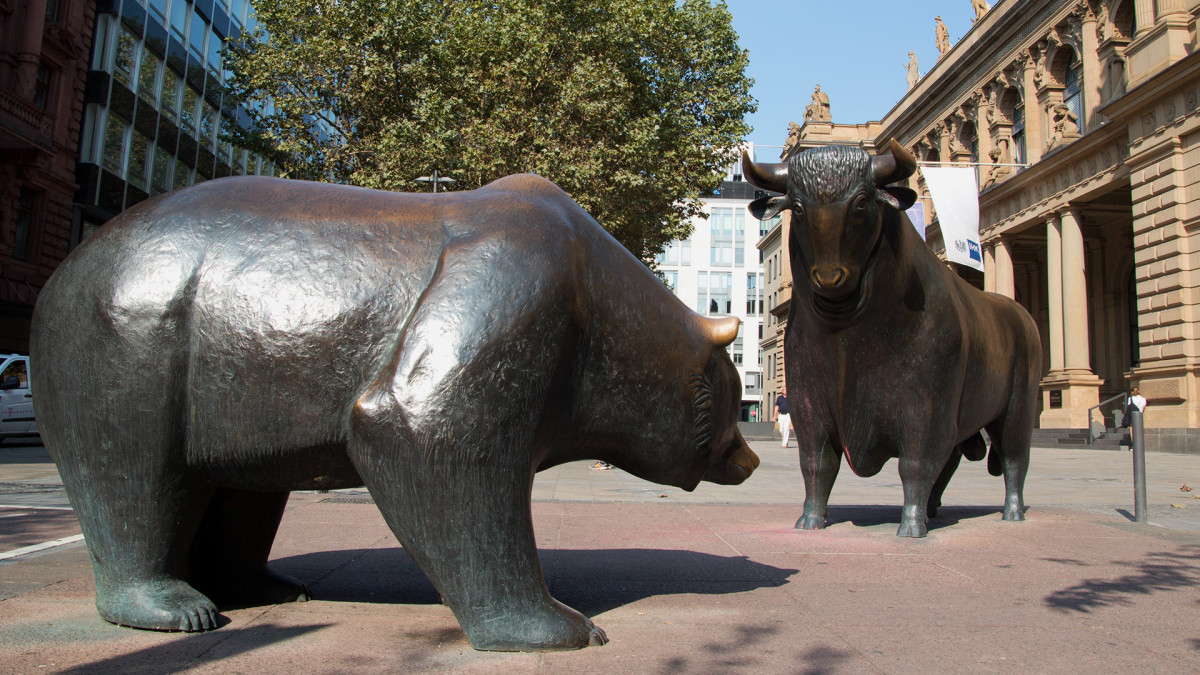 Bill Ackman offers a key observation for alert investors: Some of the best businesses on earth are quietly going on sale.
Ackman’s words and his wallet are saying the same thing
One reason I take Ackman’s optimism seriously is that he is speaking exactly the way he tends to behave when markets crack. When fear rises, he goes shopping.
He has spent the past couple of years building big positions in companies he thinks are unfairly beaten up.
His fund bought roughly 30.3 million shares of Uber after a sell-off, a move he defended by calling Uber “one of the best managed and highest quality businesses in the world” that was still being valued by the market at a discount to its true worth.
Ackman has also taken a major stake in Meta, arguing to his investors that the stock does not yet reflect the company’s long‑term upside from artificial intelligence and its global ad business.
More Wall Street
- Billionaire Dalio sends 2-words on Fed pick Warsh
- Top analyst bets these stocks will boost your portfolio in 2026
- Bank of America sends quiet warning to stock market investors
He has been equally vocal about Fannie Mae and Freddie Mac.
Describing the two mortgage giants as essentially a “royalty on first mortgages,” Ackman has repeatedly said he thinks their shares are ridiculously cheap, with significant upside potential if they are fully released from tight government control.
“Fannie and Freddie are stupidly cheap. Asymmetry at its best. They could be a 10X and it could happen soon,” he said in a follow-up X comment.
These aren’t the words of someone who is bullish on everything all the time. He tends to make concentrated, conviction‑driven bets on businesses he believes can compound for years once temporary fear burns off.
So when he talks about “the highest quality businesses in the world” trading at “extremely cheap prices” today, he’s using the same language he has used around Uber, Meta, and his mortgage‑market plays.
The consistency between what he posts and how he invests is what makes this message hard to ignore.
Other smart investing voices are spotting the same pattern
I never want my own investing decisions — or yours — to hinge on a single person’s view, no matter how famous they are. So I always check whether the data and other voices support or contradict the story.
Research shows that Goldman Sachs’s U.S. Equity Sentiment Indicator has turned negative, and past readings below minus 1 have often been followed by stronger‑than‑average returns over the next 12 months, according to MarketWatch.
Tom Lee of Fundstrat has argued in multiple television appearances that a mix of AI spending, a more supportive Federal Reserve, and washed‑out sentiment could drive gains in tech, financials, industrials, and energy once the current scare runs its course.
All of this doesn’t mean we’ve already seen the bottom. It does, however, mean that the combination of high fear and lower valuations in key sectors has often rewarded investors who were willing to act before the all‑clear.
That is the same emotional trade Ackman is asking you to consider.
What a nervous investor can actually do with Ackman’s advice
If you are sitting in cash and feeling paralyzed, Ackman’s post is not a command to dump everything into stocks tomorrow. It is a wake‑up call to think about time and quality differently.
Here is how I would translate it into a realistic playbook.
1. Reset the goal.
You are not trying to buy at the absolute bottom; you are trying to own more great businesses at prices that give you a good chance at attractive long‑term returns.
2. Restrict your focus to quality.
Ackman has consistently favored companies with durable competitive advantages, strong free cash flow, and management teams that have shown they know how to allocate capital.
That has led him to large, well‑known names such as Uber and Meta, housing‑linked plays tied to Fannie and Freddie, and a small group of other cash‑generating giants disclosed in his filings.
You don’t have to copy his list, but you can use his questions.
- Does the company dominate its niche?
- Can it raise prices without losing customers?
- Is the current sell-off about temporary macro fear, or is the business model itself cracking?
3. Spread new buying across time.
If you have idle cash, you could decide to invest a fixed amount each month for the next six or 12 months into a basket of high‑quality stocks or funds tilted toward quality and profitability.
That way, if markets fall another 10%, you are still buying at those lower prices, instead of watching them from the sidelines.
4. Be honest about risk.
If a 20% drawdown in your stock portfolio would threaten near‑term goals such as tuition, a home purchase, and basic expenses, you probably need a more conservative mix than Ackman does.
He plays a billionaire’s game with billionaire‑level cushioning. You have to translate his optimism into something that fits your own timeline, income, and obligations.
Still, I don’t think his core message only belongs in a hedge‑fund conference room. If you have a long horizon and some ability to tolerate discomfort, this may be one of those windows where doing nothing feels safe but quietly costs you future wealth.