
Billionaire money manager Ken Fisher just weighed in with a surprising message in the “are stocks overvalued” and “should you care” debate. His opinion: price-to-earnings ratios, or P/E ratios, aren’t nearly as important as most believe.
At first blush, it seems an unconventional take. We’ve all heard the argument: stocks are overvalued, suggesting a reckoning looms. The argument primarily focuses on price-to-earnings (P/E) ratios, which serve as a gauge for investors to determine whether a stock is undervalued (buy) or overvalued (sell).
This year, we’ve heard many pundits suggest that significant underperformance could be near, given the S&P 500‘s P/E ratio is significantly above its 5-year and 10-year averages after two (and potentially three) consecutive years of 20%-plus returns.
But what if that thinking is wrong? What if Fisher is right and the impact of high valuations isn’t nearly as significant a headwind to stock market returns as everyone thinks? It would rewrite the mindset of many investors who have pinned their hopes (and missed this year’s rally in the process) on a misguided ‘stocks are overvalued’ belief.
I know for one, Fisher’s take resonates. As a former Wall Street analyst with over 30 years of experience tracking markets, I’ve long held that valuation matters on the edges, serving more as a thumb on a scale’s balance, rather than the be-all and end-all rationale for buying or selling.
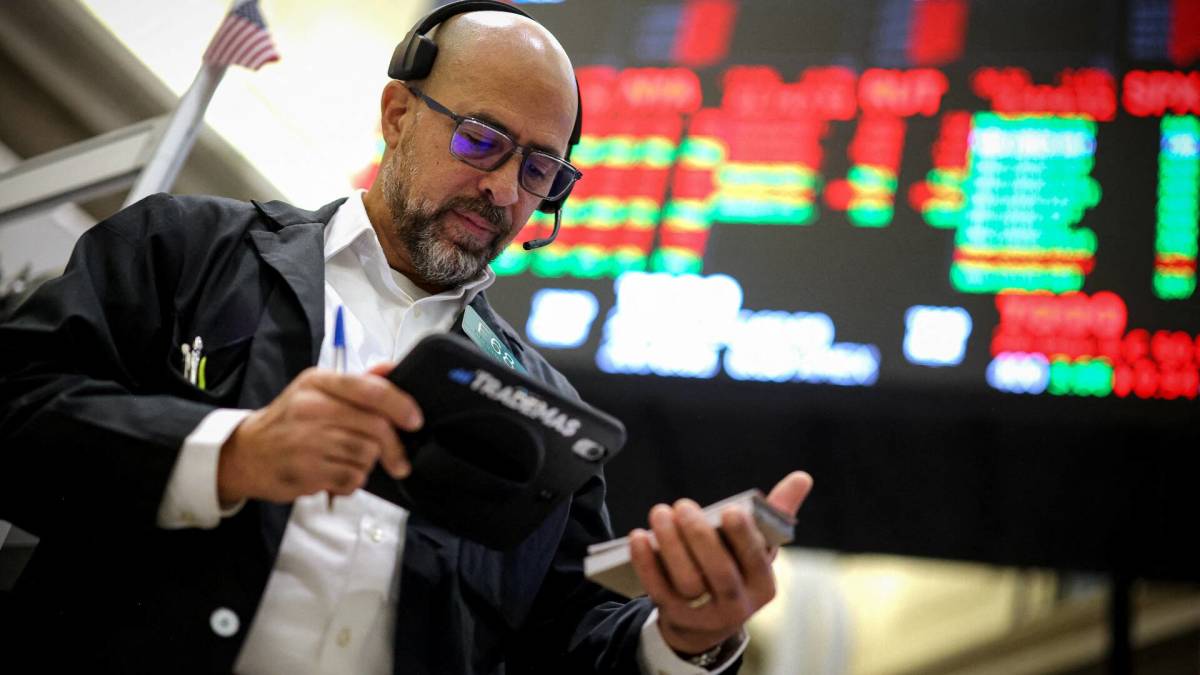 Investors are debating valuation in 2025 as the S&P 500 hits all-time highs.
REUTERS
Ken Fisher says P/E ratios aren’t nearly as important as you think
Fisher is the founder of Fisher Investments, which manages $295 billion in assets. He’s been navigating the markets since the 1970s. He’s seen his share of economic and market booms and busts, having navigated runaway inflation in the 1970s, Black Monday in 1987, the Savings and Loan crisis in the 1980s and 1990s, the Internet boom and bust, the Great Recession, the Covid pandemic, and most recently, 2022’s bear market.
He’s seen his fair share of bull and bear markets and plenty of periods of low and high valuation.
Those concerned about the stock market’s P/E ratio point to the fact that the S&P 500’s trailing 12-month P/E ratio is 28.3, above the 5-year and 10-year average of 25 and above 22.9, respectively, according to Factset.
Fisher is acutely aware of the valuation debate, but doesn’t consider valuation to be the driving force for predicting what’s next for stocks, and he has the data to back up his opinion.
“With the price-to-earnings ratio of US stocks hovering near 30, many are starting to taking it on faith that these are the last days of the bull market,” wrote Fisher in a New York Post op-ed. “Yet valuations don’t predict stocks’ direction – and they never have. Heresy? More like history – more than a century of it – proving that today’s lofty PEs mean little.”
More Wall Street:
- Stanley Druckenmiller’s latest buys suggest shifting tech trend
- Goldman Sachs unveils stock market forecast through 2035
- Dalio’s Bridgewater quietly reshapes its portfolio amid bubble warnings
- Peter Thiel dumps top AI stock, stirring bubble fears
Fisher’s point is reinforced by calculating historical returns at various P/E levels.
“Since 1872, the S&P 500’s annual starting PE (using trailing 12-month earnings) and forward 1-year returns have an R-squared of 0.01—essentially no causality! R-squared using three- and five-year returns is 0.03 and 0.02. That means just 3% and 2% of US stocks’ forward three- and five-year returns, respectively, even possibly stem from PEs,” wrote Fisher. “Randomness. Believing the reverse is just dumbness.”
R-squared is a measure of the degree to which one thing determines another. A reading of zero means “A never causes B, while 1.00 signals A always causes B,” says Fisher.
Even forward-looking valuations should be carefully considered
Since trailing p/e ratios are based on past earnings, they’re not nearly as useful in gauging the future. Stocks trade on expectations rather than yesterday’s news because investors approach portfolios with a “what have you done for me lately” mentality.
However, not even forward p/e ratios earn muster with Fisher.
“Projected earnings, used by many, stem from current expectations, already baked into sentiment and prices (and often wrong),” said Fisher. “This can make P/Es look nosebleed high at great buying opportunities.”
Case in point: The Great Recession.
Forward P/E ratios surged in 2009 as the market was bottoming because analysts were extrapolating economic armageddon to continue, rather than for stocks to find their footing. Those overly focused on valuation missed a generational buying opportunity, given the S&P 500 ETF (SPY) has risen 918% from its March 2009 low.
Critics will point out that stocks have fallen at times when p/e ratios are elevated, such as in the early 2000s and early 2022. However, there’s also plenty of times when high p/e ratios have preceded gains.
“2003 started with a 32 PE. US stocks leapt 29%, annualizing 12.8% the next five years. 2021 launched with a 38 PE. Yet stocks returned 29% that year, annualizing 10% returns over three years … despite 2022’s bear market,” notes Fisher.
What’s next for stocks in 2026 will likely hinge more on Fed, economy than valuation
Given Fisher’s data, his idea that investors are too focused on p/e ratios doesn’t sound so crazy. Fisher has decades of investing experience, and investors may want to take note that while he hasn’t released his 2026 market outlook yet, p/e ratios won’t dictate his forecast.
He usually puts together his forecast later in December. Last year, he based a bullish outlook for overseas stocks on extremely poor sentiment driven by President Trump’s election. He wasn’t wrong. The S&P World Ex-U.S. Index is up 27.2% year-to-date, while the S&P 500 is up 17%. He said that Europe would outperform the U.S. market, which is again correct, given the MSCI Europe Index’s 33.2% year-to-date return.
Fisher also predicted (correctly) in January that the S&P 500 would confound the masses, generating a third year of outsize gains, writing in the New York Post, “I believe that what is most likely is a stock market gain of 15% to 25% – maybe slightly bigger.”
Check and check.
What he says this year is anyone’s guess, but his opinion will be more shaped by sentiment about the economy than valuation, given that while the Federal Reserve has cut rates three times this year, it’s modeling for only one more cut in 2026 as of the FOMC meeting on December 10.
The Fed’s closely watched dot-plot shows that Fed officials are guiding for GDP to expand, and for jobs and inflation to stabilize and improve by the end of next year.
“In our SEP, the median projection of the unemployment rate is 4.5 percent at the end of this year and edges down thereafter,” said Fed ChairmanJerome Powell in his post-decision press conference. “The median projection in the SEP for total PCE inflation is 2.9% this year and 2.4% next year, a bit lower than the median projection in September. Thereafter, the median falls to 2%.”
That sounds pretty “Goldilocks” to me. The Fed could certainly adjust its stance on rates quickly, depending on how the data evolves. Still, the December projections suggest complacency, and how investors process that shift remains to be seen.
As for valuation, Fisher doesn’t think you toss it completely aside. He does, however, believe that its best use is on the margins, helping you decide where to tilt portfolios rather than use it for market timing.
“Valuations aren’t entirely useless. They can help pick stocks within value categories (what I created price-to-sales ratios for). But for broad market predictions? No.”
Related: Longtime fund manager offers 2-word stock market prediction for 2026